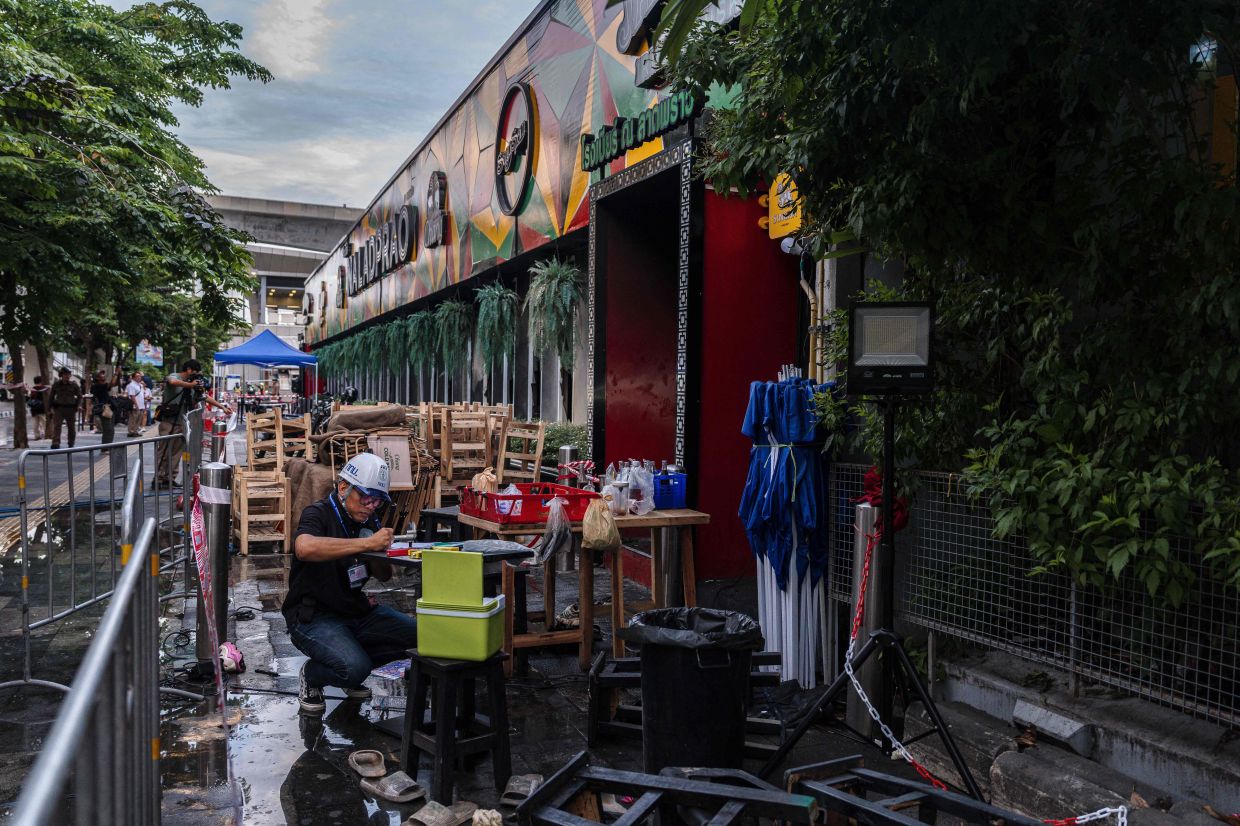
A devastating fire at a restaurant and brewery-style establishment in Bangkok's Lat Phrao district has killed 27 people and left 18 others injured, prompting city authorities to launch an immediate support operation and sweeping safety reviews across the business sector. Bangkok Governor Chadchart Sittipunt arrived at the scene just after 2.40am on Monday, where he initiated a multi-pronged response focusing on victim assistance, investigation of fire origins, and compliance checks at similar venues across the capital.
The tragedy unfolded with firefighters arriving approximately five minutes after receiving the emergency call, only to find flames already consuming much of the venue's interior. Director of Bangkok's Fire and Rescue Department Suriyachai Rawiwan reported that the rapid spread of fire proved catastrophic for those inside. Thick smoke obscured visibility throughout the building, transforming the evacuation process into a nightmarish struggle for patrons attempting to reach safety. The dense fumes appear to have been a primary killer, with preliminary indications suggesting many victims succumbed to smoke inhalation rather than burns.
The scale of fatalities—nine men and 18 women according to initial reports—underscores the lethal efficiency of the blaze and the challenges rescue teams faced navigating the smoke-filled premises. A troubling pattern emerged during rescue operations: multiple victims were discovered clustered near emergency exits, particularly on the building's left side, where investigators suspect physical obstructions may have prevented escape or caused fatal delays. Other casualties were found near rear toilet facilities, indicating that panicked patrons sought refuge in any enclosed space rather than successfully locating marked emergency routes.
Governor Chadchart's preliminary observations at the scene suggest that structural and material factors may have accelerated the fire's spread beyond what would be typical. Flames appeared to race across ceiling surfaces with unusual velocity, while furnishings such as plastic tables and chairs sustained comparatively minimal damage. This discrepancy has led fire safety specialists to hypothesize that toxic emissions from interior decorative materials—possibly foam, adhesives, or synthetic coverings—may have overwhelmed occupants far more rapidly than conventional combustibles would. Such materials, commonly used in budget hospitality venues across Southeast Asia, can generate lethal concentrations of poisonous gases within minutes of ignition, potentially incapacitating people before they can effectively escape.
The venue's emergency exit infrastructure has become a focal point of the investigation. Initial inspections identified only two escape routes, one of which required patrons to navigate through the kitchen—a pathway that would be rendered impassable once fire and smoke advanced into food preparation areas. Whether these exits complied with Thai fire safety codes, whether their locations were clearly marked and illuminated, and whether evacuation procedures were regularly practised remain critical questions. The discovery of bodies near exits suggests that even designated emergency routes may have been either inadequately marked, physically blocked, or insufficient in number to accommodate the number of people in the venue when the fire started.
Governor Chadchart has tasked the Chatuchak District Office with establishing a formal coordination centre to support bereaved families through the identification process and provide medical, psychological, and logistical assistance to the injured and affected. The identification of victims is proceeding methodically through official channels, involving forensic doctors and relevant agencies, given the physical conditions of many remains following exposure to extreme heat and smoke. This cautious approach, while necessary for legal accuracy, means families face prolonged uncertainty and distress as formal confirmations are gradually released.
Parallel to victim support operations, Bangkok's Metropolitan Administration has ordered an immediate and comprehensive audit of business operating permits and fire safety compliance across all hospitality venues—particularly restaurant-bars and entertainment establishments similar to the destroyed venue. Officials will examine whether businesses hold valid operating licences, whether fire exits meet minimum quantity and accessibility standards, whether emergency signage is visible and properly illuminated, and whether evacuation routes are genuinely unobstructed during normal business operations. This sweep represents a significant undertaking, given Bangkok's thousands of such establishments, many operating in older buildings or with informal arrangements that may not reflect safety documentation.
The fire's investigation remains ongoing, with forensic teams and police examining physical evidence to determine precisely how and where the blaze originated. Governor Chadchart has identified understanding causation as essential to preventing recurrence, whether the fire resulted from electrical malfunction, cooking equipment failure, improper storage of flammable materials, or negligent smoking practices. Once the investigation concludes, authorities plan to implement targeted prevention measures tailored to the specific cause, rather than applying generic safety improvements.
For Malaysian and regional readers, this incident carries sobering implications. Bangkok's hospitality and entertainment sectors operate under regulatory frameworks broadly comparable to those in Malaysia, with widespread challenges including inadequate inspection frequency, informal business operations, and venues that prioritise atmosphere and profit margins over safety infrastructure. The high proportion of female victims in this fire mirrors patterns in many Southeast Asian nightlife venues where female staff may receive less safety training or be less familiar with emergency procedures than regular patrons. Thailand's tourism-dependent economy creates competitive pressure for businesses to minimise visible safety investments that might detract from their commercial appeal.
The rapid spread of fire and the difficulty of rescue operations also highlight a broader vulnerability in older commercial buildings throughout the region. Many Bangkok establishments, like comparable venues in Malaysian cities, occupy converted residential structures or buildings predating stringent fire codes. Installing modern fire suppression systems, improving structural fire resistance, or expanding emergency exits in such properties requires capital investment that financially-struggling businesses resist, particularly in competitive sectors like hospitality where margins are thin.
Governor Chadchart's commitment to accelerated review processes and comprehensive safety measures signals political responsiveness to this tragedy, though implementation will determine whether the coordination centre and permit checks represent genuine systemic reform or temporary crisis management. The Bangkok Metropolitan Administration's pledges of support and thorough incident review must translate into sustained enforcement, adequate resourcing for inspections, and penalties sufficiently severe to incentivise genuine compliance. Without such follow-through, future venues will calculate that regulatory risks remain manageable relative to safety investments.
The 18 injured persons—eight classified as seriously hurt, seven with moderate injuries, and three sustaining minor damage—face varied recovery trajectories. Those with serious smoke inhalation injuries face potential long-term respiratory complications and psychological trauma. Hospital staff will play a crucial role in their physical rehabilitation, though the psychological recovery of survivors and bereaved families will extend far beyond immediate medical intervention. Support services, counselling resources, and legal assistance for families seeking accountability will determine whether this tragedy catalyses genuine change or simply becomes another memorial to negligence and inadequate oversight.

