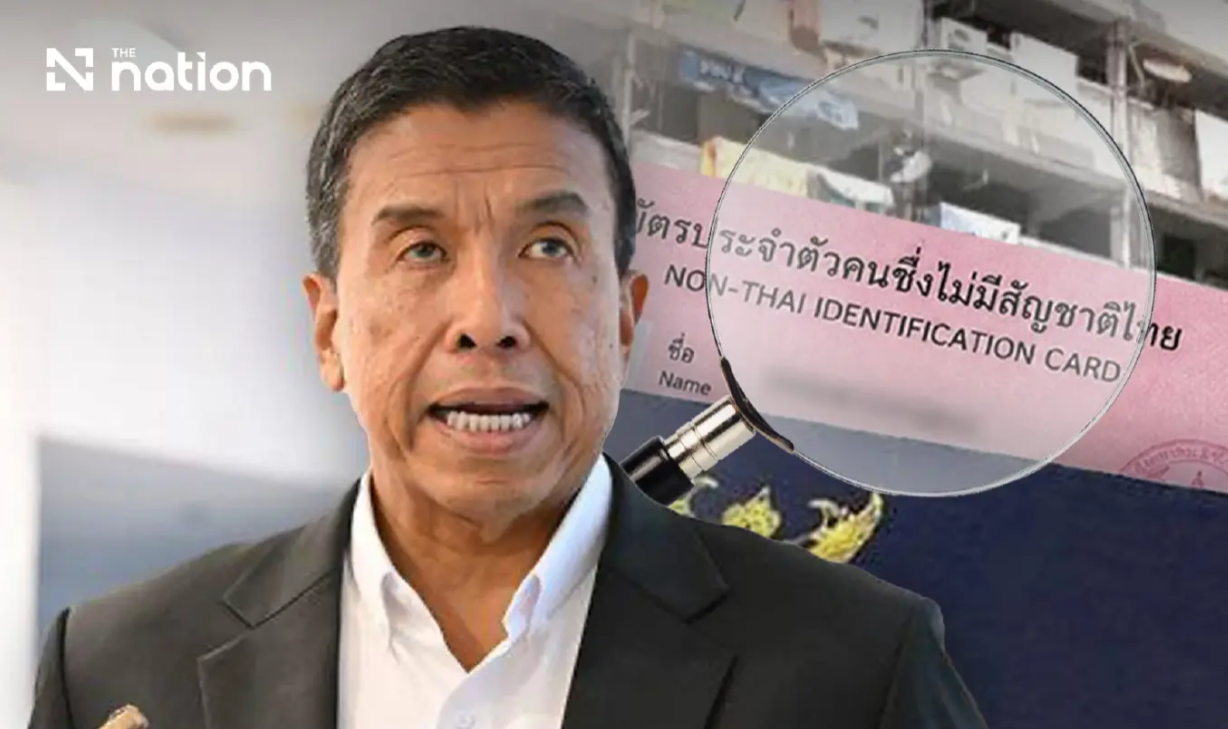
Bangkok Governor Chadchart Sittipunt has ordered a comprehensive examination spanning a full decade of household registration records across all 50 district offices in the Thai capital, responding to growing evidence of systematic irregularities connected to the issuance of pink cards—identity documents issued to foreign nationals residing in Thailand. The scale of the investigation underscores the gravity with which municipal authorities are treating what appears to be an entrenched fraud network exploiting vulnerabilities in Bangkok's civil registration infrastructure.
The audit, which encompasses records from 2017 onwards, specifically targets suspected cases where non-Thai nationals were improperly entered into household registrations, a procedural step typically required to support applications for pink-card documentation. The Bangkok Metropolitan Administration (BMA) instructed all district offices to submit preliminary findings by late August, establishing an accelerated timeline that reflects official concern about the depth and breadth of the problem. This administrative urgency signals that investigators believe the fraudulent activity extends far beyond isolated cases, potentially affecting thousands of registrations across multiple locations throughout the city.
Chadchart outlined several sophisticated methodologies allegedly employed by the fraud network to circumvent registration safeguards. One common scheme involved birth certificates of children born in Thailand to foreign parents who subsequently moved abroad. These legitimate certificates, left behind in Thailand, were allegedly repurposed to transfer unrelated individuals into household registrations under false identities, enabling those individuals to falsely claim Thai residency status sufficient to qualify for pink-card applications. This approach exploited what appears to be a gap in the system's ability to verify whether registered minors actually reside at listed addresses or maintain genuine family connections to registered households.
Investigators have also identified cases involving what officials characterised as "phantom child" and "phantom father" arrangements, where fabricated or misrepresented parent-child relationships were created within the registration system to provide documentary cover for fraudulent entries. Additional instances involved transferring names from central household registers into ordinary registrations, exploiting procedural inconsistencies between different tiers of the registration hierarchy. The technical sophistication of these methods suggests coordination among individuals with insider knowledge of registration procedures, rather than ad-hoc opportunistic fraud.
Din Daeng district emerged as a focal point for the initial investigation, where authorities uncovered particularly egregious concentration of suspicious registrations. A single property measuring approximately 40 square metres contained between 40 and 45 individuals listed in its household registration—a density suggesting obvious fraud given the physical impossibility of housing that many people in such a small space. Subsequent examination of Din Daeng records from 2024 alone identified more than 2,000 address transfers exhibiting unusual characteristics, providing concrete evidence that the problem pervades the district's administrative operations and likely extends throughout the broader city.
The administrative response has already included temporary removal of four BMA employees linked to the scheme, though officials emphasised that suspension does not constitute an admission of guilt and that separate police investigations continue. A fourth Din Daeng employee was subsequently suspended as the investigation widened, indicating that investigators have identified multiple potentially complicit officials operating within the district office. Chadchart stated his willingness to pursue accountability up the administrative chain if evidence warrants it, explicitly noting that retired senior officials would not be shielded from investigation, a declaration potentially significant given the possibility that the fraud network may have operated for years under institutional oversight or tacit permission.
Moving beyond administrative accountability, the BMA will coordinate with Thai police to examine financial connections between suspected brokers orchestrating the fraud and government employees allegedly facilitating registration approvals. This financial analysis represents a crucial investigative avenue because it offers the potential to establish clear quid pro quo arrangements and money trails linking specific officials to fraudulent transactions. The BMA cannot independently compel production of financial records from external actors, making police cooperation essential for comprehensive investigation. Establishing these financial linkages would strengthen cases against both officials and the broader network of intermediaries profiting from the scheme.
The investigation committee will establish a three-phase screening methodology. Initially, the BMA will identify properties with at least 15 registered residents as presumptively suspicious, with the threshold potentially lowered in subsequent phases to enable more comprehensive random audits. This tiered approach reflects the practical reality that investigators cannot simultaneously examine every Bangkok residence but need to concentrate resources on properties exhibiting the most obvious irregularities before conducting broader sample surveys. Chadchart cautioned that the preliminary estimate of approximately 3,000 questionable registrations remains unconfirmed and may represent only a subset of the actual problem, with fraudulent registrations potentially distributed across numerous properties rather than concentrated at a few locations.
Beyond the immediate investigation, the BMA is implementing structural reforms designed to prevent similar fraud in the future. The municipal government will require that district directors and section heads share responsibility for registration approvals rather than concentrating such authority in individual employees, reducing the power of any single official to approve fraudulent applications. Officials working in sensitive registration positions will face periodic rotation to prevent the development of entrenched relationships between officials and brokers that enable systematic fraud. These preventive measures reflect recognition that the fraud's persistence indicates not merely individual malfeasance but systemic vulnerabilities that allowed coordinated schemes to operate with apparent impunity.
The BMA also plans to expand existing anti-corruption policies with particular emphasis on administrative affairs and civil registration procedures. Officials anticipate revising working procedures to enhance transparency and institutional oversight while ensuring that legitimate applicants seeking pink cards experience minimal disruption from the investigation. This balancing act—conducting thorough fraud investigation while protecting legitimate access to identity documentation—represents a significant administrative challenge, particularly given that many authentic applications may involve foreign nationals presenting documentation similar to fraudulent submissions. The municipal government's explicit commitment to maintaining legitimate applicant access indicates awareness that overly aggressive investigations could create practical hardship for genuine non-Thai residents seeking proper documentation and legal residency status in Bangkok.

