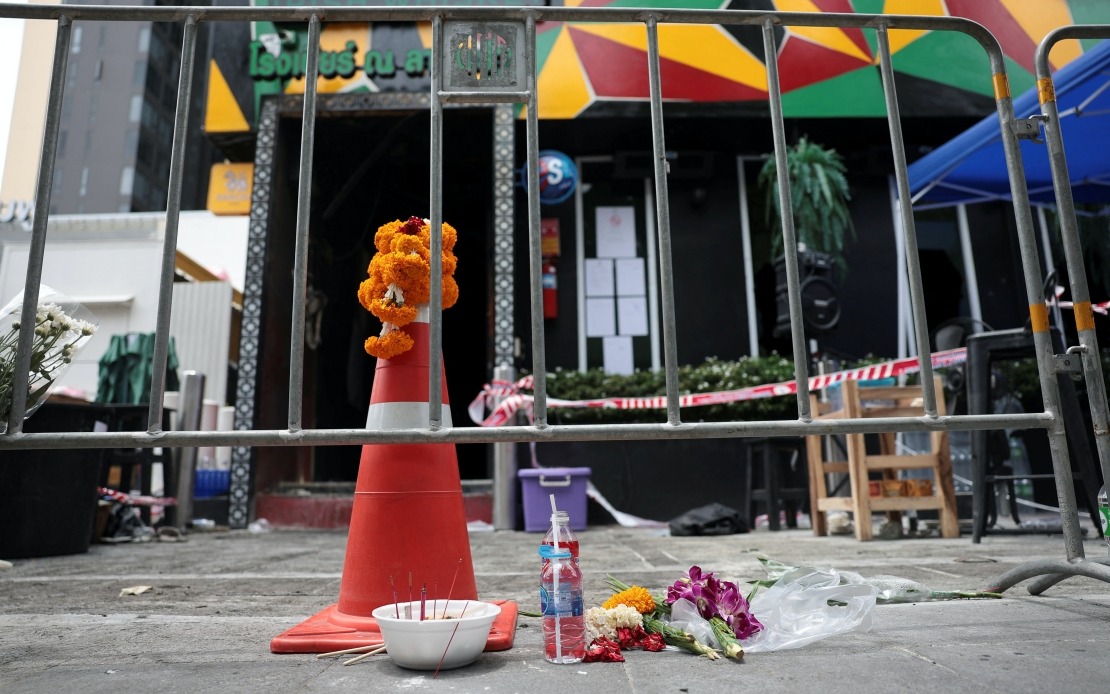
Investigators probing the catastrophic fire at a Bangkok entertainment venue have determined that the 33 victims died from asphyxiation caused by toxic gas exposure rather than direct thermal injury. According to Metropolitan Police Bureau Commissioner Police Lieutenant General Sayam Boonsom, forensic examination revealed that carbon monoxide and cyanide were present in the bodies of deceased patrons, with these poisonous gases preventing oxygen absorption at the cellular level—a process capable of proving fatal in mere minutes.
The discovery carries significant implications for how the tragedy unfolded. When fires consume synthetic materials and furnishings common to entertainment establishments, they generate dangerous chemical byproducts alongside smoke. Carbon monoxide, an odourless, colourless gas produced during incomplete combustion, is particularly lethal in enclosed spaces where ventilation is compromised. Cyanide compounds, which can be released from burning plastics and other materials, compound this danger by blocking the body's ability to utilise oxygen even when breathing continues. The rapid lethality of this combination explains why so many patrons succumbed before reaching exits or receiving assistance.
The blaze erupted shortly after midnight on Monday at the establishment located in Bangkok's Lat Phrao district. Emergency responders rescued more than 70 people from the burning structure, though 33 did not survive the incident. Current medical data indicates that 14 survivors remain hospitalised in intensive care units, whilst 44 others have been discharged following treatment for injuries and smoke inhalation. The death toll represents one of Thailand's deadliest fire incidents in recent years, prompting urgent scrutiny of building safety standards and venue operations throughout the capital.
Forensic teams have completed their on-scene examination, though the investigation itself remains active as authorities work to establish the fire's origin and contributing factors. Preliminary findings already point toward multiple potential culprits. Police have identified possible electrical malfunctions as a starting point for investigation, but equally significant are apparent safety failures including unauthorised structural modifications to the building, emergency exit obstruction, and potential violations of fire safety codes. These structural problems may have created a death trap that prevented occupants from escaping and allowed toxic fumes to accumulate rapidly.
The inquiry has expanded to encompass broader compliance issues at the venue. Investigators are examining whether the establishment operated beyond the parameters of its entertainment licence and whether it breached regulations governing nightlife venues. Such questions are pertinent in Southeast Asia, where enforcement of safety standards at bars and clubs can be inconsistent, and where business owners sometimes prioritise capacity and profit over patron safety. The Bangkok incident will likely prompt regional authorities to review similar establishments in their own jurisdictions, including Malaysia, where nightlife venues operate under comparable licensing frameworks.
Police have so far questioned more than 106 witnesses, including staff members, survivors, and emergency responders. These interviews are generating investigative leads whilst building a comprehensive picture of conditions inside the venue immediately before the fire. Witness accounts may provide crucial details about emergency exit accessibility, crowd management, and whether safety protocols were observed. The scale of witness interviews underscores the complexity of establishing accountability across multiple potential violations.
Whilst no formal charges have been filed, prosecutors are preparing to pursue several criminal counts. These include causing death and serious injury through negligence, conducting unauthorised building alterations, negligently causing a fire, and breaching entertainment venue regulations. The multiplicity of potential charges reflects the accumulation of apparent failures across different domains—from building maintenance and structural integrity to fire prevention measures and emergency preparedness. Determining precisely which parties bear responsibility will require careful analysis of ownership structures, management practices, and regulatory oversight.
For Malaysia and other Southeast Asian nations, this tragedy serves as a cautionary reminder of recurring vulnerabilities in the nightlife sector. Many bars and clubs in the region operate in older buildings or retrofitted structures where fire safety may be compromised by modifications made without proper permits or oversight. Capacity constraints are frequently ignored, emergency lighting and signage are inadequate, and staff training on evacuation procedures is minimal. The Bangkok fire underscores how multiple small failures—unauthorised renovations, blocked exits, inadequate ventilation, flammable décor—can combine catastrophically when fire strikes.
Thailand's fire prevention framework, though comprehensive on paper, evidently faced enforcement challenges at this particular venue. Regular inspections by local authorities failed to identify or remediate the hazardous conditions that contributed to the disaster. This suggests that inspectorate resources may be stretched, corruption may facilitate non-compliance, or venues may conceal violations during official checks. Malaysian authorities overseeing entertainment venues would be wise to examine their own inspection protocols and consider whether unannounced inspections, independent audits, or enhanced penalties might improve compliance.
The toxic gas findings also highlight the importance of fire suppression systems and ventilation design. Modern venues increasingly incorporate sprinkler systems and smoke extraction technology that can reduce both fire intensity and toxic gas concentration. However, retrofitting older buildings with such systems proves expensive, and some operators resist the investment. The Bangkok incident may accelerate adoption of these protective measures throughout Thailand and potentially influence regional building codes. Property owners and venue operators in Malaysia should anticipate increased regulatory scrutiny and rising standards for safety upgrades.
Beyond the immediate investigation, this tragedy raises questions about corporate accountability and civil liability. Relatives of deceased victims and injured survivors will likely pursue compensation claims against the venue operator and potentially against building owners or local authorities if negligent oversight contributed to the disaster. Such litigation can extend for years and generate substantial financial penalties, incentivising operators throughout the region to prioritise safety improvements. Insurance companies may also increase premiums or impose stricter conditions on coverage for entertainment venues, creating market pressure for better safety practices.
The investigation's ultimate findings will shape how Thai authorities recalibrate enforcement of fire safety standards. Enhanced penalties for violations, more frequent unannounced inspections, mandatory staff training, and stricter requirements for emergency egress are likely consequences. These reforms, if implemented rigorously, could influence regulatory practices across Southeast Asia as neighbouring jurisdictions learn from Bangkok's tragedy. For venue operators and building owners throughout the region, the message is unambiguous: safety compliance is not optional, and the human cost of negligence is catastrophic.

