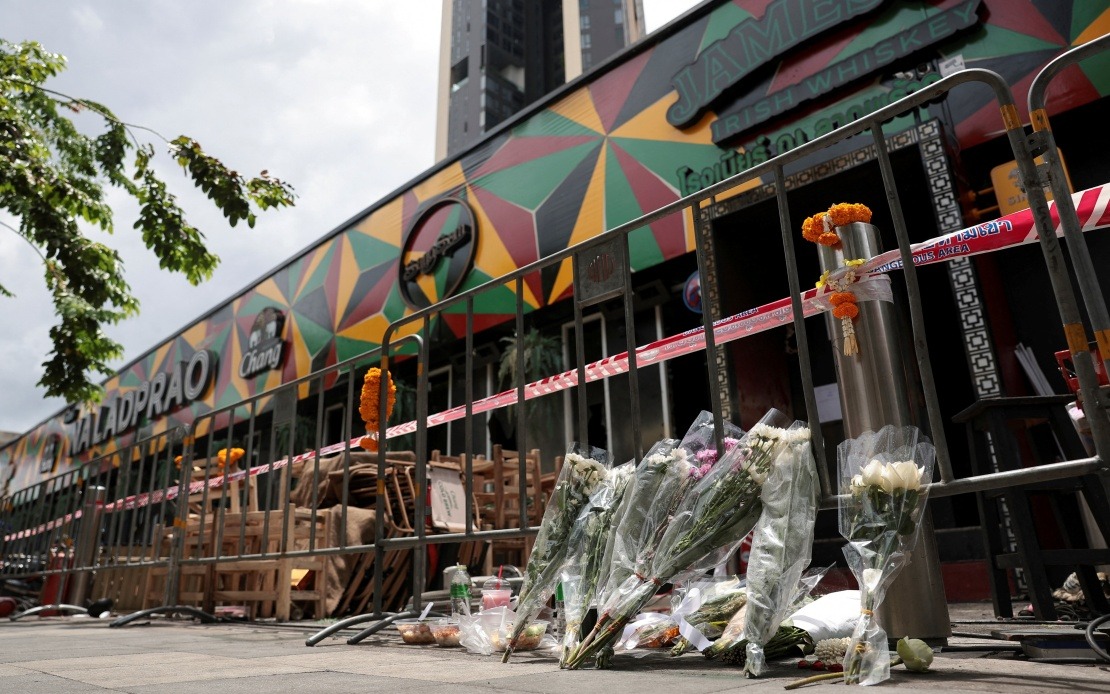
A devastating fire at a Bangkok entertainment venue has claimed 32 lives, with the death toll continuing to climb as medical facilities struggle to treat the severely wounded. Two additional victims who were hospitalized in critical condition following the Monday night blaze at Rong Beer Na Lat Phrao have died, bringing the total number of fatalities among patients receiving hospital care to five. Thai medical authorities confirmed these latest deaths occurred at Paolo Kaset Hospital and Nopparat Rajathanee Hospital, marking another somber milestone in what has become one of the country's most catastrophic fire disasters in recent memory.
The fire erupted shortly before midnight on Monday in the Chatuchak district, though initial reports placed the venue in the Lat Phrao area. The rapid spread of flames through the packed entertainment venue suggests the establishment may have been operating with significant safety vulnerabilities, a pattern that has emerged repeatedly in similar disasters across Southeast Asia. The Bangkok Emergency Medical Centre, also known as the Erawan Centre, reported that as of Wednesday morning, 79 individuals had sustained injuries from the fire. Of these, 44 had been discharged following treatment, while 30 remained hospitalized, including a particularly alarming 15 patients requiring intensive care unit supervision.
The medical situation reflects the severity of injuries sustained in such confined-space fires, where victims often suffer from severe burn injuries, smoke inhalation, and crushing injuries from the panic and crowd surge that typically accompanies evacuation from engulfed buildings. The concentration of 15 patients in intensive care units indicates that many survivors face extended and potentially life-threatening recovery processes. Thai health authorities have mobilized significant resources to manage this medical crisis, though the ongoing fatalities demonstrate the limits of medical intervention when injuries are sufficiently catastrophic.
In response to the tragedy, Thai Prime Minister Anutin Charnvirakul issued immediate directives on Tuesday ordering the Ministry of Interior to conduct comprehensive safety inspections across Thailand targeting all buildings and entertainment venues. This nationwide response demonstrates governmental recognition that the fire reflects systemic inadequacies in building safety standards and enforcement mechanisms that likely extend far beyond the single Bangkok venue. The inspection initiative involves coordination among multiple agencies including the Bangkok Metropolitan Administration, local administrative organizations, the Department of Public Works and Town & Country Planning, and the Royal Thai Police.
Such interagency coordination, while necessary, also reveals chronic weaknesses in Thai building regulation enforcement. Entertainment venues operating in Thailand frequently operate with minimal oversight despite the obvious dangers posed by large gatherings in enclosed spaces. The decision to conduct nationwide inspections suggests authorities acknowledge that numerous venues may be operating with similarly dangerous conditions. For Malaysian readers familiar with entertainment venue safety standards in their own country, the Thai situation underscores the importance of consistent regulatory enforcement and the consequences of lax oversight in nightlife establishments.
Investigators have identified multiple critical factors that likely contributed to the disaster. Blocked or inadequate emergency exits represent perhaps the most immediately condemning finding, as such obstructions directly prevented evacuees from escaping and are consistently identified as primary factors in nightclub fire fatalities worldwide. The interior design and furnishings also feature prominently in the investigation, with flammable materials used throughout the venue potentially accelerating the fire's spread and intensifying the heat and smoke that claimed lives. Additionally, investigators are examining the possibility of electrical faults igniting the initial fire, a common cause in aging buildings with deteriorating or inadequately maintained electrical systems.
The combination of blocked exits, flammable interior materials, and potential electrical ignition sources suggests a venue operating with multiple simultaneous safety violations. Such compounding failures indicate not merely isolated negligence but rather systemic disregard for fire safety protocols. Venue operators may have prioritized maximizing interior space and aesthetic appeal over implementing proper fire suppression systems, clearly marked emergency exits, and non-flammable construction materials. This cost-cutting approach, while potentially increasing short-term profitability, has proven catastrophically expensive in human terms.
For Southeast Asian nations including Malaysia, this Bangkok fire serves as a stark reminder of fire safety imperatives in the entertainment industry. Malaysia has experienced similar tragedies in the past, and regulatory bodies continue working to enforce comprehensive fire safety standards in nightclubs, bars, and similar venues. The Bangkok incident demonstrates that even in major metropolitan areas with professional emergency services and modern hospitals, fires in crowded entertainment venues can quickly overwhelm response capabilities and result in mass casualties.
The investigation's focus on emergency exits is particularly significant, as international fire safety standards consistently emphasize that adequate, unobstructed, and clearly marked exits are essential for rapid evacuation. Many Southeast Asian establishments continue operating with exits blocked by furniture, equipment, locked doors, or simply inadequate pathways to allow rapid evacuation during emergencies. The Thai authorities' decision to launch nationwide inspections reflects acknowledgment that this fire likely represents merely the most visible manifestation of widespread safety violations.
Beyond immediate investigation and inspection responses, the Bangkok fire raises questions about accountability for venue operators and building owners who knowingly or negligently create dangerous conditions. Whether Thai authorities will pursue criminal charges against responsible parties remains uncertain, though such prosecutions would send important signals about the serious consequences of safety violations. The family members of deceased victims and survivors facing long-term recovery will likely seek both justice and compensation, putting additional pressure on authorities to establish clear accountability.
The ongoing medical crisis also highlights the resource demands placed on healthcare systems by mass casualty incidents. Thai hospitals are managing numerous severely burned patients, patients with smoke inhalation injuries, and trauma patients simultaneously, straining staff and equipment. For Southeast Asian healthcare systems operating with limited intensive care capacity, such disasters can overwhelm available resources and potentially degrade care quality for other patients requiring critical intervention. The situation in Bangkok will likely prompt Malaysian and regional health authorities to review their mass casualty disaster response protocols.
As the investigation continues and Thailand processes this tragedy, the underlying questions about enforcement of building codes and safety standards remain urgent. The fire demonstrates that regulations mean little if operators can ignore them with minimal consequences, and if inspections and enforcement mechanisms fail to maintain consistent vigilance. Whether this incident catalyzes genuine, sustained improvements in Thailand's entertainment venue safety standards or becomes another cautionary tale quickly forgotten remains an open question that will unfold in coming weeks and months.

