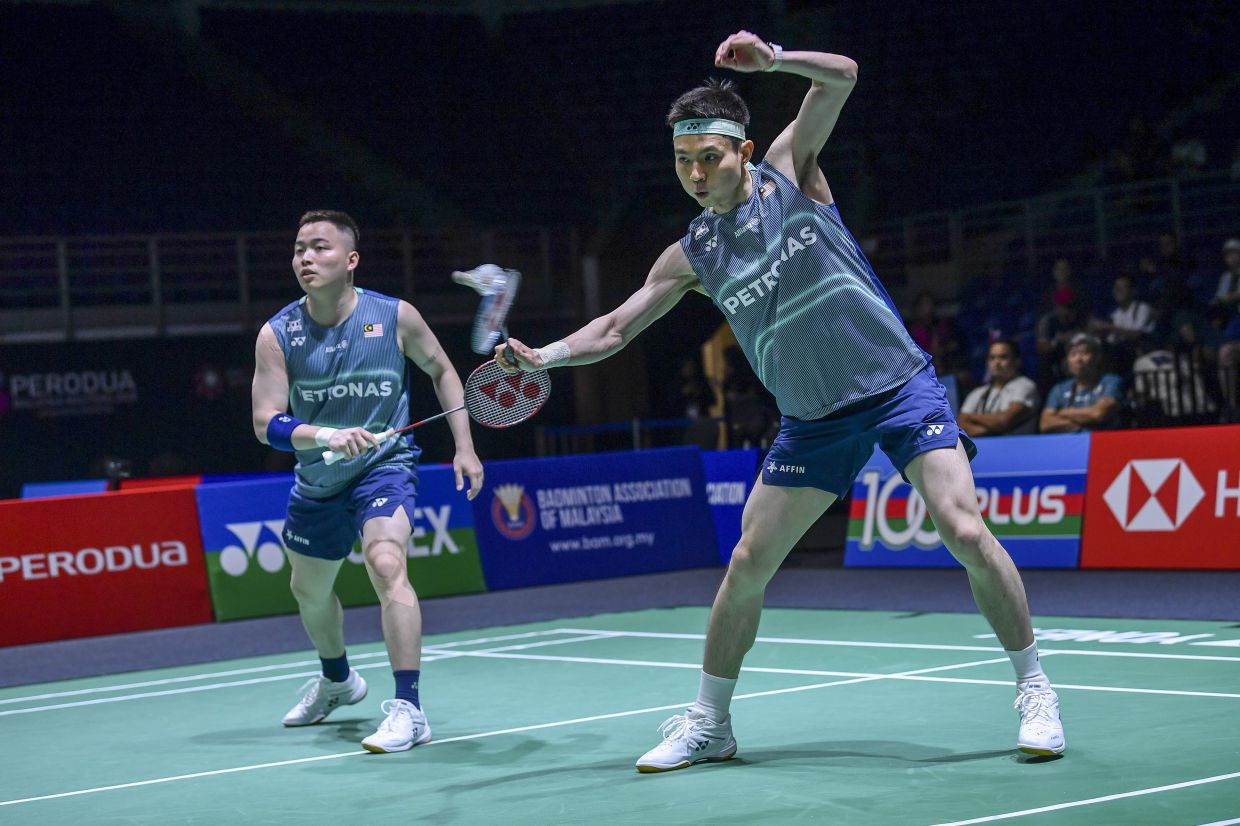
The Badminton Association of Malaysia has drawn a firm line against players attempting to extract concessions through threats of departure, with performance committee chairman Datuk Seri Lee Chong Wei issuing a pointed warning that no individual athlete stands above the collective interests of the national programme.
The statement arrives amid ongoing speculation surrounding the future of men's doubles pair Soh Wooi Yik and Aaron Chia, who have publicly signalled their intention to remain together through the 2028 Los Angeles Olympics after capturing silver at last week's World Championships in New Delhi. The pair's success on the international stage has evidently prompted conversations about their status within the national system, though neither has explicitly threatened departure.
Lee's intervention underscores a notable philosophical shift within BAM's current leadership. He emphasised that while the association maintains an open-door policy for genuine dialogue with its athletes, it will not negotiate under duress or modify substantive decisions simply because players express dissatisfaction. This posture represents a departure from historical patterns of accommodation that may have characterised previous administrations.
The BAM chief grounded his argument in a principle of institutional loyalty and developmental debt. He reminded athletes that their emergence as world-class competitors occurred within BAM's ecosystem, through the association's coaching infrastructure, competitive pathways, and financial support systems. By this logic, threatening to abandon the organisation that nurtured their talent constitutes a form of ingratitude that the current management refuses to reward with strategic concessions.
Central to BAM's position is the contractual framework binding elite players to the national programme. Both Aaron Chia and Soh Wooi Yik remain under contract with BAM until 2028, creating substantial legal and financial consequences should they pursue independence. Any unilateral departure could trigger compensation claims, potentially running into significant figures, while also exposing them to the risk of international tournament sanctions that would severely compromise their ability to accumulate the ranking points essential for Olympic qualification.
Parallel to this standoff, BAM's coaching apparatus continues implementing a strategic rotation of men's doubles combinations designed to identify optimal pairings across the Olympic cycle. Over recent months, Aaron Chia has been tested alongside Aaron Tai, a pairing that reached the Taiwan Open final, while Soh Wooi Yik initially partnered Man Wei Chong before achieving success with Aaron Tai at the Korean Masters. This experimental approach reflects BAM's conviction that no partnership is sacrosanct and that competitive adaptability should take precedence over sentimental attachments to established pairs.
The forthcoming China Masters tournament, commencing September 1st, will witness another significant reshuffle with Aaron Chia linking with Wei Chong while Soh Wooi Yik teams with Aaron Tai. These deliberate permutations serve multiple purposes: they prevent complacency within the doubles unit, maintain tactical flexibility for tournament preparation, and—perhaps most significantly—reinforce management's independence from player preferences in selecting competitive combinations.
For Malaysian badminton observers and the broader Southeast Asian sporting community, this confrontation illuminates an ongoing tension between meritocratic institutional frameworks and athlete agency. As globalisation expands career opportunities and alternative professional pathways for elite players, national sports bodies increasingly struggle to maintain control over their talent. BAM's hardline stance signals a determination to resist this erosion of institutional authority, even at the risk of losing championship-calibre performers.
The implications extend beyond one pairing. Lee's comments constitute a statement of principle directed toward the entire national squad: strategic decisions will be made according to management's assessment of collective programme interests, not individual athlete demands. This clarity may precipitate difficult conversations within the badminton fraternity, but it also establishes unambiguous parameters that could prevent future disputes from festering unresolved.
Should Aaron Chia and Soh Wooi Yik ultimately proceed with departure threats, they would be testing whether BAM's contractual and regulatory leverage can genuinely prevent international competition. The outcome would establish crucial precedents for player-organisation relations throughout Malaysian sport. Meanwhile, BAM's willingness to experiment with alternative pairings suggests it possesses contingency options, even if none currently matches the proven capability of its silver-medal-winning combination.
The timing of Lee's intervention—immediately following World Championship success rather than during a period of underperformance—also sends a strategic signal. BAM is demonstrating that institutional prerogatives override even recent major achievements. This uncompromising stance may appear counterintuitive given the pair's demonstrated excellence, yet it reflects a principled commitment to maintaining organisational autonomy in an era when elite athletes increasingly challenge traditional sport hierarchies across the region and globally.

