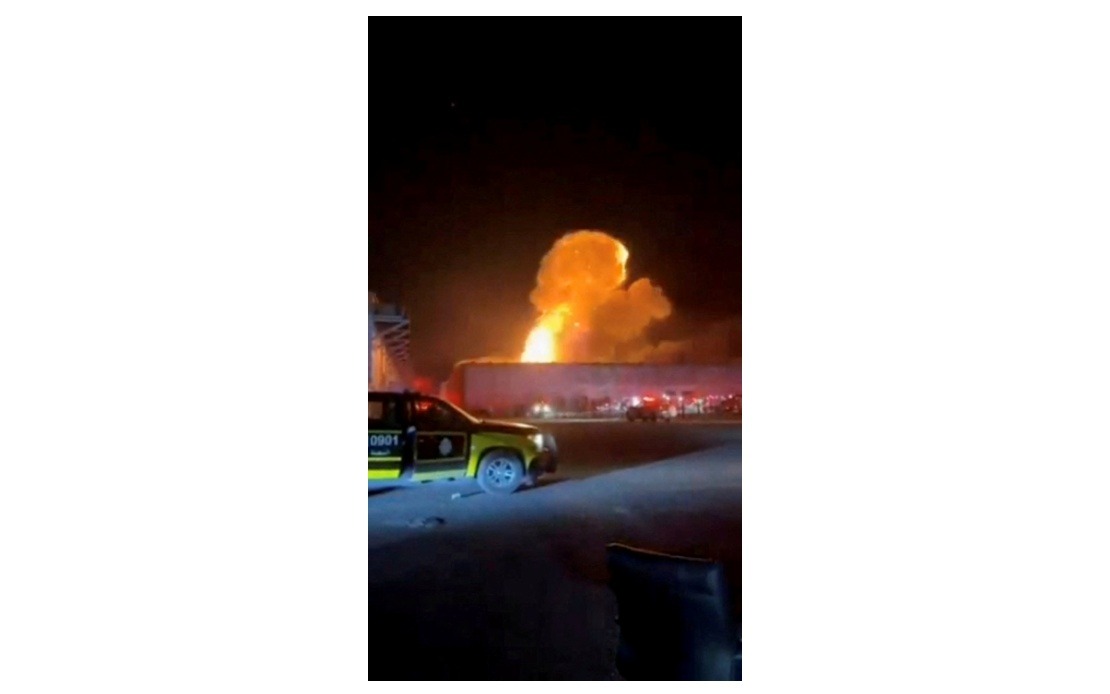
Three strategic Gulf states activated emergency defence measures and public safety warnings on Friday as Iran unleashed a fresh wave of drone and missile strikes against US military positions in the region, significantly escalating an already volatile security situation that threatens the stability of one of the world's most economically vital areas.
Bahrain's Interior Ministry triggered air raid sirens across the small island nation and broadcast urgent instructions directing residents to move immediately to designated safe shelters. The announcement reflected growing alarm among officials over the potential consequences of sustained Iranian military action targeting American installations dotted throughout the Arabian Peninsula. Meanwhile, Qatar's government issued parallel directives through its Interior Ministry, instructing the public to remain sheltered indoors and maintain heightened vigilance, while officially designating the national security threat level as high. Kuwait implemented comparable emergency measures, with the military's air defence command confirming that hostile missiles and unmanned aerial systems had penetrated Kuwaiti airspace, necessitating an active defensive response.
The Iranian military subsequently announced responsibility for the coordinated attack, stating that its armed forces had specifically targeted a United States military installation operating from Bahraini territory. However, the Iranian statement provided minimal elaboration regarding the extent of damage, number of weapons deployed, or precise targeting parameters, leaving regional analysts and international observers struggling to assess the full scope of the operation and its strategic implications.
This latest military confrontation represents the most serious escalation since a dramatic turning point in late February, when American and Israeli forces jointly initiated a comprehensive offensive campaign against Iranian military and nuclear infrastructure. Tehran responded with a substantial retaliatory strike involving ballistic missiles and attack drones that were directed against multiple targets throughout the Gulf region, particularly US military facilities and assets housed in host countries including Saudi Arabia, the United Arab Emirates, and the smaller sheikhdoms.
The cyclical pattern of action and counteraction demonstrates how the original February conflict has created a dangerous momentum of tit-for-tat military exchanges, with each side apparently feeling compelled to respond to perceived provocations. For Malaysia and other Southeast Asian nations, this recurring instability carries profound economic implications, as the Persian Gulf remains a critical transit zone for energy supplies and maritime commerce flowing to Asian markets. Any significant disruption to shipping lanes, especially through the Strait of Hormuz, would immediately ripple through global supply chains and energy prices, affecting everything from manufacturing costs to fuel expenses for Malaysian consumers and businesses.
The diplomatic framework recently brokered by Pakistan represented a potential circuit-breaker in the escalating spiral of hostilities between Washington and Tehran. Under this agreement, both parties ostensibly committed to de-escalation efforts and negotiations aimed at achieving a comprehensive peace settlement that would address underlying grievances and security concerns. However, the apparent collapse of that initiative within weeks, evidenced by mounting tensions around the strategically critical Strait of Hormuz, suggests fundamental incompatibilities in the negotiating positions of both sides or the presence of hardliners on either side determined to undermine diplomatic progress.
Disputes over maritime activities and freedom of navigation through the Strait of Hormuz have emerged as a focal point of renewed hostilities. Iran has historically used its position astride this narrow waterway—through which approximately one-third of global seaborne petroleum traffic passes—as leverage against perceived threats and as a mechanism for exerting regional influence. The resumption of military confrontation over these waters signals that fundamental questions about the acceptable parameters of Iranian naval activity and American security commitments to Gulf partners remain unresolved.
For the broader Middle East and the wider international community, the apparent inability of diplomatic mechanisms to sustain de-escalation efforts raises troubling questions about whether the underlying drivers of Iran-US confrontation can be resolved through negotiation at all. The rapidity with which the Pakistani-mediated agreement unravelled suggests that the core security anxieties motivating both sides—Iranian concerns about regime survival and American interests in maintaining regional hegemony—remain too fundamental to bridge through conventional diplomatic channels.
The emergency protocols activated across Bahrain, Qatar, and Kuwait on Friday underscore the palpable threat assessment held by Gulf leadership regarding the possibility of further Iranian strikes. These are not routine precautions but represent an acknowledgement that civilians in these countries face genuine physical risk from the military confrontation unfolding above their heads. For residents of these small, densely populated states where military facilities and urban areas are geographically intertwined, the prospect of missile impacts carries catastrophic consequences.
The situation also highlights the complex security architecture that has evolved in the Persian Gulf, with multiple layers of American military infrastructure, bilateral defence treaties, and cooperative security arrangements creating what many regional analysts view as an inherently unstable equilibrium. The presence of substantial US military installations in host countries transforms those nations into potential targets for Iranian retaliation, creating domestic political dilemmas for governments trying to balance security partnerships with concerns for civilian safety.
As the dust settles from Friday's exchanges, the international focus will necessarily turn toward whether any diplomatic or military mechanisms exist to arrest the deteriorating security trajectory. The failure of the Pakistani-mediated initiative suggests that simple frameworks for dialogue may prove insufficient without addressing the deeper strategic competition and competing visions for regional order that pit Iran against the United States and its Gulf allies. For Southeast Asian nations reliant on stable Middle Eastern security and uninterrupted energy flows, the stakes of this escalating conflict extend far beyond regional boundaries.

