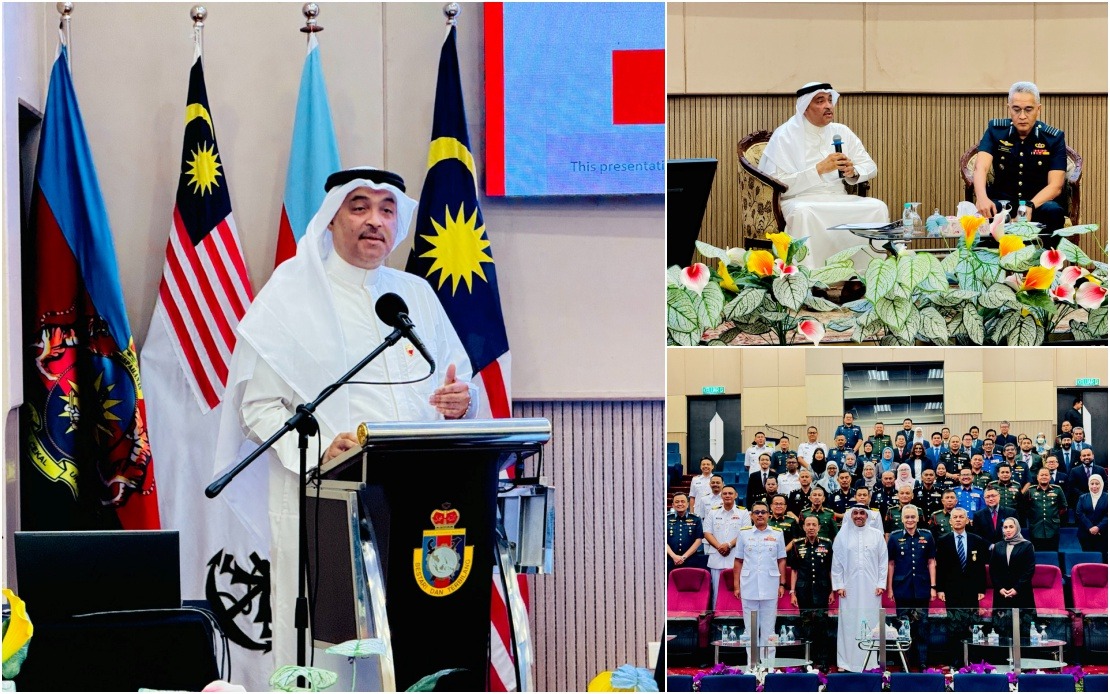
The relationship between Bahrain and Malaysia is entering a new phase of substantive engagement, with both nations committed to broadening their cooperative framework across defence, economic and diplomatic channels. Dr Waleed Khalifa Al Manea, Bahrain's Ambassador to Malaysia, underscored this commitment during a lecture at the National Resilience College in Putrajaya, emphasising that the deepening partnership reflects mutual strategic interests and shared challenges in an increasingly complex geopolitical environment.
The ambassador traced the foundation of this partnership to the personal relationships between the monarchs and prime ministers of both countries. His Majesty King Hamad bin Isa Al Khalifa and His Majesty Sultan Ibrahim have established a framework within which their respective governments—led by Crown Prince and Prime Minister Prince Salman bin Hamad Al Khalifa and Prime Minister Datuk Seri Anwar Ibrahim—are systematically expanding cooperation. This top-level political engagement has translated into concrete initiatives spanning security, maritime affairs, infrastructure protection and diplomatic coordination on international platforms.
A particularly symbolic manifestation of this growing partnership is Malaysia's hosting of the 2026 Formula 1 Gulf Air Bahrain Grand Prix, an announcement that signals both economic collaboration and the normalisation of high-profile bilateral events. Such visible expressions of partnership carry importance beyond their immediate commercial value, demonstrating to regional and global audiences that Malaysia and Bahrain view their relationship as one worth substantial investment and public celebration. For Malaysia, engaging with a Gulf nation on matters of strategic importance reflects the country's broader pivot towards deepening relationships across the Muslim world and emerging economies.
The context for this partnership deepening extends to the volatile security environment affecting the Gulf region and, increasingly, global maritime commerce. Dr Al Manea's address to Malaysian defence and security officials focused on Iran's escalating military actions against Gulf Cooperation Council member states, which have included strikes on civilian infrastructure, vital economic assets and critical shipping lanes. These tensions have reverberated beyond the Middle East, creating supply chain vulnerabilities and security risks that affect ASEAN nations, including Malaysia, which depend on uninterrupted maritime passage through strategically vital waters.
Bahrain's approach to these regional challenges centres on a multifaceted strategy combining military readiness with diplomatic engagement and collective action through international institutions. The kingdom emphasises the protection of civilian populations, the documentation of violations and the advancement of coordinated multilateral responses. During its presidency of the UN Security Council in April, Bahrain advanced initiatives focused on safeguarding maritime routes and ensuring freedom of navigation—issues of paramount concern to Southeast Asian nations with substantial maritime trade.
Malaysia's co-sponsorship of UN Security Council Resolution 2817 demonstrates alignment with Bahrain's security positioning. The resolution reaffirmed the sovereignty of attacked states and underscored the imperative to protect civilians while calling for cessation of hostile actions. This Malaysian support reflects a diplomatic calculation that the country's security interests are enhanced by backing stabilising measures in the Gulf, a region that supplies energy resources critical to Southeast Asian economies and through which Malaysian cargo transits regularly.
The lecture at the National Resilience College, which brought together senior military officers, police commanders, maritime enforcement officials, government representatives and parliamentary members, signalled official Malaysian recognition of Bahrain's security expertise and the relevance of Gulf dynamics to Malaysian defence planning. This multi-agency attendance indicates that Malaysia's national security establishment views the Gulf region as integral to comprehensive threat assessment and strategic planning frameworks.
For Malaysia specifically, the partnership offers several tangible benefits. Bahrain's experience managing complex security challenges in a strategically critical region provides valuable insights for Malaysian officials tasked with navigating regional tensions that could affect shipping lanes, energy supplies and regional stability. Conversely, Malaysia's prominence in ASEAN and its historical role as a bridge between diverse regional powers make it an attractive partner for Bahrain seeking to expand its diplomatic footprint in Asia and build coalitions around shared security concerns.
The economic dimension of the partnership should not be overlooked. Beyond the Formula 1 arrangement, both countries are exploring broader trade and investment opportunities. The presence of Bahrain's ambassador at forums addressing defence and national resilience suggests that economic cooperation is being positioned within a framework of mutual strategic benefit rather than transactional exchanges. This approach aligns with contemporary practice among Gulf states and Southeast Asian nations seeking to build relationships that span multiple sectors and create resilient partnerships less vulnerable to external pressures.
The timing of Dr Al Manea's address is also significant. As the Middle East experiences heightened tensions and maritime security concerns become more acute, Malaysia's decision to host high-level discussions on these topics with Gulf partners demonstrates the country's proactive engagement with global security architecture rather than a reactive posture. This positioning could enhance Malaysia's influence in regional and multilateral forums while simultaneously demonstrating to both Gulf and Southeast Asian audiences that Malaysia takes seriously its role in international security governance.
Looking forward, the consolidation of Bahrain-Malaysia ties reflects broader trends in international relations where geographic distance no longer determines partnership relevance. Shared security challenges, common economic interests and aligned diplomatic positions can bind nations across vast distances. For Malaysia, deepening engagement with Bahrain represents an investment in stability in a region whose disruption could impose significant costs on Malaysian security and prosperity. For Bahrain, the partnership diversifies its international relationships and anchors it within Asia's growing geopolitical importance.

