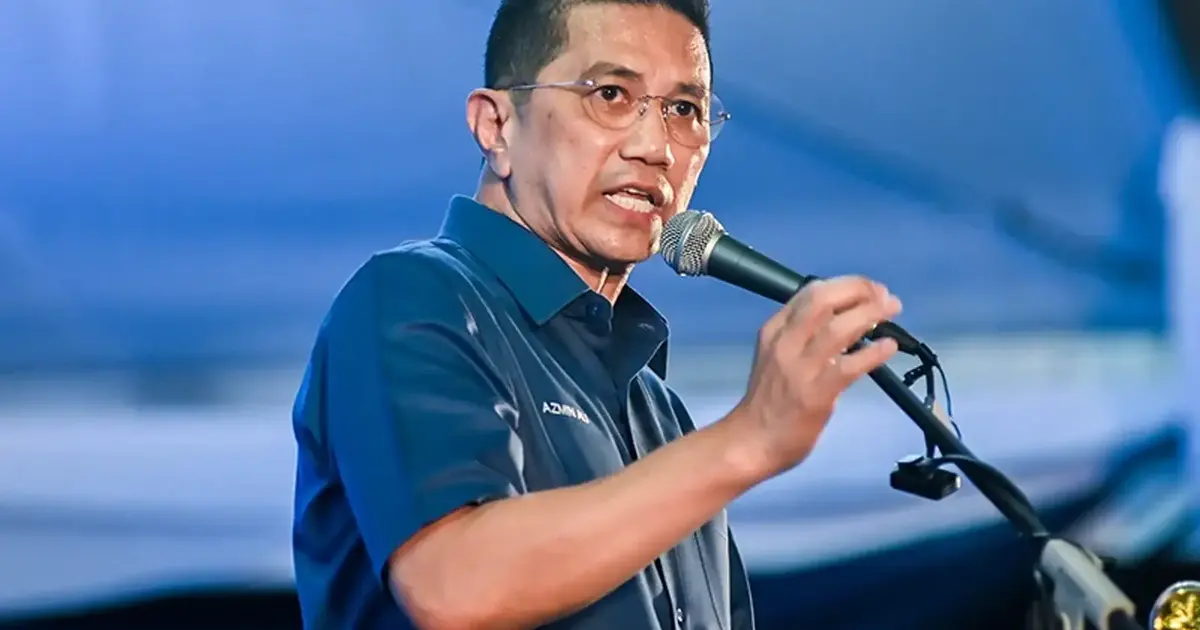
Azmin Ali's profile within Bersatu is drawing fresh scrutiny from Malaysian political analysts, who see in the party's secretary-general a potential facilitator for realignment with Pakatan Harapan should the party's president Muhyiddin Yassin opt to step down from his position. The speculation underscores the intricate web of personal relationships and institutional memory that continues to shape Malaysia's political landscape, particularly as factional tensions within both government and opposition structures remain unresolved.
Azmin's decade-long service as PKR's deputy president represents his most substantial political credential and the principal rationale cited by observers exploring scenarios involving Bersatu's repositioning. During his tenure in that role, he cultivated relationships across PKR's internal hierarchy and developed familiarity with the broader Pakatan ecosystem, credentials that remained relevant even after his departure to join Bersatu. This extended exposure to a major coalition partner provides him with institutional knowledge and personal networks that few other Bersatu figures possess in comparable measure.
The prospect of Muhyiddin's departure carries particular significance given the fractured history between Bersatu and Pakatan Harapan. The rupture that unfolded in early 2020, culminating in Muhyiddin's administration and the subsequent political realignments, left deep schisms within Malaysia's opposition and ruling coalitions. These divisions have proven remarkably durable, with efforts at reconciliation routinely encountering obstacles rooted in personal animosities, distributional conflicts over ministerial positions, and competing narratives about historical responsibility for the 2020 breakdown.
Analysts emphasize that Azmin's positioning as secretary-general places him at the organisational nerve centre of Bersatu, responsibility that entails coordinating party machinery, managing internal communications, and often serving as an intermediary on sensitive political matters. This role historically provides greater visibility and influence than its title might suggest, particularly in Malaysian political parties where administrative positions frequently function as stepping stones toward apex leadership or as power bases within collegial party structures.
The timing of such speculation reflects underlying uncertainty about Bersatu's long-term strategic direction. The party has navigated multiple coalition configurations since its formation, from its initial partnership with Pakatan through the PN arrangement and subsequent adaptations as Malaysia's political terrain shifted repeatedly. Questions about whether Bersatu can sustain its current trajectory or whether alternative alignments might better serve its electoral and policy interests appear to preoccupy party observers and political commentators.
Azmin's pathway through PKR itself merits contextualisation for readers less familiar with Malaysian party dynamics. PKR, as the nominally centrist component within Pakatan's original three-party structure alongside DAP and Amanah, has served as an incubator for figures attempting to bridge ideological and factional divides. The party's internal diversity—encompassing Islamist sympathisers, secular liberals, and pragmatic administrators—creates environments where individuals develop cross-factional competencies. Azmin's maintenance of relationships across this spectrum during his PKR years positioned him as someone capable of navigating complex intra-coalition negotiations.
The invocation of Azmin's name in succession scenarios necessarily raises questions about his own political ambitions and whether such a role would satisfy his career aspirations. Malaysian politics frequently rewards actors who possess both factional standing and perceived neutrality, a delicate balance that Azmin appears to have cultivated. His willingness to leave PKR for Bersatu in the first instance suggests comfort with organisational transitions, though the circumstances differed substantially from the hypothetical scenarios now being discussed.
For regional observers, the Azmin speculation illustrates how Malaysian coalition politics remains substantially personality-driven rather than purely programmatic. Institutional arrangements and voting systems matter, certainly, but the capacity of individual figures to maintain networks, broker compromises, and embody shared historical memories continues exercising outsized influence over political outcomes. Azmin's decade in PKR essentially granted him the role of institutional memory bearer regarding pre-2020 Pakatan arrangements, experience that becomes strategically valuable precisely when coalitions face reconstruction.
The broader implications extend beyond Bersatu's internal deliberations. Any significant repositioning by the party would ripple across government and opposition formations alike, as Bersatu's current placement in ruling arrangements contributes essential parliamentary numbers and ministerial slots to sitting administrations. Conversely, Bersatu's defection toward opposition formations would alter opposition strength calculations and internal distribution of resources. These structural considerations explain why even speculation about leadership transitions generates intense scrutiny among political analysts and party operatives.
Ultimately, whether Azmin ever assumes a central leadership role within Bersatu remains contingent on multiple variables beyond his control or formal positioning: Muhyiddin's own political longevity, broader shifts in Malaysian electoral dynamics, and the willingness of Pakatan Harapan to accommodate Bersatu under revised terms. Nevertheless, his accumulated political capital and historical connections ensure that any serious consideration of Bersatu's future trajectory will necessarily involve assessing what Azmin represents—not merely as an individual, but as a repository of institutional knowledge connecting Bersatu's current circumstances to the pre-2020 political architecture that Malaysian coalitions continue attempting either to resurrect or to overcome.