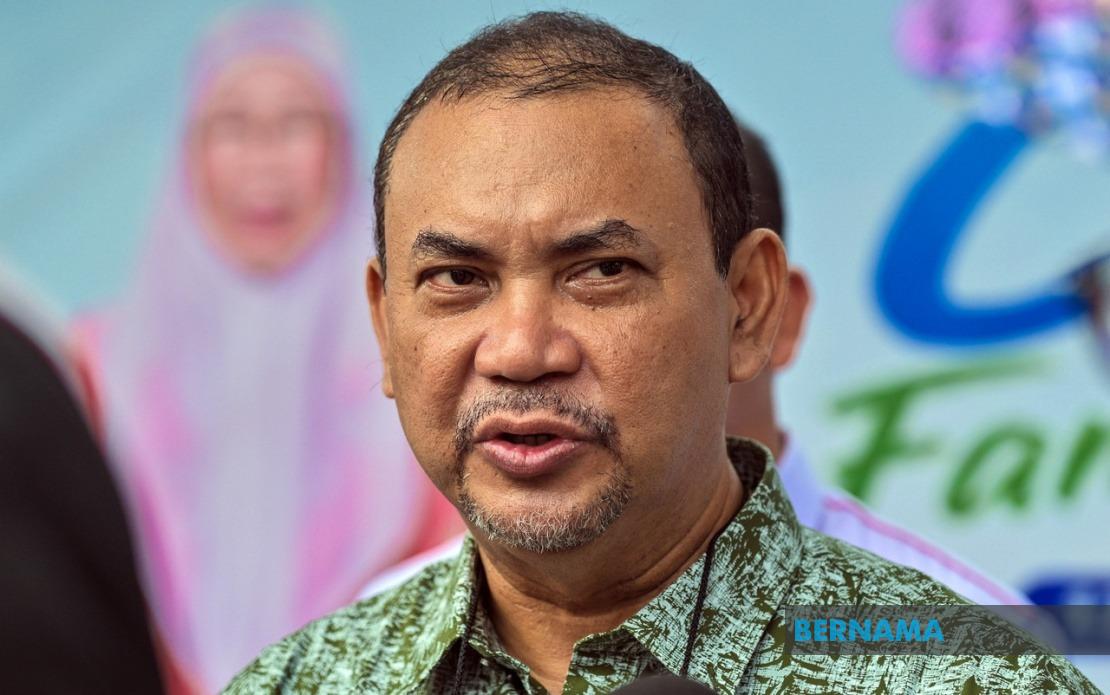
Datuk Azman Abidin, who serves as Prime Minister's Political Secretary and has been tasked with coordinating efforts in Ampang parliamentary constituency, has announced measures to enhance how government welfare reaches residents across his area. The appointment by Prime Minister Datuk Seri Anwar Ibrahim reflects the administration's focus on ensuring that assistance programmes operate with greater clarity and responsiveness at the constituency level, where many citizens first encounter government services.
The coordinator outlined a framework that brings together multiple layers of governance to maximise the impact of welfare initiatives. By working directly with the Implementation Coordination Unit under the Prime Minister's Department, Azman aims to create a unified channel through which assistance flows to beneficiaries. This approach recognises that without proper coordination among various agencies—each with separate mandates and resources—even well-intentioned programmes can fail to reach those most in need or create redundancies that waste public resources.
A key practical element of the new system is the establishment of a direct submission point for welfare applications. Residents seeking assistance can now submit requests to the Office of the Prime Minister's Political Secretary, which will handle the routing and follow-up. This centralisation potentially reduces bureaucratic friction and the confusion residents often face when uncertain which agency handles specific categories of aid, from housing support to educational grants to emergency relief.
Azman has also emphasised coordination with elected representatives at the state level, particularly the assemblymen whose constituencies fall within Ampang. In Malaysia's federal system, state assemblypersons often possess detailed knowledge of community needs and local conditions that federal coordinators may lack. By integrating their input, the system gains grassroots intelligence that should improve targeting and appropriateness of assistance. Community leaders and other local stakeholders are similarly included in this network, ensuring that formal government channels interact with informal community structures where trust and credibility matter greatly.
The emphasis on structured delivery reflects growing recognition across governments in Southeast Asia that welfare effectiveness depends not just on funding levels but on organisational efficiency. Malaysia's social safety net has expanded significantly in recent years, encompassing cash transfers, healthcare support, housing programmes, and educational assistance. Yet without proper coordination, these programmes can overlap, leaving gaps in coverage while some groups receive assistance from multiple schemes. Azman's approach attempts to map needs against available resources more systematically.
The pledge of professionalism, integrity, and accountability in managing these responsibilities carries particular weight in Malaysia's political context. Public trust in welfare administration has occasionally suffered from perceptions of political patronage or misallocation. By explicitly committing to these principles, the coordinator signals that welfare decisions will follow merit-based criteria rather than factional loyalty. For residents in Ampang, a diverse constituency encompassing urban, semi-urban, and peri-urban areas, such reassurance matters when accessing government support.
The Ampang parliamentary constituency spans multiple state assembly divisions and includes communities with varying socioeconomic profiles. From working-class suburbs to middle-class residential areas to informal settlements, residents face different welfare challenges. A one-size-fits-all approach would inevitably miss nuances. The coordinator's model, by maintaining connections with ground-level representatives and leaders, theoretically enables more differentiated responses. A family facing housing precarity may need different support than one struggling with educational costs or healthcare expenses.
For Malaysian policymakers observing this initiative, the model offers insights into how centralised political leadership can work through coordinated structures to improve service delivery without creating new bureaucratic layers. Rather than establishing a parallel welfare agency, the approach works within existing institutional arrangements—the Prime Minister's Department, state assemblies, and community organisations—while designating clear responsibility and communication pathways. This may offer a template applicable elsewhere in the federal system.
The commitment also reflects broader regional trends toward more direct political engagement with welfare delivery. Across Southeast Asia, constituency-level coordination has become more sophisticated as governments seek to demonstrate responsiveness to constituents and ensure that development benefits reach intended beneficiaries. In Malaysia's competitive electoral environment, where governments frequently face challenges from opposition parties, the efficiency of welfare delivery has become both a substantive policy issue and a political one.
Looking forward, the success of this initiative will likely be measured by whether residents actually perceive faster, fairer, and more responsive assistance. Application processing times, approval rates, and satisfaction surveys will provide metrics. Equally important will be whether the coordinated approach reduces the frustration citizens often experience navigating multiple agencies and applying for multiple schemes when a single integrated assessment would be more efficient.
The appointment and Azman's public commitment represent an attempt to translate good governance principles into practical action at the constituency level. In implementation, coordination often proves more challenging than conception. Agencies may resist sharing information or decision-making authority. Local politics may complicate ostensibly neutral welfare determinations. Yet the framework is now in place, and constituents have been given a specific point of contact. Whether this innovation achieves its intended outcomes will depend on sustained commitment and sufficient resources to make coordination meaningful rather than merely symbolic.

