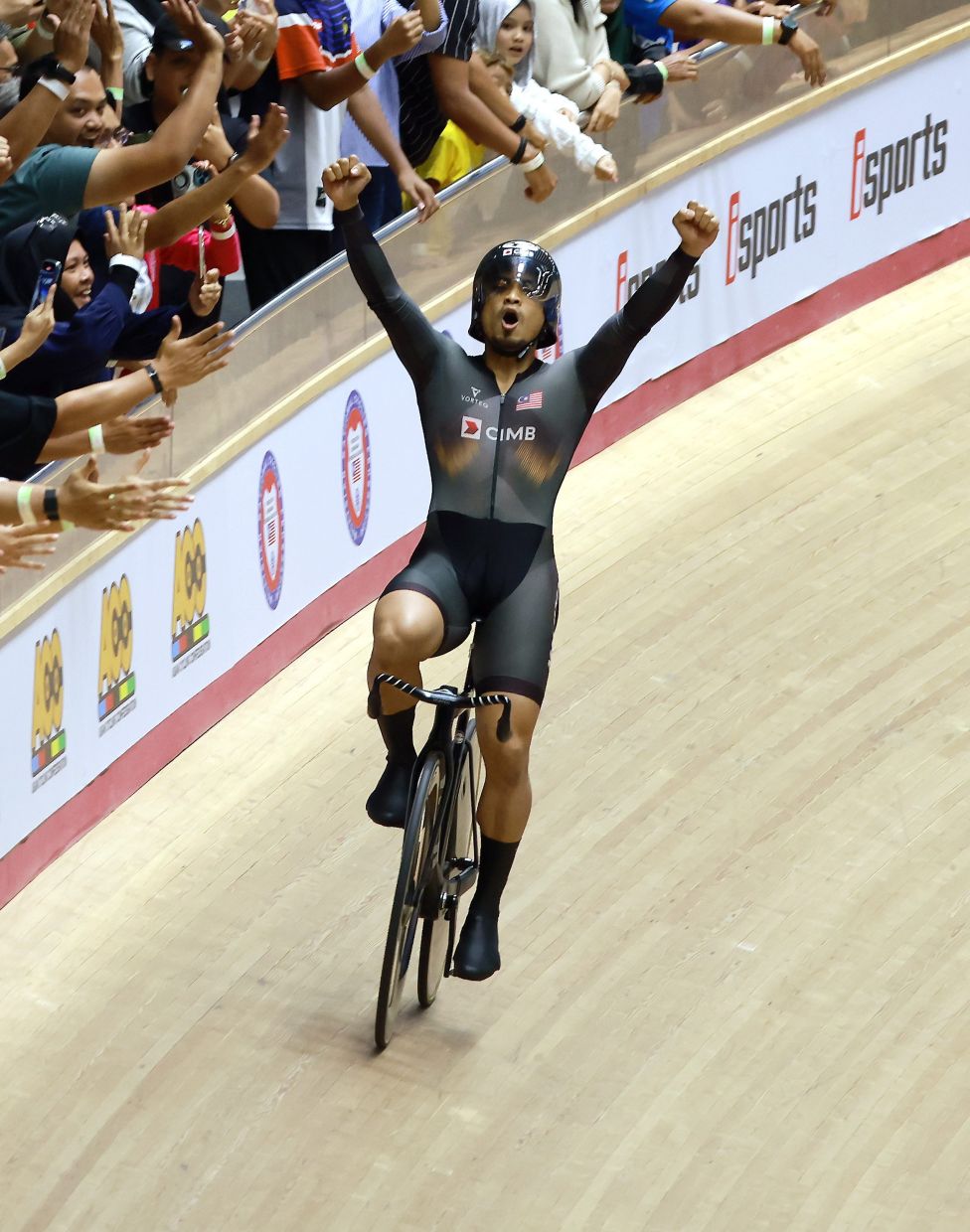
Track cyclist Azizul Awang publicly broke down in tears on Merdeka Day after the National Sports Council (NSC) and Youth and Sports Ministry confirmed they would continue supporting his qualification campaign for the 2028 Los Angeles Olympics. The emotional moment, captured in a video shared on social media from the velodrome in Petaling Jaya, marked a turning point for one of Malaysia's most decorated cycling athletes, who had spent weeks in anguished uncertainty about whether officials would back his Olympic ambitions.
Azizul's emotional response underscored the psychological toll of the delay. The 38-year-old revealed that the uncertainty had so deeply affected him that he had been unable to train effectively for an entire week preceding the announcement. During his first training session after the break, he described feeling physically and mentally disconnected from his sport—a telling indicator of how the lack of official clarity had preyed on an athlete accustomed to performing under pressure. The receipt of the confirmation email on Monday (Aug 31) therefore represented not merely an administrative decision but a profound validation of his worth and commitment to the nation.
The Malaysian National Cycling Federation (MNCF) had earlier confirmed that both the NSC and the ministry had formally committed to providing Azizul with the necessary resources to pursue his Olympic qualification. This backing carries substantial practical implications, as preparing for an Olympic Games requires consistent funding for training camps, international competition travel, coaching support, and sports science services. For an athlete in his late thirties looking to compete at an elite level against younger competitors, such institutional support is indispensable to maintaining competitive standards.
Azizul's situation had become increasingly fractious in recent weeks, reflecting broader tensions within Malaysian sports administration. The cyclist had made his frustration public across social media platforms, essentially forcing the hand of sports officials who had appeared reluctant or unable to make a timely decision about his future. His willingness to voice his concerns publicly stood in marked contrast to the typical deference Malaysian athletes show toward government sports bodies, indicating the genuine desperation he felt regarding the uncertainty.
The delay in confirmation had occurred against the backdrop of the Glasgow Commonwealth Games, which took place earlier in the cycle. Azizul had indicated from that point onwards that he urgently needed clarity on whether officials would support his Olympic campaign. His demand for a definitive answer was not unreasonable given that elite athletes typically require months of structured preparation, access to specialist facilities, and competitive scheduling to maintain qualification eligibility. The protracted silence from the NSC and ministry had effectively placed him in a state of competitive limbo.
Public support for Azizul's cause had swelled significantly, with thousands of Malaysians expressing solidarity through social media commentary and direct messages. This groundswell of backing had placed considerable reputational pressure on Youth and Sports Minister Dr Taufiq Johari and the NSC, both of whom faced criticism for the apparent indecision. The court of public opinion had essentially intervened where administrative processes had stalled, a dynamic that speaks to Azizul's standing as a national sporting icon and the Malaysian public's investment in Olympic success.
Azizul's previous achievements warrant the public enthusiasm around his continued involvement. As a former keirin world champion, he represents Malaysia's most credible prospect in track cycling on the Olympic stage. The keirin event, which requires explosive power and tactical acumen in a sprint format, has been a particular showcase for his talents. His track record at major competitions positions him as a genuine medal contender rather than a participant competing merely for experience.
The cyclist had previously stated his intention to retire from competitive racing after Los Angeles 2028, indicating that this Olympic cycle would represent his final competitive campaign. This context had made the uncertainty particularly acute, as a delayed decision at age 38 effectively reduced the remaining preparation window for a final Olympic tilt. Unlike younger athletes with multiple Olympic cycles ahead, Azizul's temporal urgency was considerably greater.
In expressing gratitude to the Malaysian public for their support, Azizul acknowledged the power of grassroots solidarity in influencing sports governance outcomes. His comments reflected appreciation not just for symbolic backing but for what he viewed as material assistance in shifting official positions. The message carried an implicit recognition that institutional decision-making in Malaysian sports sometimes requires public pressure to move forward, a reality that both reflects the strengths and limitations of the current system.
Looking forward, Azizul's confirmation opens a structured pathway toward Los Angeles qualification. The support commitment from NSC and the ministry signals that Malaysia's cycling program will now prioritize his Olympic campaign, potentially translating into training opportunities abroad, competition invitations to qualifying events, and technical coaching resources. Such backing becomes crucial in track cycling, where competition is increasingly international and technical standards continue rising.
The resolution of Azizul's situation also carries broader implications for how Malaysia manages its elite athletes and Olympic aspirations. The controversy had highlighted gaps in communication and decision-making processes that left athletes vulnerable to uncertainty precisely when decisive institutional support was most needed. As Malaysia prepares for Los Angeles 2028, ensuring timely and transparent decisions about athlete support will remain essential to converting potential into actual Olympic success.
For Azizul personally, the confirmation represents not only vindication but also liberation—the psychological space needed to redirect his considerable talent toward the singular goal of Olympic qualification. Having fought for clarity and won the backing he requested, the athlete can now channel his remaining competitive years toward achieving what would represent a fitting conclusion to an extraordinary cycling career in service of the nation.

