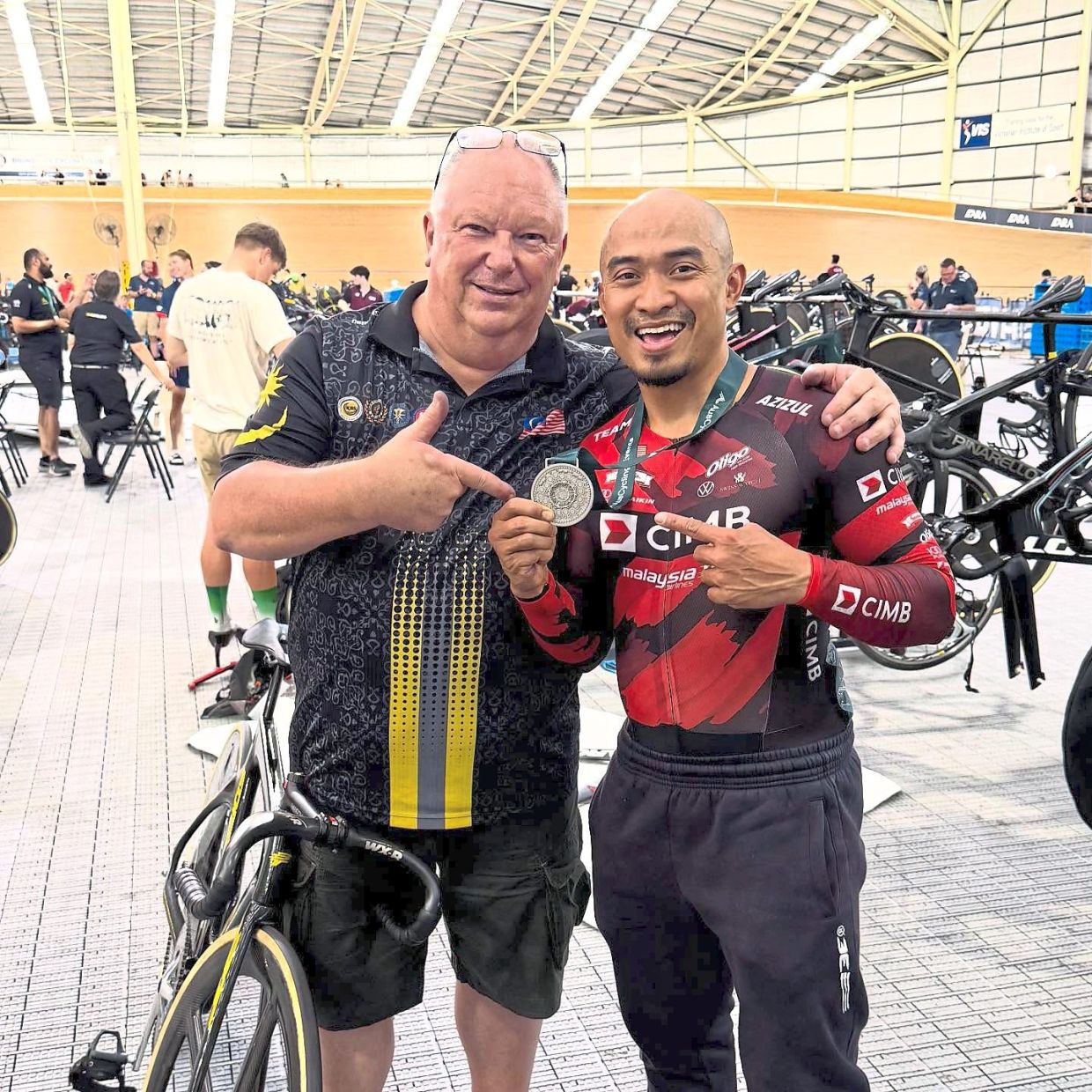
National track cyclist Azizulhasni Awang has stepped into the contentious debate surrounding technical director John Beasley with eyes wide open, candidly acknowledging that his public support for the embattled Australian coach will likely paint a target on his back. The two-time Olympic medallist recognises the political minefield he is navigating but says he is prepared to weather whatever storm follows, including potential character attacks if Malaysia's performances at the Commonwealth Games and Asian Games fall short of expectations.
Azizul's willingness to defend Beasley marks a significant moment in Malaysian track cycling's internal power struggle. The veteran sprinter understands the mechanics of blame and public opinion well enough to anticipate that detractors will seize upon any disappointing results as ammunition to attack not only the technical director but also those who have championed his cause. This knowledge has not deterred him, however, reflecting the depth of his conviction about Beasley's contributions to the sport.
The Tokyo 2020 Olympics silver medallist has articulated his reasoning with refreshing directness. He views his defence of Beasley as a moral obligation rooted in the coach's tangible impact on Malaysian cycling over two decades. Beasley's track record in developing world-class riders—with Azizul himself serving as perhaps the most visible example of this success—appears to weigh heavily in the cyclist's calculation. From Azizul's perspective, defending someone who has meaningfully contributed to the nation's sporting achievements is simply the right course of action, consequences notwithstanding.
What distinguishes Azizul's stance is his explicit acknowledgment of the personal risks involved. He has not sugar-coated the reality that critics may attempt to diminish his credibility or exploit any future setbacks at major competitions. This transparency suggests a level of maturity and acceptance of political reality that is refreshingly uncommon in Malaysian sports discourse, where athletes often either retreat into silence or engage in carefully worded diplomatic statements.
Azizul's faith appears central to his willingness to absorb potential criticism. He has cited his religious conviction as the foundation of his courage, suggesting that his belief in divine will provides the psychological fortitude to act according to his conscience rather than political calculation. This framing transforms what might otherwise appear as a risky career move into an act of principle grounded in personal spirituality.
The underlying conflict that prompted Azizul's defence stems from significant tension within Malaysia's cycling infrastructure. The Malaysia National Cycling Federation has initiated disciplinary action against two individuals from state affiliates who publicly criticised Beasley without following official administrative procedures. The federation's president, Datuk Amarjit Singh Gill, indicated that these individuals had damaged the national body's reputation through their approach to lodging complaints.
This disciplinary response reveals the federation's determination to maintain institutional order and prevent what leadership views as destructive internal warfare conducted through public channels. The decision to issue show-cause letters suggests that the federation prioritises proper protocol over allowing unfiltered public debate about technical leadership—a stance that has likely polarised opinion within Malaysian cycling circles.
Azizul's intervention into this dispute carries particular weight because of his standing as one of Malaysia's most successful track cyclists. His Olympic credentials and competitive pedigree give his words considerable influence among younger athletes, federation officials, and cycling enthusiasts. When someone of his stature publicly backs a controversial figure like Beasley, it sends a message that carries far beyond mere opinion—it functions as tacit endorsement from someone with proven ability to deliver results.
Looking forward, Azizul has signalled that his primary focus remains ensuring smooth preparations for the Commonwealth Games and Asian Games rather than engaging in prolonged public debate. This strategic positioning allows him to defend Beasley without appearing to wage a personal campaign against his critics. Instead, he frames his support as secondary to the overarching mission of achieving athletic excellence on the international stage.
The timing of Azizul's public support is significant given that major competitions loom on the horizon. Any failure to produce medal-winning performances will inevitably resurrect questions about Beasley's effectiveness and leadership, potentially validating the concerns of those who have criticised him. Conversely, strong performances could vindicate both Beasley's methods and Azizul's judgment in defending him.
For Malaysian sports observers, this situation encapsulates broader tensions between institutional authority, individual expression, and the pursuit of sporting excellence. Azizul's willingness to stand behind Beasley despite knowing the potential personal cost demonstrates that at least some athletes are willing to engage with these difficult questions rather than remain safely silent. Whether his courage proves justified will ultimately depend on whether the anticipated athletic success materialises at the Commonwealth Games and Asian Games.