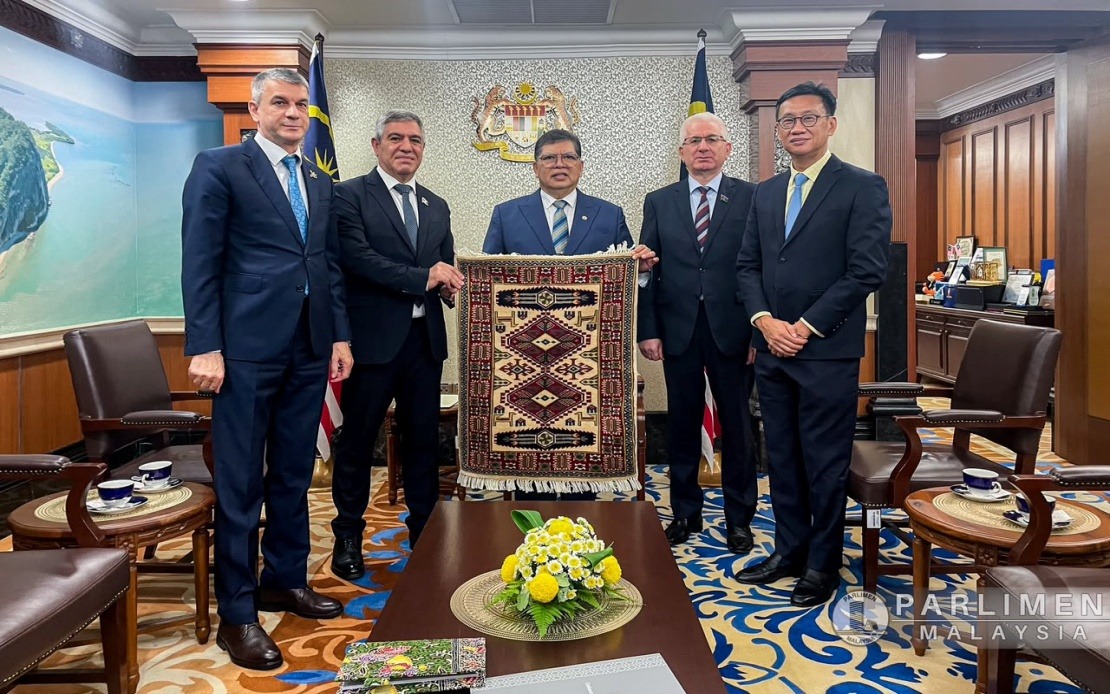
A high-level delegation from Azerbaijan's parliament has concluded a working visit to Malaysia aimed at broadening parliamentary collaboration and economic engagement between the two countries. Vugar Bayramov, who heads the Working Group for Azerbaijani-Malaysian Interparliamentary Relations in the Azerbaijani Parliament, led the mission alongside fellow legislator Bakhtiyar Aliyev. The visit represents a significant effort by Baku to strengthen institutional connections with one of Southeast Asia's leading economies and a key regional player with considerable influence in international affairs.
During their time in Kuala Lumpur, the Azerbaijani visitors engaged in a structured programme of official calls and substantive discussions with Malaysia's top parliamentary leadership. Bayramov and Aliyev met with Tan Sri Johari Abdul, Speaker of the Dewan Rakyat, establishing direct communication channels with the lower house of parliament. These courtesy calls serve an important diplomatic function, signalling respect for Malaysia's legislative institutions while providing opportunities for face-to-face dialogue on matters of mutual interest. Such personal connections between parliamentarians often facilitate smoother cooperation on future legislative initiatives and bilateral matters requiring legislative action.
Beyond the ceremonial aspects, the delegation engaged with key parliamentary committees responsible for Malaysia's external relations. Wong Chen, who chairs the Malaysian Parliament's Special Select Committee on International Relations and International Trade, met with the Azerbaijani visitors to discuss frameworks for enhanced bilateral commerce and diplomatic coordination. Similarly, discussions with Zahir Hassan, chairman of the West Asia Friendship Group, underscored the cultural and geopolitical dimensions of the relationship. These committee-level engagements carry particular weight, as they directly influence Malaysia's policy directions on trade agreements, foreign investment protocols, and regional diplomatic positioning.
The delegation's meeting with Dewan Negara President Datuk Awang Bemee Awang Ali Basah at Malaysia's upper house reflected the comprehensive nature of the parliamentary engagement. Both sides utilised the opportunity to exchange perspectives on deepening institutional ties, exploring avenues for enhanced legislative cooperation, and identifying specific areas where parliamentary collaboration could yield tangible benefits. Such bilateral dialogue between upper and lower house leadership signals to both governments and publics that parliamentary relations command serious attention at the highest levels, helping to insulate cooperation from short-term political fluctuations.
The economic dimension of the visit proved equally substantial, with the Azerbaijani delegation meeting with S. Gnanasambanthan, secretary-general of the Malaysian National Chamber of Commerce and Industry, alongside representatives from more than twenty Malaysian business entities. This broad-based business engagement reflects recognition that durable international relationships rest not solely on governmental foundations but on robust commercial ties that create mutual prosperity and stakeholder interest in maintaining stability. The inclusion of multiple private sector participants demonstrates Malaysian business community interest in exploring Azerbaijani market opportunities and potential investment corridors.
During these business-focused discussions, both delegations focused on identifying concrete mechanisms for expanding bilateral trade and investment flows. The conversations centred on establishing more robust business-to-business connections, uncovering untapped commercial opportunities, and developing frameworks for collaborative ventures across sectors. For Malaysian enterprises, Azerbaijan offers potential markets in energy, infrastructure development, and technology sectors, while Azerbaijani businesses may find opportunities in Malaysia's well-developed financial services, manufacturing, and technology sectors. Such expansions typically require sustained engagement between business communities, suggesting the current visit is positioned as an opening phase rather than a singular occurrence.
Dewan Rakyat Speaker Johari Abdul's public comments following the meeting contextualised the parliamentary engagement within broader geopolitical trends. His observation that diplomatic initiatives centred on personal relationships and human connections remain vital amid contemporary uncertainties carries particular resonance for Southeast Asia, a region navigating great power competition and complex regional alignments. Johari's emphasis on people-centred diplomacy transcending formal protocols and national boundaries reflects a sophisticated understanding of how parliamentary diplomacy functions as a supplement to traditional government-to-government channels, often providing greater flexibility and informality.
The timing of this visit reflects Azerbaijan's strategic interest in diversifying its international partnerships and strengthening ties with influential regional economies. For Malaysia, engaging with Caucasus region nations supports its longstanding commitment to maintaining broad, non-aligned international relationships and expanding economic partnerships across diverse geographies. The bilateral connection also carries symbolic importance, demonstrating both nations' commitment to South-South cooperation and strengthening of ties among developing and middle-income economies navigating complex international environments.
Looking forward, the outcomes of this parliamentary visit likely position both nations to pursue more structured cooperation frameworks. Parliamentary delegations of this calibre typically precede or accompany negotiations on trade agreements, investment protection protocols, or cultural exchange programmes. The establishment of working groups and committee-level engagement mechanisms creates institutional structures capable of sustaining dialogue beyond individual visits, building institutional memory and continuity that proves essential for long-term bilateral relationship development.
For Malaysian policymakers and business interests, the Azerbaijani delegation visit signals recognition of Malaysia's strategic importance in regional and international affairs. Azerbaijan, positioned between Europe, Asia, and the Middle East, represents a potential gateway for Malaysian companies seeking broader geographic presence and access to Central Asian and Caucasus markets. Conversely, Malaysian expertise in areas including Islamic finance, palm oil processing, and semiconductor manufacturing may hold particular interest for Azerbaijani counterparts exploring economic diversification and modernisation initiatives. The foundation established during this visit will likely require consistent follow-up, additional high-level visits in both directions, and substantive progress on specific commercial and legislative initiatives to translate diplomatic goodwill into concrete institutional and economic outcomes.

