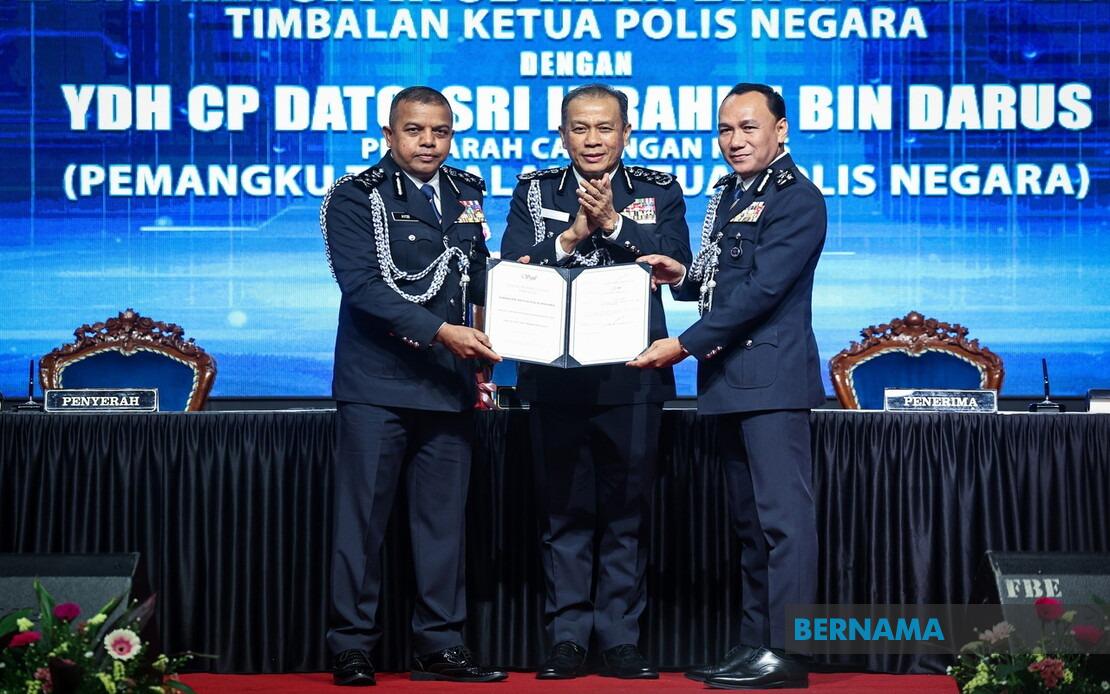
Tan Sri Ayob Khan Mydin Pitchay concluded his tenure as Deputy Inspector-General of Police on July 26, stepping down after more than three decades of service with the Royal Malaysian Police. At a handover ceremony in Kuala Lumpur, Inspector-General Tan Sri Mohd Khalid Ismail paid tribute to Ayob Khan's distinguished career, characterising him as an exemplary leader whose tenure embodied the values of commitment, firmness and integrity that define professional policing in Malaysia.
Mohd Khalid's remarks underscored the consistency Ayob Khan demonstrated in upholding judicial principles throughout his extensive police career. Rather than merely describing Ayob Khan as a competent administrator, the IGP emphasised the principled nature of his leadership—suggesting that Ayob Khan possessed the fortitude to make difficult decisions based on legal and ethical grounds even when facing institutional or political pressure. This quality proves particularly significant given the Malaysian police force's ongoing efforts to restore public confidence following years of scrutiny over operational practices and accountability.
The retiring deputy's 35-year journey through the police ranks reflected the breadth of experience expected in Malaysia's senior command structure. Ayob Khan held significant responsibility across the Special Branch, the Counter-Terrorism Division, and the Johor police contingent, positions that demanded strategic thinking and operational excellence in sensitive security matters. His progression through the Narcotics Criminal Investigation Department and ultimately the Bukit Aman Criminal Investigation Department positioned him to understand the institutional challenges facing Malaysia's law enforcement apparatus across multiple domains.
As a graduate of Universiti Kebangsaan Malaysia, Ayob Khan represented the professionally educated cadre within Malaysia's police hierarchy. His academic background, combined with ground-level operational experience, created a leader conversant in both contemporary policing theory and practical police work. This combination has become increasingly important as the PDRM navigates modernisation efforts aimed at enhancing investigative capabilities and aligning with international standards.
The recognition of Ayob Khan's combat against militant elements took on particular resonance in Southeast Asia's contemporary security environment. Malaysia has confronted persistent terrorism-related threats spanning the past two decades, requiring specialised expertise in counter-insurgency and intelligence gathering. Ayob Khan's demonstrated commitment to safeguarding institutional integrity while addressing these challenges suggested he maintained ethical standards even in high-pressure security operations—a quality the IGP explicitly identified as worthy of emulation across the police hierarchy.
Succeeding Ayob Khan as Acting Deputy Inspector-General of Police is Datuk Seri Ibrahim Darus, previously the director of Bukit Aman Special Branch. The transition reflects continuity in the leadership structure, with Ibrahim stepping into the role from another critical command position within the force's intelligence apparatus. Mohd Khalid extended his confidence in Ibrahim's ability to sustain the institutional excellence his predecessor had established, calling upon the incoming deputy to perpetuate the standards Ayob Khan exemplified.
The ceremonial nature of the handover carried symbolic importance beyond mere administrative succession. Public acknowledgment of Ayob Khan's adherence to the rule of law sends a signal regarding the police leadership's commitment to professional standards and ethical conduct. In a regional context where questions about police accountability sometimes dominate public discourse, such explicit emphasis on principled leadership contributes to broader efforts at institutional rehabilitation and credibility-building.
Ayob Khan's appointment as the 29th Deputy Inspector-General in June 2023 represented the culmination of his steady progression through critical operational and administrative positions. His relatively recent elevation to this apex position—followed by a relatively brief tenure—reflects broader structural dynamics within Malaysia's police command, where senior appointments respond to institutional needs and sometimes to broader political considerations affecting the force's strategic direction.
The IGP's comment regarding Ayob Khan as a "loyal comrade" navigating institutional "storms and challenges" carried implicit recognition of the complexities inherent in senior police leadership. The phrase suggested awareness of pressures senior officers face while attempting to maintain professional integrity and enforce the law consistently. Such candour about the difficulty of leadership at this level demonstrates the IGP's understanding of the operational realities and competing demands facing those in command positions.
For Malaysian law enforcement more broadly, Ayob Khan's departure marks the conclusion of an era characterised by engagement with evolving security threats and internal institutional reforms. His successor enters the role amid ongoing transformation within the PDRM, including technological upgrades, training enhancements, and systemic efforts to strengthen accountability mechanisms. The transition thus represents both acknowledgment of past service and preparation for future challenges.
The implications of this leadership change extend beyond police administration to the broader governance landscape in Malaysia. The quality of police leadership directly influences institutional performance in areas ranging from criminal investigation to counter-terrorism operations, affecting public safety and the protection of civil liberties. Explicit recognition of ethical leadership standards in public forums contributes to establishing cultural expectations within the force regarding how senior officers should conduct themselves and make decisions.
As the Malaysian police continue modernising their operations and responding to transnational security threats affecting the region, the transition in deputy leadership occurred at a critical juncture. Ibrahim Darus inherits not only administrative responsibilities but also the expectation of maintaining the standards Ayob Khan's public commendation has come to represent. The way Ibrahim shapes his tenure as Acting Deputy IGP will influence perceptions of institutional continuity and the police force's commitment to upholding constitutional principles.

