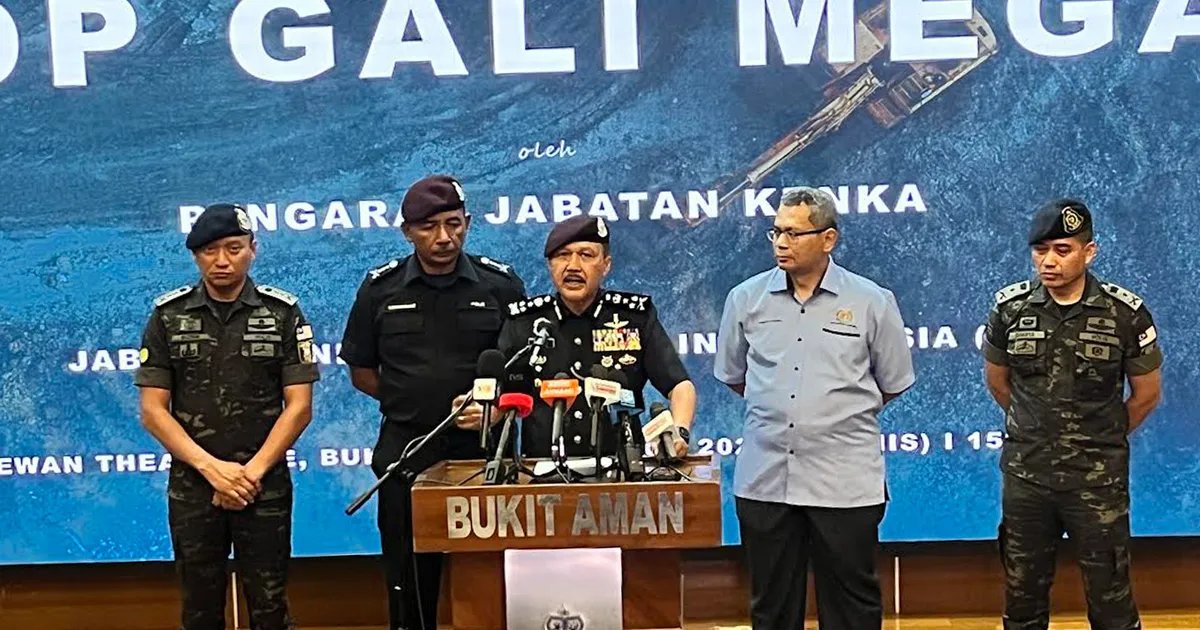
Malaysia's enforcement agencies have delivered a significant blow against illegal mining networks, arresting 99 individuals and confiscating RM119 million in assets during an intensive five-day operation conducted from August 19 to 23. The coordinated crackdown represents one of the more substantial enforcement efforts in recent months, signalling renewed determination by authorities to combat the persistent problem of unregulated resource extraction that continues to plague the country's mining sector.
The operation successfully recovered approximately 33,000 tonnes of illegally extracted natural resources, comprising coal, quarry stone, earth and sand, with an estimated combined value of RM21 million. This substantial haul of raw materials underscores the scale at which illegal mining operations function in Malaysia, often operating across multiple sites and involving complex networks of suppliers, transporters and buyers who profit from circumventing environmental and safety regulations.
Illegal mining remains a chronic challenge for Malaysian authorities, driven by strong regional demand for construction materials and the high profit margins available when operators avoid licensing fees, environmental compliance costs, and proper rehabilitation obligations. The problem is particularly acute in states with significant mineral deposits and weaker enforcement capacity, where syndicates exploit geographical advantages and logistical networks to move materials quickly across borders or into the formal supply chain.
The coordination required to execute this five-day operation across multiple locations demonstrates improved interagency collaboration, likely involving the Ministry of Natural Resources, local authorities, police and possibly customs enforcement. Such integrated approaches have proven more effective than isolated enforcement actions, as they disrupt entire supply chains rather than targeting individual sites. The seizure of RM119 million in related assets—likely equipment, vehicles, machinery and financial instruments—strikes at the operational capacity of these criminal networks and raises the financial cost of engaging in illegal extraction.
For Malaysia's construction and manufacturing sectors, illegal mining represents both a competitive distortion and a supply chain risk. Legitimate quarrying operations and licensed mining companies face unfair competition from unregulated competitors offering cheaper materials produced without proper safety systems, environmental restoration, or labour protections. Construction projects using materials sourced through illegal channels expose contractors and developers to legal liability and reputational damage, particularly as international environmental and due diligence standards tighten.
The environmental impact of uncontrolled extraction cannot be overstated. Illegal mining operations typically leave behind degraded landscapes without proper rehabilitation, creating water pollution, soil erosion, and habitat destruction. Unlike licensed operations required to undertake restoration activities and post-extraction land use planning, illegal miners extract resources and abandon sites, leaving local communities to bear the long-term costs of environmental damage and safety hazards.
The enforcement success also carries implications for Southeast Asia's broader struggle with transnational resource trafficking. Malaysia's location and established logistics networks make it vulnerable to becoming a transit point for illegally extracted materials from across the region, particularly as demand for raw materials in China and other major economies remains robust. Disrupting major smuggling networks in Malaysia has ripple effects throughout regional supply chains.
However, the persistence of large-scale illegal mining despite repeated enforcement operations suggests that sustained crackdowns alone are insufficient without addressing underlying drivers. These include inadequate licensing processes that create barriers for legitimate small-scale operators, weak penalties that amount to minor business costs for large syndicates, and insufficient inspection capacity relative to the number of active mining sites across Malaysia's vast geography.
Moving forward, authorities will need to balance intensive enforcement operations with structural reforms to the mining licensing system, stronger penalties that genuinely deter participation in illegal networks, and investment in detection technology such as satellite monitoring to identify new extraction sites more rapidly. Cooperation with state governments is equally critical, as mining administration and enforcement largely fall under state jurisdiction, requiring sustained political commitment at both federal and state levels.
The August operation also highlights the importance of community reporting and tip-offs in detecting illegal mining activities, which often operate in remote areas where government presence is limited. Public awareness campaigns that emphasize environmental and safety risks, combined with accessible reporting mechanisms, can amplify enforcement capabilities beyond what government resources alone can achieve.
The 99 arrests and RM119 million in asset seizures represent a tactical victory in Malaysia's ongoing enforcement efforts, but the true measure of success will be whether such operations increasingly dismantle the economic viability of illegal mining networks, or whether they remain episodic responses to a problem that continues to grow. Sustained pressure, combined with systemic improvements to governance and compliance frameworks, will be necessary to finally bring Malaysia's illegal mining sector under effective control.

