Malaysia's Prime Minister's Department (Religious Affairs) has launched an investigation into allegations that a Department of Islamic Development Malaysia (JAKIM) reference number was improperly used to validate a marriage declaration letter distributed by the Malaysia Rohingya Ulama Council. The inquiry comes after a document bearing the reference "JAKIM.PERH/LN.800-7(5)" circulated widely across social media platforms, prompting concerns about whether the letter carries legitimate institutional backing.
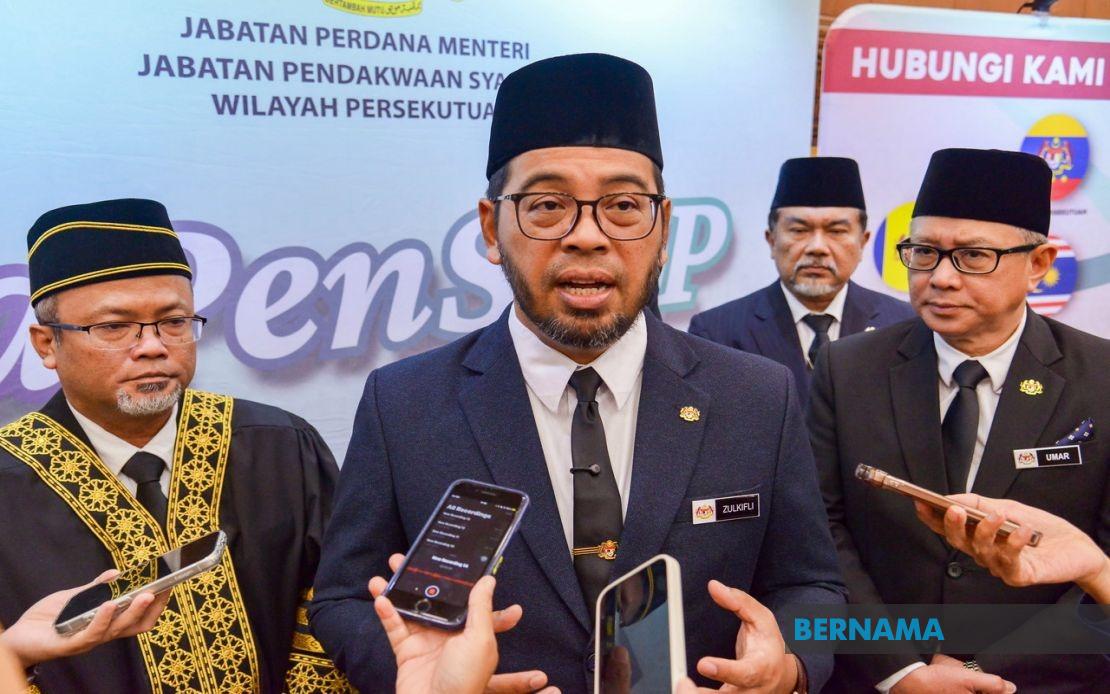
Minister Dr Zulkifli Hasan announced the probe on July 15 following the opening of the second Malaysian Syariah Prosecutors Conference (PePSSM) 2026 in Putrajaya. Speaking to reporters, he indicated that his department had not yet compiled sufficient details about the matter but assured the public that a thorough examination would proceed. The development highlights growing scrutiny surrounding religious documentation practices and the potential misuse of official institutional identifiers within Malaysia's Muslim community.
The controversy deepened after the Perak Islamic Religious Department (JAIPk) publicly stated that it does not recognise the marriage declaration letter as a legally valid document. Officials from JAIPk further clarified that marriages involving members of the Rohingya community cannot be registered through standard channels, citing unresolved policy questions that remain under review by state religious authorities. This position underscores the complex intersection of immigration law, religious administration, and the status of stateless or undocumented populations within Malaysia's Islamic legal framework.
The Rohingya population in Malaysia faces significant legal and administrative challenges, with many lacking citizenship or formal documentation status. Marriage registration represents a critical issue for community members seeking to formalise unions and protect spousal and inheritance rights. The alleged misuse of a JAKIM reference number suggests that some community leaders may be attempting to create workarounds to bypass restrictions that prevent standard registration procedures. This dynamic reflects broader tensions between humanitarian concerns for the displaced population and the regulatory structures that govern Islamic affairs across Malaysian states.
Beyond the immediate marriage document controversy, Dr Zulkifli identified another pressing regulatory concern: religious lectures and teachings being delivered online without proper accreditation. He acknowledged that his department continues to review mechanisms for addressing this phenomenon, though he emphasised that responsibility for regulating religious teaching credentials ultimately rests with state governments. This delineation of authority reflects Malaysia's federal structure, wherein Islamic affairs fall primarily under state jurisdiction rather than federal control, creating coordination challenges when addressing nationwide issues.
The minister outlined the government's cautious approach to enforcing accreditation standards in digital spaces, noting that legal considerations complicate enforcement efforts. He indicated that the department is studying optimal strategies to regulate online religious content while respecting constitutional and jurisdictional boundaries. At the departmental level, officials attempt to ensure that individuals invited to appear on government-affiliated platforms or media channels possess proper qualifications, though this does not extend to private social media dissemination beyond state oversight.
Enforcement officers responsible for religious compliance, known locally as Pegawai Penguatkuasa Agama (PPA), face mounting difficulties in curtailing unaccredited teaching activities conducted via digital platforms. The borderless nature of online communication renders traditional enforcement approaches insufficient, while the sheer volume of religious content generated daily across social media platforms exceeds monitoring capacity. Dr Zulkifli's acknowledgment of these enforcement challenges suggests that the government recognises the need for enhanced tools and inter-agency cooperation to address the problem systematically.
Addressing a broader institutional need, the minister called for strengthened Syariah prosecution capabilities to meet contemporary challenges, particularly those involving digital crimes and cyber-related offences. He advocated for enhanced collaboration between JAKIM, the Malaysian Communications and Multimedia Commission (MCMC), the Royal Malaysia Police (PDRM), and the Attorney General's Chambers to ensure coordinated and effective enforcement of Islamic law. This multi-agency approach reflects recognition that modern legal violations increasingly transcend traditional institutional boundaries.
Syariah prosecutors must develop competencies in digital forensics, data analysis, and emerging technologies to effectively investigate and prosecute cases involving cyber fraud, online harassment, and digital manipulation—areas where Islamic law previously had limited application frameworks. The government's emphasis on prosecutorial capability development signals its intention to modernise Islamic legal enforcement mechanisms without abandoning traditional jurisprudential principles. Such technical advancement could prove particularly relevant to cases involving document fabrication and misrepresentation of institutional credentials, as in the JAKIM reference number controversy.
The marriage document investigation reflects a wider pattern of challenges facing Malaysia's Islamic administration as it grapples with enforcing regulations across digital platforms while managing vulnerable populations with ambiguous legal status. The convergence of Rohingya humanitarian concerns, regulatory jurisdiction complexities, and digital governance gaps illustrates how contemporary religious affairs administration requires solutions extending beyond traditional bureaucratic frameworks. As Malaysia continues developing mechanisms to address these multifaceted issues, cases such as this one will likely inform future policy approaches to religious accreditation, document validation, and community-specific legal accommodations within the Islamic system.

