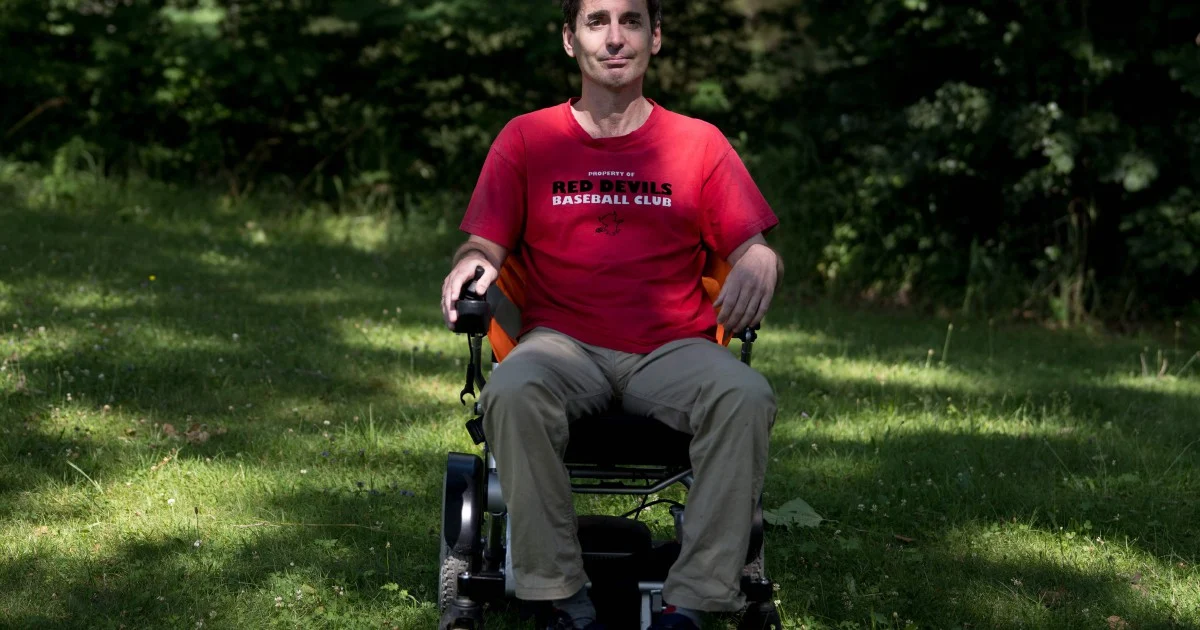
An Austrian man in a wheelchair has filed legal action against his government, arguing that the country's insufficient response to climate change violates his fundamental rights. Mex Muellner, who relies on a wheelchair for mobility, contends that recurring heatwaves create hazardous conditions that disproportionately affect people with disabilities, making the government's climate inaction a matter of human rights.
Muellner's decision to pursue the case stems from his personal experience enduring extreme temperatures while managing his disability. During periods of intense heat, individuals with mobility constraints face particular challenges—whether accessing air-conditioned spaces, obtaining adequate hydration, or managing the physical toll that elevated temperatures place on their bodies. For wheelchair users and others with disabilities, heatwaves transform from an inconvenience into a serious health and safety issue, yet climate policy has historically overlooked these specific vulnerabilities.
The Austrian case emerges within a broader international context where vulnerable populations increasingly seek legal remedies for climate inaction. Europe has witnessed a surge in climate litigation, with citizens and groups filing cases against governments for failing to meet climate commitments or establish sufficient protective measures. These lawsuits reflect growing public frustration with the perceived gap between political promises and concrete action on emissions reduction and climate adaptation.
Austria, despite its reputation as an environmentally conscious nation, has faced criticism for not implementing climate policies at the pace and scale that scientists consider necessary. The country's climate targets, while ambitious on paper, have not translated into sufficiently rapid reductions in greenhouse gas emissions. This tension between stated goals and actual progress forms the crux of Muellner's legal complaint—that rhetorical commitment to climate action does not satisfy the urgency demanded by the science or the rights of vulnerable citizens already experiencing harmful effects.
The strategic framing of climate action as a human rights issue represents a significant development in climate litigation. By anchoring his case in rights discourse rather than purely environmental arguments, Muellner's legal strategy appeals to fundamental protections that courts across Europe have increasingly recognized. The European Court of Human Rights and national constitutional courts have begun acknowledging that government failures to address climate change can infringe upon the right to life, privacy, family life, and freedom from discrimination.
For Malaysian and Southeast Asian observers, the Austrian case carries particular relevance. The region faces intensifying heat stress, with temperatures already among the world's highest and projected to rise further. Nations like Malaysia, with large populations living in hot, humid climates, will see vulnerable groups—elderly individuals, those with chronic illnesses, and people with disabilities—face escalating health risks. The question of government responsibility for protecting these populations during extreme weather is not merely academic but increasingly urgent as climate impacts accelerate.
Disability rights advocates argue that climate policy discussions often overlook the specific needs and vulnerabilities of disabled people. When governments develop climate adaptation strategies, they frequently concentrate on infrastructure, agricultural resilience, or economic sectors, while neglecting how disabled citizens will cope with more frequent or intense extreme weather events. Muellner's lawsuit challenges this blind spot, asserting that inclusion of disability considerations within climate action is not optional but legally and morally obligatory.
The outcome of the Austrian case could establish important precedent for future litigation linking climate inaction to violations of disabled people's rights. If courts accept the argument that inadequate climate response disproportionately harms individuals with disabilities and constitutes a human rights violation, governments across Europe and beyond may face similar legal challenges. This could compel policymakers to explicitly consider disability impacts when designing climate policies and adaptation measures.
Austria's response to this lawsuit will likely influence how other European nations approach climate litigation involving vulnerable populations. The government faces pressure both from the courts and from public opinion increasingly concerned with climate justice and equitable protection of all citizens. Dismissing concerns about disabled people's vulnerability during heatwaves would expose Austria to criticism about its commitment to both climate action and disability rights—twin commitments that the government has publicly endorsed.
The broader significance of Muellner's case lies in its intersection of climate justice, human rights, and disability inclusion. It demonstrates how climate change is not merely an environmental or economic issue but fundamentally a matter of protecting human dignity and ensuring that vulnerable populations are not left behind in the transition to a sustainable world. As Southeast Asian nations confront intensifying heat stress and climate impacts, similar legal challenges may emerge, pushing governments to weave disability and vulnerability considerations into their climate strategies and policies.
Muellner's determination to pursue this case reflects a growing movement among citizens demanding that climate action be measured not just by aggregate emissions reductions but by genuine protection of those most vulnerable to climatic harms. His lawsuit sends a message that climate inaction has human consequences—consequences that increasingly people are willing to pursue through courts to ensure government accountability and meaningful change.

