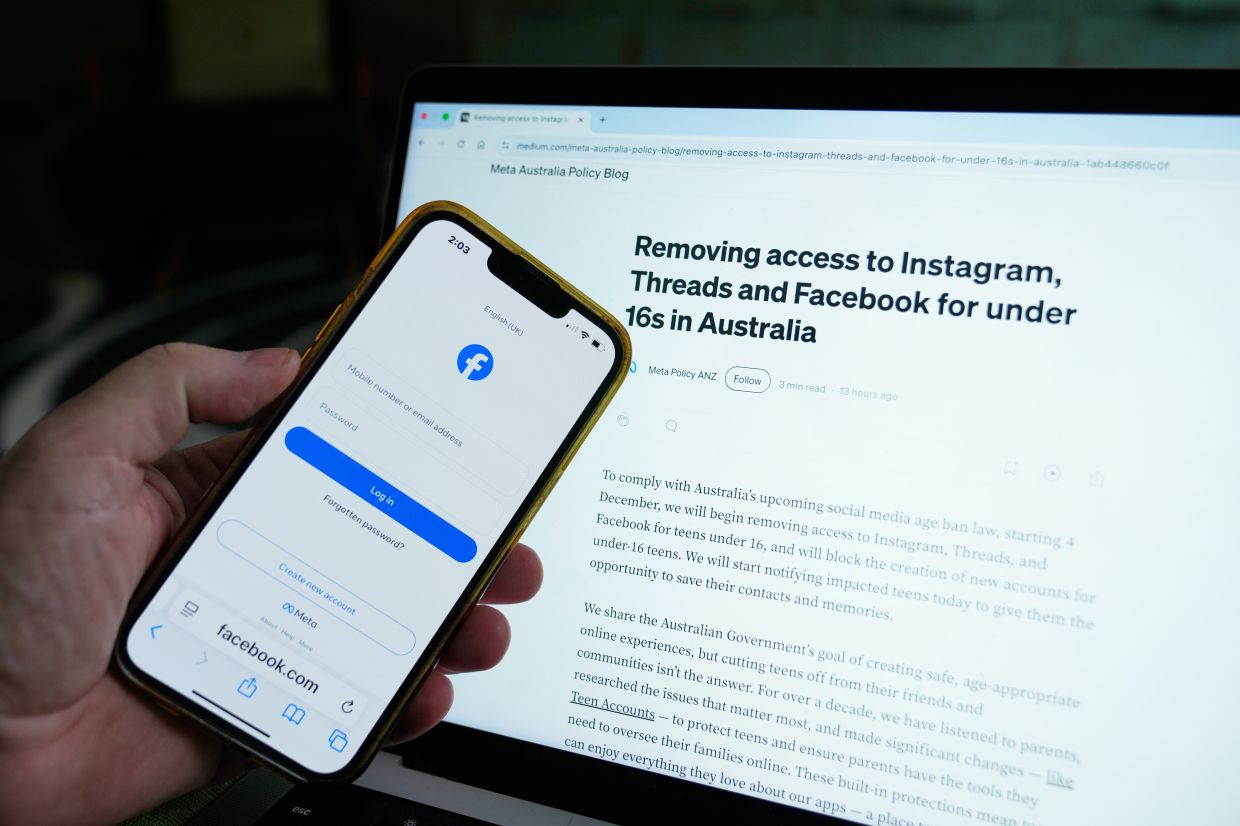
Australia's government has condemned a parliamentary delay to legislation that would significantly expand the powers of the eSafety Commissioner to police the country's social media ban on children under 16. Prime Minister Anthony Albanese expressed frustration that the opposition Liberal Party and the Australian Greens referred the amendment bill to an eight-week Senate inquiry on July 2, a move he said would allow digital platforms to eliminate material before enforcement action could commence. The government, which lacks Senate control, faces an uphill battle to pass the strengthened measures within its current parliamentary term.
The proposed amendments would equip eSafety Commissioner Julie Inman Grant with substantially greater investigative capabilities than she currently possesses. Rather than being limited to requesting information from platforms about their child-exclusion efforts, she would gain the authority to demand documents and insist on comprehensive accounts of compliance measures. The expansion reflects growing frustration with what regulators perceive as inadequate enforcement by major platforms despite the ban's formal introduction in December. These enhanced powers are intended to level the playing field between Australia's comparatively modest regulatory apparatus and the well-resourced legal and compliance teams at global technology companies.
Albanese underscored the temporal dimension of the delay during an interview with Australian Broadcasting Corporation. Once the amendments pass—or if they pass—the commissioner could immediately issue formal demands for information and subsequently impose financial penalties if platforms fail to comply. The current legislative hold, Albanese argued, creates a window during which technology companies might systematically purge internal documents, communications, and other materials related to their handling of young users. This destruction of evidence would impair the commissioner's ability to demonstrate non-compliance and pursue enforcement action in the months following the inquiry's completion. The strategic disadvantage imposed by the eight-week delay crystallises a broader tension between the pace of regulatory ambition and the speed at which technology companies can respond to political pressure.
The amendments also introduce mechanisms to verify platform claims about circumvention patterns and child behaviour. The commissioner would be empowered to demand information from third-party providers of age-verification technology, allowing independent testing of assertions platforms make regarding how children continue accessing restricted services despite the ban's implementation. This provision acknowledges the technical opacity that has hampered previous enforcement efforts, where regulators struggled to independently validate platform compliance reports. By breaking down barriers to information from supply chains beyond the platforms themselves, the amendments create a more comprehensive investigative toolkit.
Financial penalties would be substantially escalated under the new framework, with maximum fines doubling to A$99 million (approximately US$68 million or RM276.56 million) for platforms failing to exercise reasonable efforts in excluding minors. This represents a significant escalation aimed at creating genuine financial deterrence for non-compliance. However, the absence of any fines being issued to date under the existing regime raises questions about whether increased penalties alone drive behavioural change without commensurate increases in regulatory capacity to identify and prosecute violations.
Opposition senators have questioned both the design of the original ban and the adequacy of the proposed remedies. Greens Senator David Shoebridge, who has consistently opposed the social media restrictions, challenged the logic of doubling penalties that have never been deployed, suggesting this represents performative rather than substantive reform. His scepticism reflects broader concerns within progressive politics that criminalisation and financial penalties represent blunt instruments that may not meaningfully enhance child safety outcomes. Instead, critics argue for approaches centred on algorithmic transparency, platform accountability for content recommendations, and digital literacy initiatives.
Liberal communications spokesperson Senator Sarah Henderson adopted a different angle, positioning the opposition's delay not as protection of platform interests but as an opportunity to demand tougher legislation. Henderson characterised the original ban as poorly designed, hastily implemented, and fundamentally failing to achieve its stated objectives. From this perspective, the Senate inquiry represents a chance to scrutinise whether the current approach addresses root causes of child vulnerability on social platforms or merely creates new compliance bureaucracies. The opposition appears to be calculating that public pressure on child safety issues, combined with evidence of the ban's operational failures, might enable them to extract more stringent requirements during the inquiry process.
The empirical foundation for this debate has shifted dramatically since the ban's December introduction. Initial government claims that over 5 million accounts had been removed, deactivated, or restricted gave way to the eSafety Commissioner's March finding that roughly 70 percent of children with accounts on restricted platforms on the ban's effective date remain active on Facebook, Instagram, Snapchat, and TikTok. This gap between enforcement aspiration and compliance reality has become the central factual dispute in Australian politics. The degree to which this discrepancy reflects inadequate regulatory tools versus intentional platform resistance versus the technological difficulty of age verification at scale remains contested.
Inman Grant escalated her response to non-compliance in April by indicating her consideration of court proceedings against Facebook, Instagram, YouTube, and other platforms, alleging systematic failure to implement reasonable age-exclusion measures. Her approach signals frustration with negotiation and a shift toward adversarial regulatory strategy. However, initiating court action requires substantially more proof of intent and negligence than regulatory demands for information provide. Notably, the commissioner reported satisfaction with compliance efforts by X, Kick, Reddit, Threads, and Twitch, suggesting that variation in platform cooperation rather than technological impossibility accounts for differential compliance outcomes.
Communications Minister Anika Wells revealed that monthly assessments from the eSafety Commissioner since March have identified no meaningful improvement in platform compliance, a finding that reinforces government demands for expanded enforcement authority. This pattern of stagnation or deterioration contradicts industry suggestions that compliance takes time to implement and that regulatory patience would yield results. Instead, the evidence suggests platforms have prioritised other jurisdictions and compliance regimes, leaving Australia's relatively small regulatory body without adequate leverage.
The Australian case has become a closely watched template across the Indo-Pacific region and globally. Jurisdictions including Singapore, Malaysia, India, and several European nations are developing or contemplating comparable restrictions on child social media access. The effectiveness or failure of Australia's approach will substantially influence the design and ambition of these emerging regulatory frameworks. If Australia's experience demonstrates that even explicit legislative bans prove difficult to enforce against determined corporate resistance, it may lead other nations toward either more draconian measures or acceptance that industry self-regulation will persist despite formal legal restrictions.
The Senate inquiry will likely produce detailed testimony from the eSafety Commissioner, platform representatives, technologists, child safety advocates, and international regulators. Whether this deliberative process strengthens the amendments as intended, weakens them through the imposition of sunset clauses or effectiveness reviews, or leaves them substantively unchanged will signal Australia's commitment to treating child online safety as a regulatory priority comparable to financial system supervision or environmental protection. The outcome carries implications beyond Australia's borders, shaping how emerging democracies and developed nations balance parental rights, child protection, platform liberty, and state authority in the digital age.

