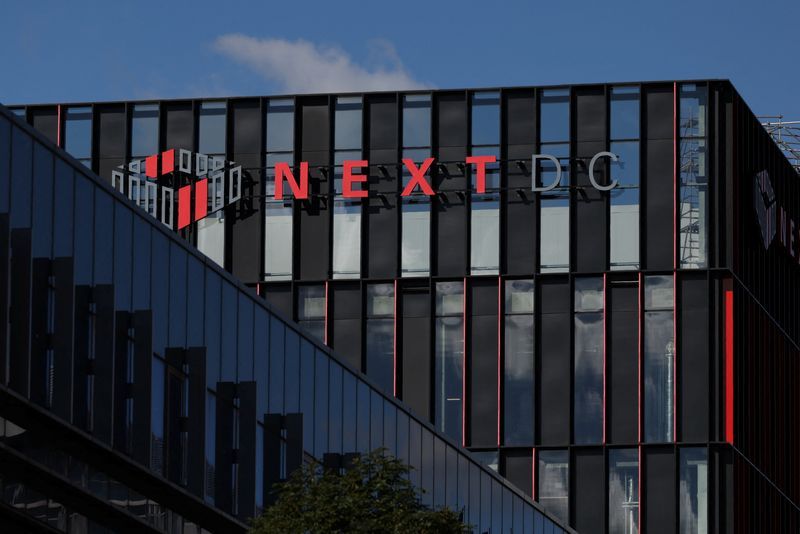
Australia's leading data centre operator NextDC has delivered a financial performance that exceeded market expectations, but the company's results also highlight a troubling trend that is increasingly capturing the attention of policymakers and environmental advocates across the Asia-Pacific region. The firm reported a swing to profitability alongside revenue growth, yet simultaneously disclosed that both its water and energy efficiency metrics have deteriorated for a third consecutive year—a pattern that underscores the mounting tension between rapid artificial intelligence infrastructure expansion and the sustainability demands of communities already grappling with resource scarcity.
For the financial year ending in June, NextDC achieved underlying EBITDA growth of 15 per cent, reaching A$248.8 million, a result that surpassed the consensus forecasts tracked by Visible Alpha. The company's net profit position reversed dramatically from the prior year's A$60.5 million loss to a gain of A$82.1 million, reflecting both operational improvements and accounting recognition of property value increases. Revenue expansion of 16 per cent demonstrates the sustained demand for computing infrastructure that underpins the global technology sector's rapid advancement, particularly as enterprises globally race to deploy artificial intelligence capabilities across their operations.
Yet beneath these positive financial metrics lies a more complex environmental narrative. NextDC's water usage effectiveness ratio—a standard measure of how efficiently a data centre consumes water relative to its computing output—deteriorated to 2.40 litres per kilowatt-hour from 2.25 the previous year. Similarly, its power usage effectiveness ratio, which gauges the overhead electricity consumed for cooling and other non-computing functions, worsened to 1.49 from 1.44. These consecutive annual declines signal that the company's rapid expansion is outpacing efficiency improvements, a dynamic that has immediate relevance for Malaysian policymakers considering their own data centre regulatory framework and energy transition strategies.
NextDC attributed the deteriorating efficiency metrics to multiple operational factors. The company noted that newly constructed data centre capacity requires cooling systems to operate at full capacity even before the computing equipment reaches full deployment, creating a temporary efficiency drag. Additionally, the firm identified that comprehensive reconciliation and validation of water consumption data during the reporting period uncovered previously undetected leaks, meter anomalies, and discrepancies between site-level monitoring and utility company records. This transparency, while commendable from an accountability perspective, suggests that efficiency challenges may be more widespread across the industry than previously acknowledged.
The situation at NextDC mirrors broader concerns now confronting data centre operators across developed nations and increasingly in Southeast Asia. Governments from Europe to North America have begun implementing restrictive policies targeting data centre expansion, citing mounting pressures on electricity grids already stressed by electrification demands, acute water shortages in several regions, competition for developable land, and broader community resistance to industrial-scale infrastructure projects. Ireland, Taiwan, and parts of the United States have either frozen or substantially constrained new data centre approvals, demonstrating that the tension between technological progress and environmental stewardship has transcended technical discussions to become a mainstream political consideration.
Australia's federal government has moved to address these concerns through regulatory intervention. Canberra is developing mandatory, nationally consistent standards that would govern data centres' energy consumption, water usage, and site selection criteria. More provocatively, policymakers have proposed requiring data centres to construct new renewable energy generation capacity rather than drawing electricity from existing grid supply, effectively making new facility operators responsible for expanding the nation's clean energy infrastructure. Such measures, if implemented, would substantially increase capital requirements for operators and reshape industry economics across the Asia-Pacific region.
For Malaysia and other Southeast Asian nations, NextDC's experience carries instructive lessons as the region positions itself as a potential hub for data centre investment. Malaysia's abundant hydroelectric capacity and strategic location have attracted interest from technology companies seeking alternatives to congested markets in developed economies. However, the NextDC results demonstrate that efficiency gains cannot be assumed to accompany rapid capacity expansion, and that regulatory frameworks must be established proactively rather than reactively addressing environmental damage after infrastructure deployment. The deterioration in metrics despite years of industry focus on efficiency improvements suggests that infrastructure growth may inherently generate environmental pressures that require policy-level interventions.
The financial markets responded positively to NextDC's announcements, with share prices rising 3.3 per cent by mid-session trading on Friday. This investor enthusiasm reflects confidence in the company's growth trajectory and the underlying demand for data centre capacity that will likely persist for years given artificial intelligence's expanding role across industries and economies. However, market optimism should not obscure the sustainability questions that NextDC's own disclosures raise, particularly regarding whether efficiency metrics can genuinely improve without fundamental changes to data centre design, location selection, or operational protocols.
NextDC operates in a competitive landscape that includes formidable rivals such as Blackstone-owned AirTrunk and Infratil-controlled CDC, both of which face identical efficiency and regulatory pressures. The competitive dynamics among these operators will likely determine whether efficiency improvements can be achieved through innovation or whether external regulatory mandates become necessary. Given that environmental metrics have worsened despite years of industry maturation, spontaneous improvement appears unlikely without either technological breakthroughs or binding policy constraints that raise the cost of inefficiency.
For investors and policymakers across Southeast Asia, the NextDC situation illustrates that the data centre sector's profitability and regional importance must be balanced against environmental realities that affect entire populations. Malaysia's water resources, while substantial, support agricultural sectors, urban populations, and industrial activities that collectively generate far greater economic value than data centre operations. Establishing clear environmental guardrails before massive data centre expansion occurs—rather than attempting to impose standards after infrastructure deployment—represents the most prudent policy approach. The Australian experience suggests that regulatory frameworks emphasising renewable energy integration and strict efficiency requirements should accompany any regional strategy to attract data centre investment.

