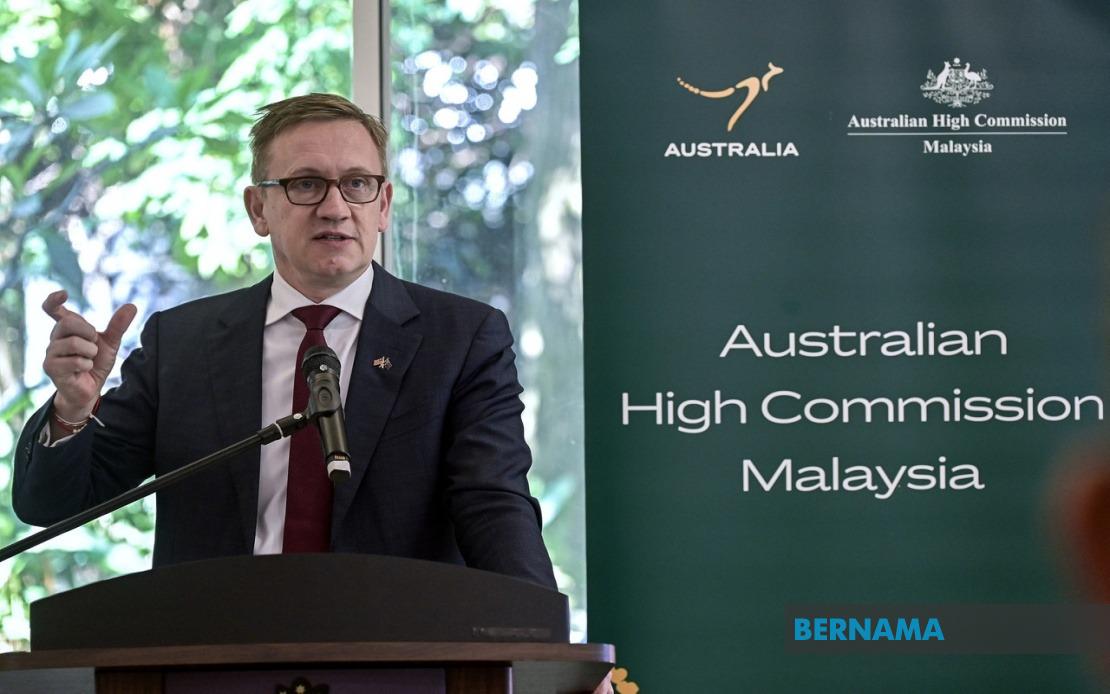
The Australian High Commission has rolled out the Australia Awards-Malaysia Semester Programme, a fresh scholarship offering designed to give Malaysian students greater access to Australian higher education while strengthening bilateral connections between Canberra and Kuala Lumpur. The initiative was unveiled in Malaysia's capital city on August 4, with Julian Hill, Australia's Assistant Minister for International Education, presiding over the launch alongside Australian High Commissioner Danielle Heinecke and representatives from partner institutions.
Hill framed the programme as evidence of Australia's sustained dedication to fostering people-to-people bonds with Malaysia through educational exchange. He highlighted a striking statistic: more than half a million Malaysians have undertaken studies in Australia over the decades. While many have returned home upon graduation, Hill suggested that educational experiences abroad create enduring connections that benefit both nations. He described these individuals as human bridges capable of cultivating mutual understanding and strengthening the relationship between Australia and Malaysia across multiple dimensions of engagement, from commerce to culture.
The scholarship initiative reflects a broader philosophical approach to bilateral relations. Hill underscored that education has historically anchored the Australia-Malaysia partnership across generations, serving as a foundation upon which economic cooperation, trade relationships, and diplomatic ties have been constructed. The programme extends this legacy by making such opportunities more accessible to talented Malaysian students who might otherwise face financial barriers to international study.
Crucially, Hill emphasised that deepening educational ties must operate as a two-way street. While Australia invests in enabling Malaysians to study in Australia, the country also encourages reciprocal participation from Australian students in Malaysian educational institutions. Initiatives including the New Colombo Plan and semester exchange programmes aim to attract Australian undergraduates to branch campuses operated by Australian universities across Malaysia, ensuring that the benefits of academic exchange accrue to both nations.
Australian universities operating in Malaysia serve purposes extending beyond conventional instruction. Hill noted that these institutions function as research hubs capable of generating innovation and driving collaborative inquiry into challenges confronting both nations. Medical science, renewable energy, mining, and agricultural development emerged as priority areas where academics from Australia and Malaysia could pool expertise to address shared problems. This research dimension transforms the branch campuses from merely educational venues into centres of knowledge creation with practical applications for regional development.
The programme's structure demonstrates careful design aimed at removing financial obstacles that typically inhibit talented students from disadvantaged backgrounds from accessing international education. The Australia Awards-Malaysia Semester Programme covers comprehensive costs associated with transnational study, including international airfares, residential accommodation, living allowances, visa fees, travel insurance, and miscellaneous expenses. This all-encompassing support model reflects deliberate policy intent to ensure that financial hardship does not constrain access to premium educational opportunities.
The initial cohort has already commenced their Australian studies, with sixteen Malaysian students departing for the July intake, marking the pilot phase's opening. These trailblazing participants enrolled at Australian branch campuses in Malaysia—specifically Curtin University Malaysia, Monash University Malaysia, and the University of Wollongong Malaysia—before transitioning to Australia for their semester abroad. The arrangement permits students to pursue up to two semesters of study in Australia while maintaining formal enrolment at their home campus, facilitating credential recognition and seamless degree progression.
The Australian government has committed funding for an initial four-year operational period aligned with its budgetary cycles. However, Hill expressed confidence that the programme would eventually transition into a permanent fixture of Australia-Malaysia educational relations, contingent upon demonstrated success and continued political backing. This staged funding approach allows policymakers to evaluate outcomes, gather feedback from participants, and refine programme components before committing to longer-term resource allocation.
All four Australian university branch campuses currently operating in Malaysia have received invitations to participate in the pilot initiative. Beyond the three institutions already enrolled—Curtin, Monash, and UOW—Swinburne University of Technology Sarawak Campus has been extended participation eligibility. This inclusive approach maximises geographic reach within Malaysia and ensures that students across different regions and institutional contexts can access the scholarship opportunity. The involvement of MARA, represented through Chairman Dr Asyraf Wajdi Dusuki, indicates alignment with Malaysia's own educational objectives and development priorities.
For Malaysian students contemplating tertiary education abroad, this programme addresses a persistent challenge: balancing aspiration against financial capability. By subsidising the full cost of semester exchange, the initiative opens pathways for middle-class and lower-income students who might otherwise default to domestic options regardless of academic talent. The programme thereby contributes to equitable access to international education while simultaneously building human capital that benefits Malaysia's long-term development trajectory.
From a Southeast Asian perspective, the initiative reflects broader competitive dynamics in regional education markets. Australia has invested substantially in establishing university presence throughout Southeast Asia, competing with traditional destinations like the United Kingdom and United States for talented students. By facilitating semester mobility, Australia enhances the appeal of its branch campuses while positioning itself as an accessible gateway to world-class education. This strategy may influence similar programmes from other English-speaking nations seeking to strengthen educational footprints in the region.
The programme also carries implications for Malaysia's own higher education sector. Rather than viewing Australian campus expansion as threatening, the initiative demonstrates potential for complementarity—local students gain international credentials and exposure without departing permanently, while Malaysian institutions benefit from enhanced prestige and student mobility experience. This collaborative model contrasts with zero-sum competition and suggests possibilities for other bilateral educational partnerships across Southeast Asia.

