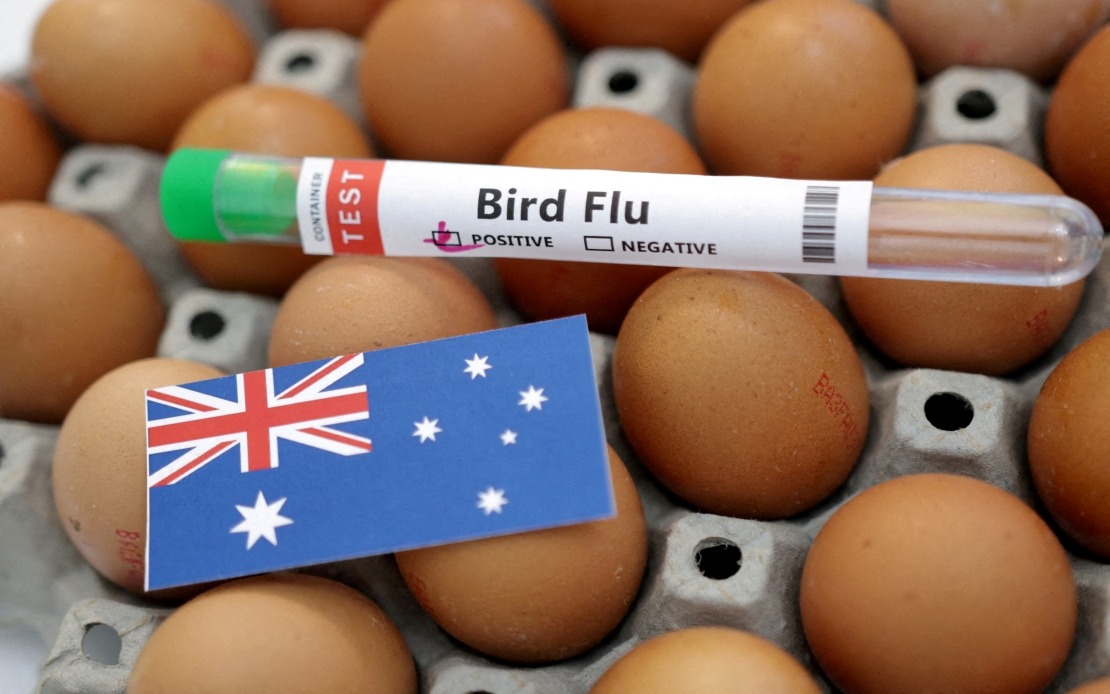
Australia's agricultural authorities announced on Friday that H5N1 avian influenza has reached a local bird species for the first time, representing a significant escalation in the country's disease surveillance landscape. The discovery came after a non-migratory greater crested tern found dead near the South Australian coastal town of Robe returned a positive test result for the highly pathogenic strain. Agriculture Minister Julie Collins confirmed the finding at a media briefing, underscoring that the detection marks a watershed moment in Australia's ongoing battle against bird flu, as all previously identified cases had involved migratory species arriving from sub-Antarctic regions.
This development carries particular weight because it demonstrates that H5N1 has successfully established itself within Australia's resident bird populations, rather than appearing sporadically through visiting migratory species. The greater crested tern is sedentary, meaning it does not undertake the long-distance migrations that had previously accounted for every confirmed mainland case. This shift suggests the virus may now be circulating within local ecosystems, presenting a more entrenched public health challenge. The distinction matters substantially for biosecurity planning, as it implies the threat is no longer confined to seasonal migration periods but could persist year-round within Australian wildlife.
Minister Collins revealed that authorities have simultaneously confirmed three additional cases beyond the index greater crested tern. Two more infected birds were identified in South Australia, while a fourth case emerged in Western Australia, bringing the total number of mainland H5N1 detections to twelve since the outbreak began. This rapid multiplication of cases within a compressed timeframe indicates accelerating transmission dynamics, though officials stopped short of characterising the situation as a full epidemic among wild birds. The clustering of new cases in South Australia suggests that region may currently serve as a transmission hotspot, prompting enhanced monitoring efforts around Robe and neighbouring areas.
South Australian health authorities have mobilised an intensified surveillance network in the vicinity where the diseased tern was discovered, aiming to identify additional infected birds and establish the boundaries of the affected zone. Investigators are simultaneously pursuing epidemiological detective work to reconstruct how the bird contracted the virus. Scientists have begun examining potential transmission pathways, considering possibilities ranging from contact with infected migratory birds that may have arrived earlier in the season to exposure through contaminated water sources or other environmental vectors. Collins acknowledged that determining the infection source would require sustained analytical effort, as the chain of transmission could involve multiple species or environmental reservoirs.
The minister's characterisation of the discovery as "concerning" yet "not unexpected" reflects a measured assessment informed by global disease trends. H5N1 has been steadily expanding its geographic footprint across multiple continents in recent years, and expert consensus had long anticipated that Australia's isolation would eventually prove insufficient to exclude the pathogen indefinitely. The Australian mainland had distinguished itself as the final inhabited continent without a confirmed local case, a distinction it held until June when the first detection occurred in Western Australia. That initial finding followed a trajectory observed in other regions, with sporadic cases among migratory birds eventually giving way to evidence of local establishment and transmission.
Collins framed the detection as validation of Australia's biosecurity architecture, suggesting that the system's capacity to identify the virus swiftly rather than allowing it to spread undetected among wild populations demonstrated institutional preparedness. This perspective emphasises early warning over prevention—acknowledging that stopping a pathogen at the border indefinitely is unrealistic, but detecting it rapidly enables public health authorities to implement containment measures and monitor human exposure risk. The statement reflects broader global acknowledgment that in an era of climate change and shifting animal migration patterns, complete exclusion of transboundary diseases has become practically impossible for even the most isolated developed nations.
For Malaysian and Southeast Asian observers, Australia's H5N1 detection carries significant implications. The Southeast Asian region has historically served as an epicentre for avian influenza emergence and evolution, with H5N1 becoming endemic in poultry populations across multiple countries. Australia's experience demonstrates that even geographically distant temperate-zone wildlife can become infected, suggesting no region is truly insulated from the global disease ecology that now characterises avian flu. The virus's ability to establish in Australian resident bird species hints at adaptive changes in viral behaviour or epidemiology that warrant close monitoring throughout the Asia-Pacific.
The detection also underscores the importance of maintaining robust disease surveillance infrastructure, particularly for nations with significant poultry industries and wildlife interfaces. Malaysia, Indonesia, Thailand, and Vietnam have all experienced substantial H5N1 impacts on commercial and backyard poultry operations, and the Australian case reinforces that sustained vigilance remains essential even when cases appear to stabilise. The involvement of a non-migratory bird species suggests that H5N1 may be developing capacity to circulate within more diverse host populations, a epidemiological shift that could complicate control efforts across the region.
Authorities have not yet clarified whether the infected tern posed any direct hazard to human populations, though H5N1's established capacity to occasionally jump to people remains a persistent concern underlying global surveillance efforts. Dead birds of prey or scavenging species that consume infected waterfowl represent the primary human-contact risk in most wildlife transmission scenarios. Public health messaging will likely emphasise standard precautions for anyone handling deceased birds, consistent with protocols Australia and Southeast Asian nations have maintained throughout the pandemic years.
The confirmed cases arrive amid broader context of elevated global H5N1 activity. The virus has demonstrated expanding host range capabilities in recent years, infecting mammalian species from mink to seals to cattle in unprecedented numbers. Australia's detection of local wildlife transmission, while noteworthy, represents one manifestation of a worldwide pattern in which H5N1 appears to be becoming progressively more embedded in environmental and animal reservoirs. This trajectory suggests that controlling the virus at source—whether in Asian poultry systems or wildlife populations—remains humanity's most effective long-term strategy, as complete geographic containment has become demonstrably unachievable.

