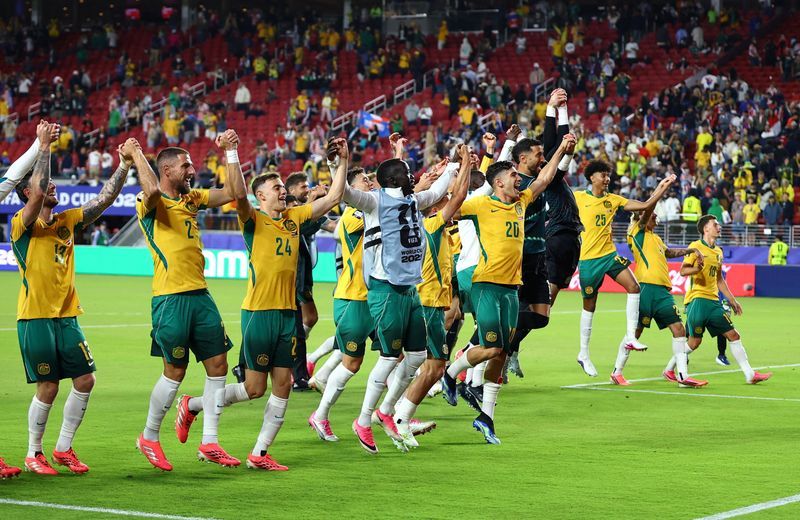
Australia has progressed to the World Cup's round of 32 following a tightly contested goalless encounter with Paraguay at San Francisco Bay Area Stadium in California on Thursday. The Socceroos secured their passage to the knockout phase for the third time in their World Cup history, extending their campaign beyond the group stage four years after reaching the last 16 in Qatar. The result handed coach Tony Popovic's side second place in Group D, guaranteeing them a place among the tournament's 16 teams advancing from the opening round.
The match itself reflected the high stakes, with both teams adopting cautious approaches that produced few clear-cut opportunities and little in the way of flowing attacking football. Paraguay, having earned four points from their first two fixtures, faces an anxious wait to determine whether their tally proves sufficient to advance as one of the eight best-finishing third-placed sides. The South Americans, quarter-finalists in 2010, will discover their fate once the remaining group matches conclude over the coming days. For now, their progression remains uncertain, hinging on results from other competitions.
Popovic demonstrated tactical boldness in team selection, making six alterations to his starting lineup in a statement of attacking ambition. The inclusion of Nestory Irankunda's attacking flair and Cristian Volpato on the forward line signalled the coach's intent to impose Australia's game on their opponents. The repositioning of Jordan Bos from left back to right flank, necessitated by Jacob Italiano's injury, created defensive vulnerabilities that Paraguay would attempt to exploit, particularly as the match progressed.
Australia dominated possession during the opening period, repeatedly probing down the right flank where Bos and Volpato launched promising attacks. Despite the early territorial superiority, the Socceroos struggled to convert their dominance into genuine danger. Jackson Irvine epitomised this frustration in the opening moments when Volpato's pass sent him clear on the right of the penalty area, only for his angled effort to sail directly at Paraguay goalkeeper Orlando Gill. The pattern continued throughout the first half, with both Bos and Volpato forcing saves from Gill without ever generating the kind of incisive play that breaks down well-organised defences.
Paraguay's coach Gustavo Alfaro recognised his team's passivity and responded at the interval by introducing Mauricio, the Brazilian-born attacker who added dynamism to Paraguay's attacking movements. Within five minutes of the restart, Mauricio tested Australia's composure with a speculative long-range effort, signalling Paraguay's increased threat. The introduction of Julio Enciso further galvanised the South American side, with the energetic midfielder repeatedly finding space in transition and exposing gaps in Australia's defensive shape. The balance of the match shifted noticeably, as Paraguay grew in confidence and ambition.
Enciso came closest to breaking the deadlock eight minutes from the final whistle when he carved out a promising opening and unleashed a low drive that screamed wide of the left post. The opportunity represented Paraguay's clearest chance of the evening, squandered at a moment when a goal would have secured their advancement. Australia's vulnerability was evident, yet their defensive discipline ultimately proved sufficient to repel the South American onslaught.
In a frenetic conclusion, Australia manufactured their own chances despite conceding the territorial advantage. Bos created a moment of genuine excitement for the home crowd in the 89th minute when he burst through Paraguay's midfield, drove into the penalty area from the right, and sent a powerful shot just wide of the far post. The miss underscored Australia's inability to capitalise on the attacking opportunities that materialised throughout the contest. Moments later, Mauricio replied for Paraguay with his own shooting opportunity, finding a pocket of space near the area but sending a soft, unconvincing effort at Australia's goalkeeper that posed little threat.
The goalless outcome reflects both teams' caution and the defensive solidity that both coaches prioritised. Australia advances to face the runner-up from Group G, a competition that remains genuinely competitive with Egypt and Iran contesting one match, whilst Belgium and New Zealand prepare to meet on Friday. This open scenario means the Socceroos' knockout opponent remains unknown, adding an element of uncertainty to their preparation. Regardless of their next challenger, Australia's qualification represents a respectable achievement for a nation that has made steady progress in recent tournament cycles.
The draw represents a pragmatic outcome for Australia, who secured their primary objective with minimal drama or risk-taking. Popovic will likely view the result as acceptable, having avoided defeat against a Paraguay side that demonstrated increasing resilience as the match developed. For Southeast Asian observers following Australia's progress as a neighbour in regional football hierarchies, the Socceroos' passage provides continuity and represents another chapter in their growing World Cup experience. Their knockout-stage campaign will provide insights into Australian football's evolution and competitive standing at the highest level of the sport.

