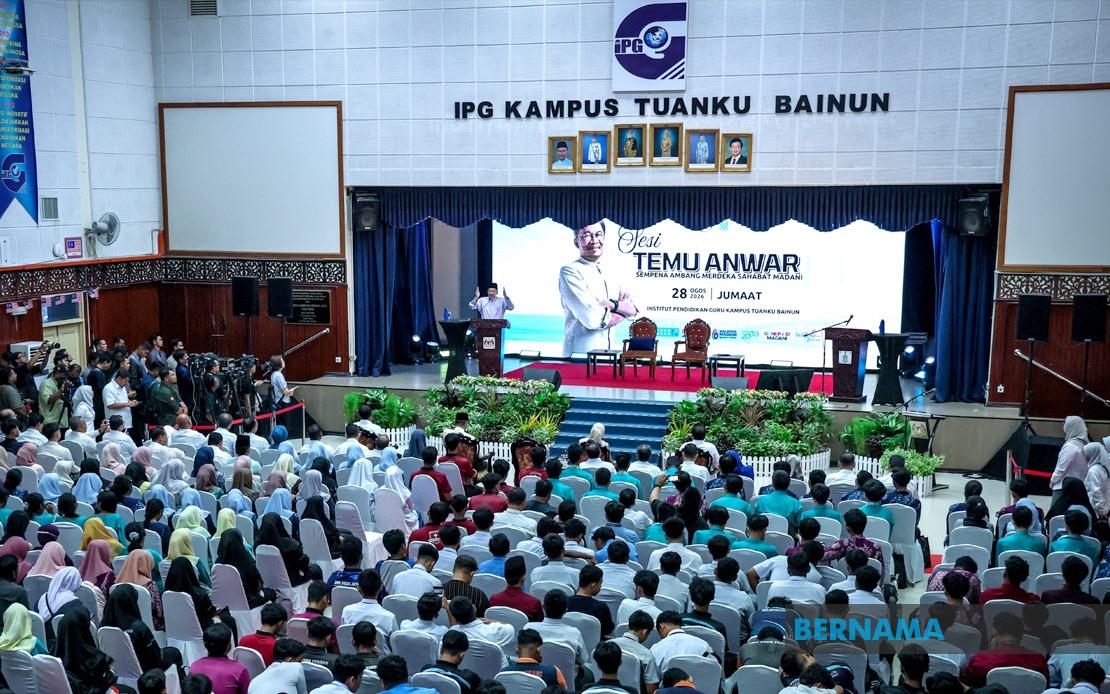
Prime Minister Datuk Seri Anwar Ibrahim has justified the sweeping repeal of the Universities and University Colleges Act 1971 (AUKU) as a necessary step to empower the nation's youth, declaring that Malaysian students deserve the same freedoms as working adults. Speaking during a Temu Anwar session in Bukit Mertajam, Anwar articulated a fundamental shift in the government's approach to campus governance, positioning the removal of decades-old restrictions as central to developing a generation capable of navigating complex societal challenges.
The AUKU, which had governed university conduct for over half a century, contained provisions that limited student activism and political expression on campuses. Anwar's remarks underscore a philosophical break with this regulatory framework, emphasising that legal age considerations should inform policy decisions affecting young people's participation in public discourse. By noting that students at 18 can vote in national elections, the Prime Minister has drawn a logical connection between electoral rights and broader freedoms of expression, challenging the previous legal rationale for campus restrictions.
Central to Anwar's defence of the AUKU abolition is his conviction that uninhibited speech serves as a crucible for developing the intellectual capabilities Malaysia requires. He stressed that students should be encouraged to articulate their perspectives and engage in substantive debate, even when their conclusions may ultimately prove mistaken or incomplete. This framing positions the freedom to speak not merely as an end in itself, but as a pedagogical tool essential to cultivating the judgement and analytical capacity that distinguish educated citizens from passive information recipients.
The Prime Minister's argument reflects growing international evidence that restricted campus environments can stifle innovation and intellectual development. Universities across developed democracies have long recognised that exposure to diverse viewpoints and the freedom to test ideas through dialogue produce graduates better equipped for professional and civic responsibilities. Anwar's pronouncements suggest Malaysia is aligning its higher education policy with this global consensus, moving away from paternalistic oversight toward models that treat university students as emerging adults capable of self-governance.
Context matters significantly here: AUKU's original 1971 enactment occurred in a very different political era, with different security concerns and governance philosophies. Five decades later, the Malaysian student population is vastly more educated, globally connected, and exposed to information flows that no legislative restriction can realistically control. By abolishing rather than merely reforming AUKU, the government acknowledges that the original legal constraints have become anachronistic—a recognition that updating institutional frameworks to match contemporary realities is itself a form of good governance.
The implications for Malaysian higher education extend beyond symbolic gesture. Universities freed from AUKU restrictions face both opportunity and responsibility to foster genuine intellectual communities where debate flourishes and ideas are rigorously tested. This transition will require institutional maturity from campus administrators, academic leaders, and students themselves, as freedom without corresponding ethical commitment can devolve into licence rather than liberty. The success of AUKU's repeal will ultimately depend on whether Malaysian universities develop robust internal cultures that value rigorous discourse over ideological conformity.
For Southeast Asian higher education more broadly, Malaysia's move signals a potential recalibration of the region's approach to campus freedoms. Several neighbouring countries maintain similar restrictions on student political activity, justified through national security arguments or claims about maintaining academic focus. Anwar's public endorsement of expansive student freedoms may influence regional discussions about whether such restrictions genuinely serve educational outcomes or primarily function as instruments of political control. The Malaysian experiment will provide valuable evidence for policymakers elsewhere considering similar reforms.
Education Minister Datuk Seri Fadhlina Sidek's presence at the Temu Anwar session signals cabinet alignment on this policy direction, suggesting the AUKU repeal reflects a deliberate whole-of-government commitment rather than an isolated prime ministerial initiative. Such institutional coherence will be crucial as universities navigate the practical challenges of operating under new frameworks, requiring clear guidance and sustained support from the education ministry.
The AUKU abolition also intersects with broader questions about how Malaysia positions itself internationally as a destination for higher learning and research. Many prospective international students factor campus freedoms into their university selection, and countries seen as restrictive face disadvantages in competing for top talent. By removing AUKU, Malaysia potentially enhances its appeal in global academic markets, contributing to the knowledge economy objectives outlined in various national development strategies.
Moving forward, Malaysian universities will need to develop institutional policies that replace AUKU's blunt restrictions with more nuanced frameworks emphasising responsibility alongside freedom. This might involve clear codes of conduct addressing genuine safety concerns while protecting legitimate expression, structured mechanisms for student participation in institutional governance, and faculty commitment to facilitating rather than merely delivering learning. The transition from restriction to freedom is not automatically benign; it demands mature institutional responses.
The removal of AUKU ultimately represents a calculated wager that Malaysian students, given freedom, will exercise it wisely and that universities can be trusted to nurture rather than merely regulate young minds. Anwar's framing of this repeal as investment in national development through enhanced critical thinking suggests the government views student freedoms not as a concession reluctantly granted, but as a strategic necessity for a nation aspiring to innovation-driven prosperity. Whether this aspiration translates into transformed campus cultures and stronger democratic participation will determine whether AUKU's abolition becomes a genuine watershed in Malaysian educational history.

