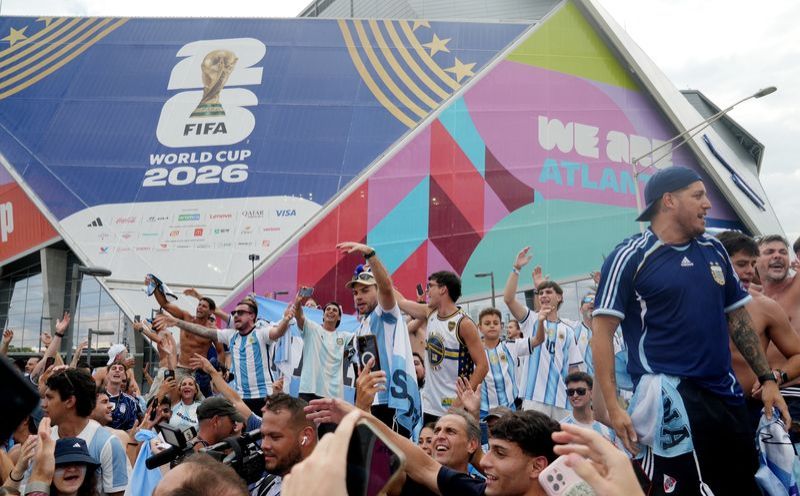
Atlanta's month-long stewardship of the 2024 Women's World Cup has fundamentally altered the rhythm of a city traditionally synonymous with hip-hop culture and American football. From Cape Verde's tournament debut to Argentina's dramatic path to the final—including a stunning comeback victory against England in the semi-finals—the Georgia capital hosted eight matches that collectively captivated 544,516 spectators. The influx of international supporters transformed Atlanta's streets and stadium into a global celebration of women's soccer, creating memories for both longtime residents and first-time visitors that will shape perceptions of the city for years to come.
The magnitude of Atlanta's World Cup experience extends far beyond the matches themselves. Over 19 days, the Fan Fest drew more than half a million people through its gates, while local enthusiasm manifested in remarkable volunteer participation, with more than 2,000 Atlantans and Georgians stepping forward to support the event. This grassroots engagement underscores how major tournaments can mobilise communities beyond the stadium walls, transforming casual observers into invested stakeholders in the sporting narrative unfolding across their city.
Atlanta's emergence as a credible World Cup host city represents the culmination of strategic investments made over the past decade. When Atlanta United launched in 2017—the same year the city began pursuing World Cup hosting rights—few anticipated how swiftly the MLS franchise would establish itself as a cornerstone of the city's sports identity. The club's immediate success, capped by a domestic cup victory in 2018, combined with its consistent MLS attendance leadership, provided FIFA evaluators with tangible evidence that Atlanta possessed both infrastructure and genuine fan appetite for top-tier football. Arthur Blank's $50 million donation to the U.S. Soccer National Training Center just outside the city further strengthened Atlanta's credentials, signalling deep financial commitment from local oligarchs to soccer's development.
The broader sports ecosystem that emerged provided essential scaffolding for the World Cup's success. Atlanta Stadium, home to both Atlanta United and the NFL's Falcons, offered a world-class venue already accustomed to hosting international matches and major events. Yet the city's experience with mega-events extends considerably further back—the 1996 Olympic Games established Atlanta as a capable organiser of global sporting spectacles, while four previous Super Bowl editions demonstrated the city's logistical competence and hospitality infrastructure. When Super Bowl LVIII returns to the stadium in 2028, Atlanta will have demonstrated consecutive capability in hosting events of vastly different scales and sporting cultures.
For Malaysian and Southeast Asian observers, Atlanta's World Cup legacy offers instructive lessons about how host cities can leverage tournament momentum for long-term sporting development. The decision to establish a mini-pitch in collaboration with MARTA, the local transport company, and the Soccer in the Streets programme represents precisely the kind of grassroots intervention that builds sustainable football culture. By providing free access to the sport for all children, regardless of economic circumstance, Atlanta is creating pathways that extend participation beyond affluent demographics—a model particularly relevant for Southeast Asian cities contemplating World Cup bids or seeking to democratise football access.
The economic and social impacts of hosting such tournaments often remain overlooked in discussions focused narrowly on match statistics and attendance figures. Beyond the immediate spectacle, Atlanta secured commitments that will reshape its sporting landscape through 2031. The arrival of an NWSL women's franchise in 2028 represents a significant commercial validation of the city's female soccer market, while the pursuit of hosting rights for the 2031 Women's World Cup signals that Atlanta intends to consolidate its position as a primary global destination for women's football. This sequential approach—leveraging the 2024 tournament to attract professional franchises and subsequent tournament hosting—demonstrates how communities can construct long-term sporting identities through strategic event management.
Atlanta's simultaneous pursuit of multiple women's football initiatives carries particular significance for regions grappling with gender equity in sports. The proliferation of professional pathways for female athletes, combined with grassroots investment, creates developmental pipelines that young players throughout the region can aspire to join. As Southeast Asian nations increasingly invest in women's football, Atlanta's model of tournament hosting linked to franchise expansion and youth development offers a replicable template for elevating women's sport from marginal status to mainstream prominence.
The transformation of Atlanta's cultural landscape during the World Cup highlights how international sports tournaments function as powerful vectors for soft power and urban branding. A city previously defined by specific musical and cultural traditions temporarily adopted a new identity centred on global football culture. The songs, chants, and colours that followers from participating nations brought to stadiums and streets created a cosmopolitan atmosphere that fundamentally altered the city's social texture. For visitors from Cape Verde, England, Argentina, and dozens of other nations, Atlanta became a temporary home where their football cultures found expression and celebration, generating goodwill that extends far beyond tournament duration.
Local host committee leadership, particularly figures like Dan Corso, recognised from the tournament's inception that success required more than merely accommodating international visitors. The deliberate cultivation of volunteer participation, community engagement through Fan Fest programming, and investment in permanent infrastructure reflected understanding that transformative events demand genuine local buy-in rather than imposed external requirements. This stakeholder approach contrasts sharply with tournament models in which host cities view themselves as merely providing venues, rather than actively shaping how global sporting narratives intersect with local identity.
The infrastructural investments flowing from World Cup hosting deserve particular scrutiny from Southeast Asian cities evaluating their own capacity for similar ventures. The mini-pitch development, combined with enhanced sports training facilities and stadium improvements, creates tangible assets that persist long after international supporters depart. Unlike some tournament legacies that consist primarily of white elephant stadiums, Atlanta has structured its World Cup investments to address persistent local needs—specifically, ensuring that football accessibility extends across socioeconomic divides through programmes like Soccer in the Streets.
Looking forward, Atlanta's World Cup experience serves as foundation rather than conclusion. The 2028 Super Bowl return, the 2028 NWSL franchise launch, and the 2031 Women's World Cup pursuit represent sequential opportunities to reinforce Atlanta's positioning as a premier global sports destination. For Southeast Asian cities contemplating similar trajectories—particularly rising economic powers in Vietnam, Thailand, and Indonesia—Atlanta demonstrates that strategic tournament hosting, when coupled with genuine infrastructure investment and community mobilisation, can catalyse decades of sustained sporting development and economic opportunity.

