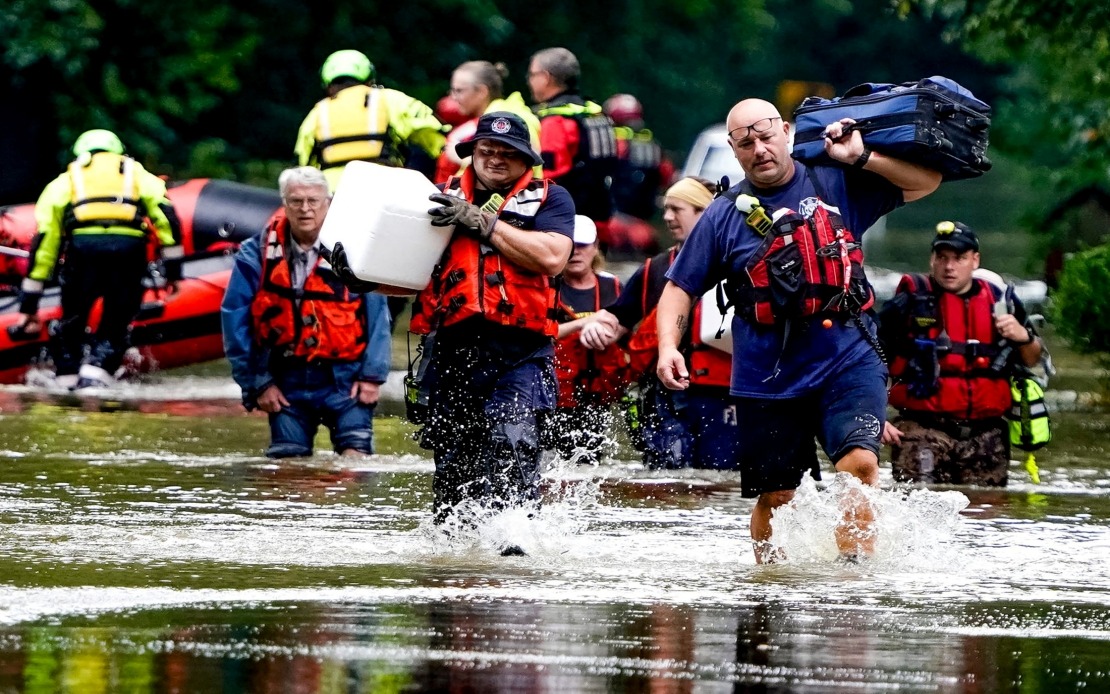
A catastrophic weather event has devastated Indiana, leaving at least six dead and displacing hundreds of residents as an intense storm system unleashed historic flooding across the American Midwest. The powerful tempest deposited over 11 inches of rainfall in certain areas over just two days, overwhelming river systems and triggering one of the most significant flood events the state has experienced in over a century.
The brunt of the disaster concentrated along the White River corridor, stretching from Hamilton County through the northern suburbs encircling Indianapolis. Emergency personnel conducted more than 90 rescue operations, simultaneously caring for 45 animals displaced by rising waters. In the Ravenwood neighbourhood of Indianapolis, the scale of the inundation became starkly apparent as floodwaters completely submerged vehicles and reached the entrances of residential properties. Residents improvised their own evacuation routes, paddling kayaks and rowing small boats through streets that had transformed into temporary waterways.
The White River's surge proved unprecedented in modern times. Water levels climbed above 24 feet in both Anderson and Noblesville, obliterating the previous record established in 1913. Jacob Spence, heading Marion County's Emergency Management operations, characterised the event as a once-in-a-generation occurrence, noting that officials were documenting entirely new hydrological benchmarks. Indianapolis Mayor Joe Hogsett immediately declared a local emergency and issued evacuation directives for all residents occupying properties adjacent to the river's banks, recognising the unpredictability of ongoing water movement.
Governor Mike Braun mobilised the state's disaster response apparatus, connecting directly with President Donald Trump to expedite federal assistance. An accelerated Federal Emergency Management Agency disaster declaration proceeded through the bureaucratic pipeline, signalling the magnitude of damage and need across affected communities. Braun's public statement conveyed both sympathy and urgency, explicitly appealing to Hoosiers to maintain healthy respect for floodwaters and to heed official warnings as conditions remained volatile.
Death reports emerged across multiple counties as the flooding intensified. Fatalities were confirmed in Jennings, White, Porter, and La Porte counties, according to the Indiana Department of Homeland Security. One tragic incident in Delaware County involved a 58-year-old woman whose body was discovered after she had apparently attempted to navigate through floodwaters in her vehicle—a dangerous behaviour that authorities repeatedly warn against during such disasters. The National Weather Service continued documenting rainfall totals that underscored the exceptional nature of the precipitation event.
Flood alerts remained active throughout central Indiana as meteorologists warned of additional storm systems potentially moving into the region. Todd Wilson, overseeing Indianapolis' public works department, stressed that water levels continued climbing, making compliance with evacuation orders absolutely critical. The dynamic nature of the flooding meant that officials could not yet determine whether conditions would stabilise or deteriorate further.
The impacts extended well beyond Indiana's borders. The severe weather system spawned tornado activity, generated torrential downpours, and created flash flood conditions across the broader Midwest region. Communities stretching from the Chicago metropolitan area eastward to western Pennsylvania sustained damage, indicating a storm complex of substantial geographic scope. This pattern of widespread severe weather suggests climate patterns that may present increasing challenges for disaster preparedness across the American heartland.
For Malaysia and Southeast Asian observers, the Indiana disaster offers sobering lessons about climate resilience. Like Malaysia and neighbouring countries, which face their own monsoon-related flooding challenges annually, the American experience demonstrates how even developed nations with sophisticated warning systems and emergency infrastructure can be overwhelmed by extreme precipitation events. The historical record-breaking nature of Indiana's flooding mirrors similar unprecedented weather phenomena increasingly documented across Asia, from Pakistan's devastating 2022 floods to Indonesia's recurring inundation crises.
The response coordination between state and federal authorities in Indiana also reflects governance structures that differ substantially from Southeast Asian frameworks. Governor Braun's direct engagement with the president, coupled with the expedited FEMA declaration process, showcase centralised disaster management mechanisms. In contrast, Southeast Asian nations often navigate more complex federal arrangements or governance structures where provincial and national authorities may require extensive coordination. Understanding these different approaches to disaster response could provide valuable comparative insights for regional policymakers considering emergency management improvements.
The broader implications for infrastructure planning emerge clearly from this event. The White River's overtopping of 111-year-old records suggests that historical data may no longer reliably predict future conditions. This phenomenon, increasingly common globally, challenges conventional engineering standards for flood defence systems. Many Southeast Asian flood management projects rely on historical precipitation and water level data; Indiana's experience suggests such baseline assumptions require periodic reassessment in light of changing climate patterns.
As rescue and recovery operations continue throughout Indiana, the event serves as a reminder that natural disasters recognise no borders and that even prosperous American communities face vulnerability to severe weather. For Malaysian readers and policymakers across Southeast Asia, the unfolding situation underscores the universal importance of maintaining robust emergency management systems, investing in early warning infrastructure, and fostering public awareness about the dangers of attempting transit through flooded areas—lessons equally applicable to monsoon-affected nations in the region.

