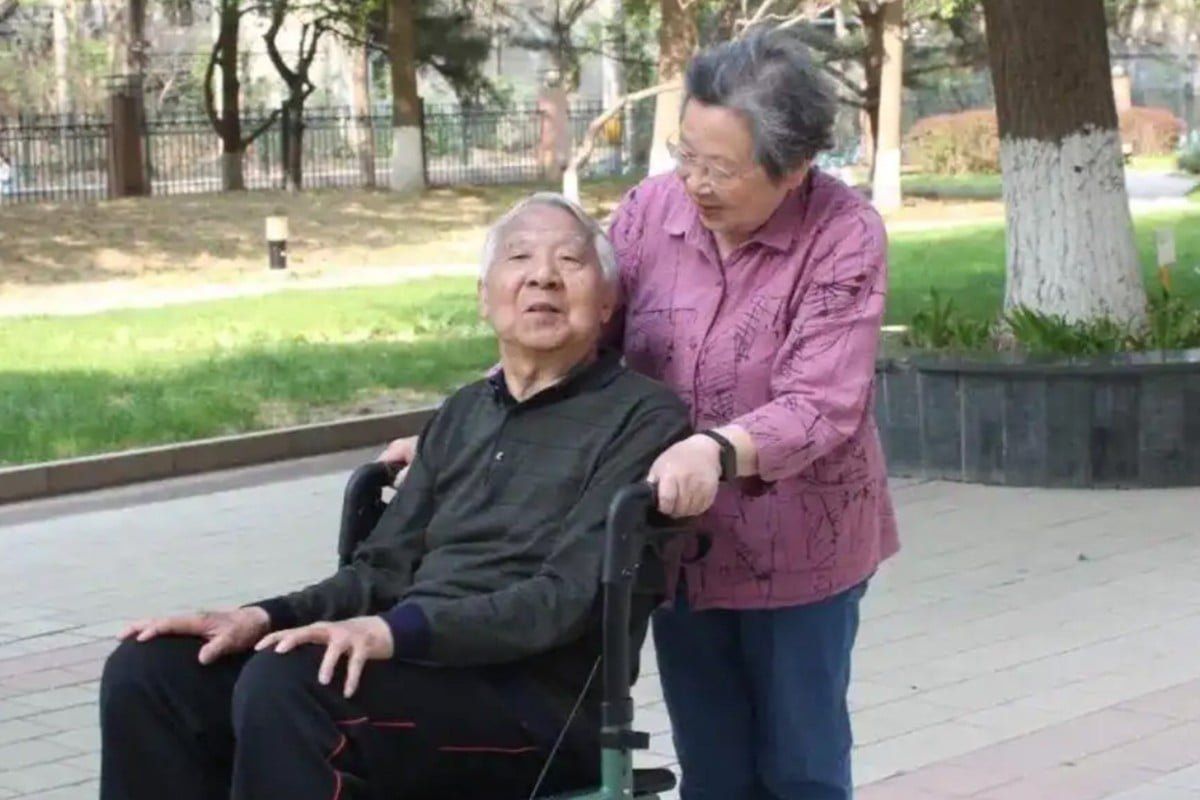
At 90 years old, Wen Bo has become an unlikely influencer in China, not through celebrity or wealth but through her quiet, relentless commitment to caring for her husband as Alzheimer's disease gradually reshapes their life together. Her journey—documented in diary posts on the social media platform RedNote—has resonated across the country at a moment when China faces unprecedented demographic challenges around ageing and elder care. What began as a private family decision has evolved into a broader conversation about how societies should treat their most vulnerable citizens, particularly those facing cognitive decline.
Wen and her husband's relationship spans nearly seven decades. They first encountered each other as teenagers in secondary school, then undertook years of long-distance courtship before marrying in 1960—a union that would outlast the profound economic and social transformations of modern China. Throughout their partnership, they cultivated an energetic lifestyle that included swimming, walking, and travel throughout China and internationally. Their two sons grew up, built careers, and established families of their own, creating the typical pattern of urban Chinese life where adult children juggle demanding professional obligations with filial responsibilities.
The diagnosis came in 2023, when Wen's husband, now 92, began exhibiting memory loss and incontinence. Rather than view his condition as primarily a medical problem requiring institutional solutions, Wen approached it as a challenge demanding both practical caregiving and emotional attunement. Recognising that her sons were preoccupied with their own families and professions, she made the deliberate choice to become his full-time carer, supplementing her efforts with a domestic helper for cooking and household management. This decision reflects values rooted in filial piety and spousal commitment, yet executed with a modern sensibility about what meaningful care actually entails.
What distinguishes Wen's approach is her philosophical conviction that Alzheimer's patients require far more than medical monitoring and physical assistance. She has invested considerable effort in understanding the disease through books and online research, then translated that knowledge into a daily regimen of cognitive stimulation. Mathematics problems, puzzles, and painting sessions form the backbone of their mornings and afternoons. These activities are not merely therapeutic busywork; they represent Wen's belief that people with dementia retain capacity for growth, challenge, and accomplishment—qualities that anchor human dignity. The results, though modest, have been measurable: her husband's cognitive deterioration has proceeded more slowly than typical for someone at his stage of disease.
Wen's diary entries provide intimate details that have struck a chord with millions of younger Chinese confronting their own anxieties about ageing and parent care. A recent post described her husband completing an arithmetic test, taking longer than before but achieving only a single error—a moment that encapsulates both decline and perseverance. More poignantly, she expressed her deepest fear: that he might forget her name. Rather than passively accept such forgetting as inevitable, Wen has adopted a nightly ritual, reminding him before sleep to call for her assistance whenever needed. She frames this not as rote memory practice but as an affirmation of their fundamental relationship: she is his wife, and she should be the last person erased from his mind.
Beyond cognitive exercises, Wen employs what care specialists might call dignity-preserving practices. She encourages her husband to participate in simple household tasks, allowing him to move at his own pace without correction or impatience. When they venture outside, he can still operate his electric wheelchair independently, and he occasionally reminds her to take breaks—small reversals of dependency that she clearly treasures. In interviews, Wen has articulated a philosophy that challenges stigmatising attitudes toward Alzheimer's: people with the disease should not be defined by their illness. She insists that self-respect, a sense of existence, and the feeling of being needed remain essential even as memory fails. This perspective stands in sharp contrast to narratives that often treat dementia patients as gradually ceasing to exist as meaningful persons.
The social media response to Wen's posts reveals something significant about contemporary Chinese society. Younger adults who have watched their parents grapple with career pressures now face the prospect of managing elder care with limited time, limited space in urban apartments, and limited cultural models beyond institutional solutions. Wen's story offers an alternative vision—one that does not deny difficulty or decline but insists that meaningful life and genuine care remain possible within those constraints. One commenter wrote that Wen's posts bring comfort by demonstrating what an ideal later life could resemble: companionship with a loved one alongside preserved independence. Another noted that Wen's documented experiences have assuaged fears about parental care and provided practical confidence for the future.
This cultural moment arrives as China confronts demographic realities that demand urgent policy attention. The country's population aged 60 and older exceeded 320 million people by the end of the previous year—more than one-fifth of the total population. This unprecedented ageing is unfolding in a society where traditional extended family structures have fragmented, where young people bear enormous competitive pressure in education and careers, and where public investment in elder care infrastructure remains inadequate relative to need. Institutional care facilities exist but often lack resources, carry social stigma, and cannot fully replicate the attentiveness a devoted family member might provide. Against this backdrop, Wen's example of intensive home-based care takes on quasi-political significance.
Yet Wen herself maintains realistic expectations about what she can sustainably provide. In diary entries, she has mentioned that should her husband's condition deteriorate substantially, she would consider transitioning to hospice care. This acknowledgment—that there are limits to what any individual can manage, and that institutional support may eventually become necessary and appropriate—prevents her narrative from becoming either inspirational propaganda or implicit criticism of families unable to match her dedication. Instead, it frames her caregiving as one possible response to Alzheimer's, admirable but not universally replicable, and suggests that a humane society requires multiple care pathways.
The resonance of Wen's story across social media platforms indicates a hunger for models of ageing that emphasise agency, dignity, and relational continuity. China's younger generations, confronting their own mortality and family obligations in ways their parents' generation did not, see in Wen's example both a template and a challenge. They recognise that the way they treat their parents and grandparents reflects not only personal virtue but also a society's fundamental values. As China continues its demographic transition—moving from a young, expanding population to an aged, contracting one—the narratives it produces about Alzheimer's, elder care, and the meaning of a life well-lived will shape policy, family decisions, and the lived experience of millions.

