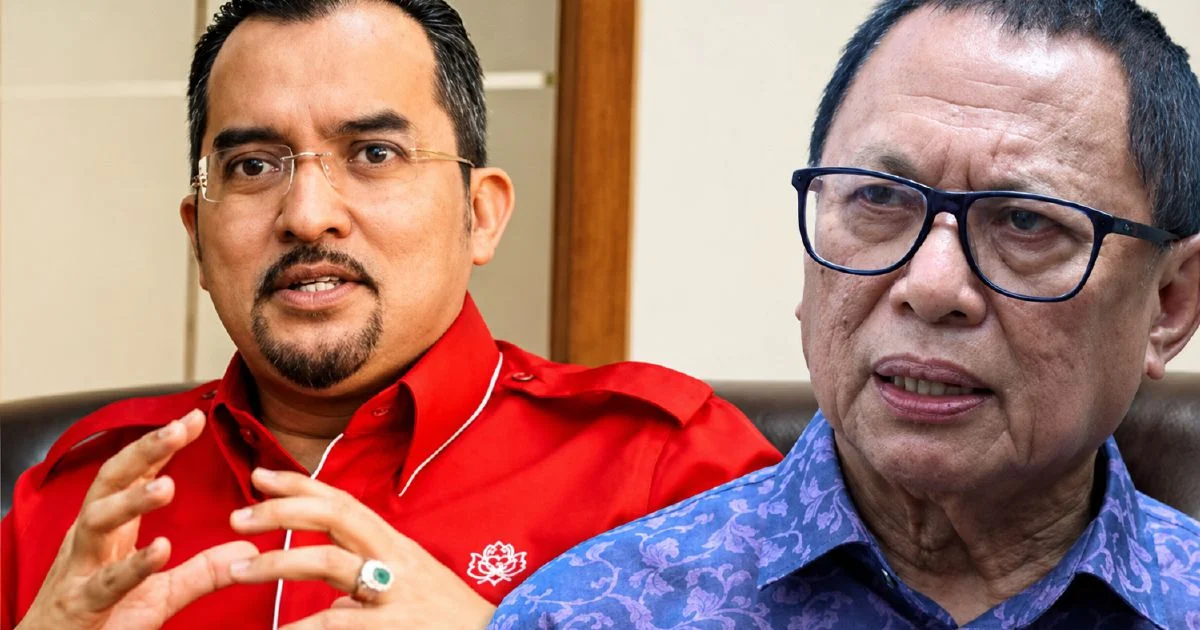
The political turmoil within Umno has intensified as Datuk Dr Asyraf Wajdi Dusuki, the party's secretary-general, delivered a forceful counterattack against Datuk Dr Mohd Puad Zarkashi in Johor Baru, responding to the latter's recent departure from the Malay-Muslim party. The exchange underscores deepening tensions within Umno's upper ranks, reflecting broader ideological and operational divisions that have plagued Malaysia's dominant political organisation in recent months.
Puad Zarkashi's exit from Umno represents a significant blow to the party's cohesion at a time when it desperately seeks to consolidate power ahead of anticipated electoral cycles. His decision to step away from the party has left ripples across the political landscape, particularly given his seniority and profile within Umno's hierarchy. The circumstances surrounding his resignation, along with the allegations he has reportedly levelled, have become the subject of intense speculation and intra-party recriminations.
Ashyraf Wajdi's response demonstrates the gravity with which Umno's leadership treats such departures and the reputational challenges they pose. As secretary-general, he occupies a crucial organisational role within the party, tasked with maintaining administrative integrity and party discipline. His direct engagement with the matter signals that Umno's top echelons view Puad Zarkashi's exit as more than a routine resignation—it represents a potential fracture that could undermine the party's unity narrative during a politically uncertain period.
The allegations surrounding palace matters, which feature prominently in the dispute, touch upon sensitive constitutional and political terrain in Malaysia. References to the palace carry particular weight in Malaysian politics, where the institution of royalty occupies a constitutionally protected and symbolically central position. Any insinuation that party figures have involved monarchical institutions in partisan disputes risks damaging Umno's standing among both traditionalist supporters and broader public opinion that generally respects palace neutrality in political contests.
Puad Zarkashi's background and previous roles within Umno provide context for understanding why his departure carries significance beyond normal party attrition. Individuals at his level typically possess detailed knowledge of party operations, financing arrangements, and strategic deliberations. His willingness to exit—and apparently to speak publicly about grievances—suggests fundamental disagreements that extend beyond routine policy disputes or personal ambitions.
The timing of this confrontation merits consideration within Umno's broader political trajectory. The party faces pressure from multiple directions: competition from younger, more agile political formations, internal factional divisions, and questions about its relevance in contemporary Malaysian politics. Leadership succession questions, organisational renewal challenges, and strategic direction disagreements have periodically boiled over into public disputes. Asyraf Wajdi's aggressive response may reflect calculated efforts to project strength and restore confidence in Umno's institutional structures.
For Malaysian observers, the Asyraf-Puad dispute illustrates the hazards facing any political organisation attempting to maintain unity while accommodating diverse interests and ideological perspectives. Umno's inability to contain such conflicts within closed-door negotiations suggests institutional weaknesses in conflict resolution mechanisms. When senior figures resort to public recriminations, it signals a breakdown in internal discipline and consensus-building capacity that typically characterises well-functioning party machines.
The involvement of palace-related claims adds a layer of complexity that extends beyond ordinary intra-party politics. In the Malaysian context, where constitutional monarchies and state rulers retain significant symbolic authority and occasional political influence, allegations touching upon royal matters demand particular discretion. Public disputes invoking such themes risk appearing disrespectful to institutions that the party fundamentally relies upon for legitimacy and grassroots support, particularly among Umno's traditional voter base.
Ashyraf Wajdi's counterattack, however forceful, must navigate these sensitivities carefully. His role as secretary-general requires him to defend the party's interests and leadership while avoiding statements that might themselves be construed as inappropriate references to palace matters. This balancing act reflects the peculiar challenges facing Malaysian political leaders when managing internal disputes that touch upon constitutionally sensitive territory.
Looking beyond this immediate clash, the Asyraf-Puad confrontation carries implications for Umno's capacity to govern effectively should it reclaim executive power. Political organisations experiencing frequent high-level departures accompanied by public disputes often struggle with policy implementation and administrative coherence once in office. The party's inability to manage this situation discreetly raises questions about whether it possesses the institutional maturity and disciplinary structures necessary for stable governance.
The situation also reflects wider challenges within Malaysia's political ecosystem, where party systems remain personality-driven and factional rather than institutionally robust. Umno, despite its decades-long dominance, exhibits structural vulnerabilities that newer competitors have attempted to exploit. The Asyraf-Puad episode underscores these organisational limitations and raises questions about whether Umno can successfully modernise its internal processes to prevent such public conflicts from recurring.
Regional observers monitoring Malaysian politics will note that Umno's current troubles provide opportunities for rival political forces to gain ground. In Johor and other stronghold states, such public disputes over departures and palace allegations can erode voter confidence and open space for alternative political movements. The party's handling of this matter will likely influence assessments of its overall organisational health and electoral prospects in coming contests.

