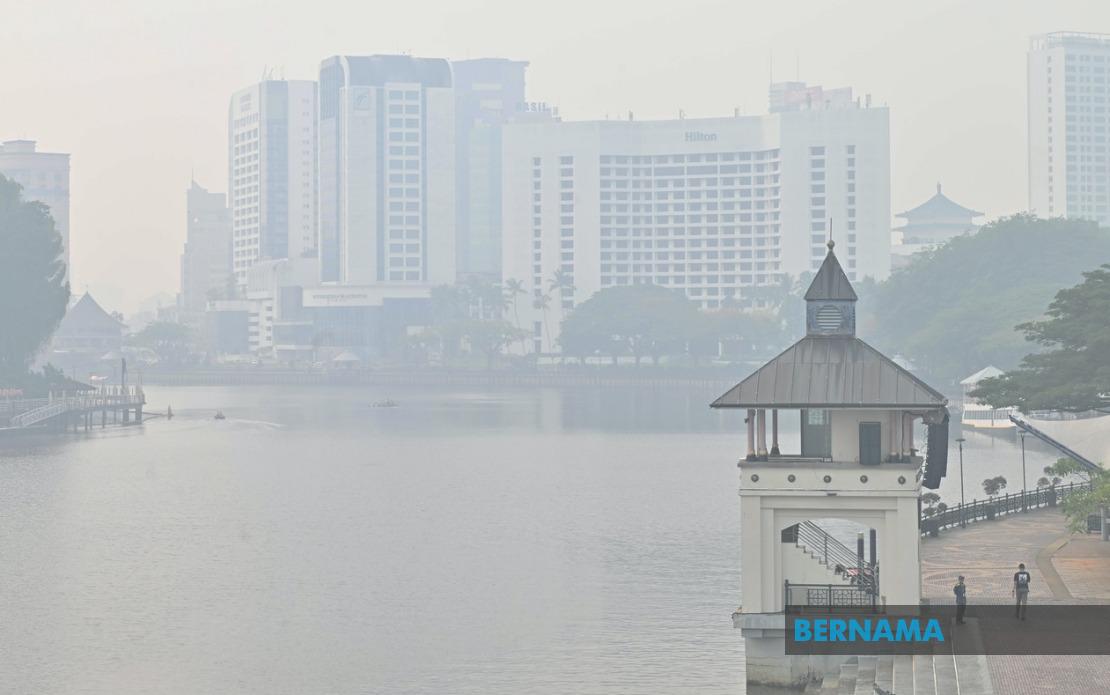
Social activist Tan Sri Lee Lam Thye has challenged ASEAN leaders to conduct a high-level review of the ASEAN Agreement on Transboundary Haze Pollution and adopt a more stringent, time-bound and enforceable regional action plan before the situation deteriorates further. Speaking on August 25, Lee stressed that the bloc can no longer afford to treat the recurring haze crisis as a seasonal weather inconvenience, arguing instead that ASEAN must transition from reactive crisis management to proactive prevention strategies and bolster collective preparedness across the region.
The agreement, which was signed in Kuala Lumpur on June 10, 2002 and entered into force the following year, has now been in operation for over two decades. Yet despite this extensive framework, Southeast Asian nations continue to experience recurring forest fires, transboundary smoke migration and persistent air quality deterioration. Lee's intervention reflects growing frustration within the region that the existing pact, despite its longevity, has failed to produce sustained results or meaningful improvement in haze episodes that regularly disrupt daily life and commerce across multiple countries.
Lee reframed the haze problem beyond its conventional environmental characterization, presenting it instead as a multifaceted governance, ecological, public health and interstate responsibility challenge that demands immediate structural reform. He argued that viewing haze as merely an annual ritual risks diminishing its severity and legitimizing chronic underperformance in regional cooperation. This rhetorical shift is significant for Malaysian policymakers, given that the country has historically borne the brunt of transboundary pollution from neighboring territories and has emerged as a leading voice for stronger regional action.
The activist called for urgent measures that would represent substantial departures from the current framework. These include comprehensive strengthening and reassessment of how the haze agreement is implemented across member states, coupled with the establishment of precise, quantifiable objectives for preventing fires, reducing hotspot occurrence and eliminating persistent sources of regional air pollution. Such specificity stands in contrast to the often vague commitments that have characterized ASEAN statements on the issue, reflecting a demand for measurable accountability.
Enhanced corporate and individual accountability emerged as a cornerstone of Lee's proposal. He advocated for tougher enforcement action against companies and persons engaged in open burning and unauthorized land clearing, alongside formal mechanisms for conducting cross-border investigations, sharing evidence and implementing penalties when fires generate transboundary damage. This dimension addresses a persistent weakness in regional cooperation: the difficulty of holding private actors and state entities accountable for violations that affect neighboring populations.
Lee proposed establishing a permanent, institutionalized regional haze response system featuring real-time satellite surveillance capabilities, expedited dissemination of hotspot intelligence, coordinated firefighting operations and clearly delineated roles for each nation during severe pollution episodes. This institutional architecture would replace the ad-hoc coordination that currently characterizes crisis response, ensuring continuity and faster mobilization during critical periods. The proposal recognizes that information gaps and delayed communication have historically undermined regional efforts to contain fire-driven pollution.
Prevention-focused cooperation formed another pillar of the recommendations. Lee urged ASEAN members to establish joint early-warning systems activated before seasonal dry periods, intensify collaborative efforts in peatland and forest conservation management, and commit to greater openness in disseminating data concerning hotspot locations, fire origins and enforcement actions taken by individual states. For Malaysia, improved information transparency would provide valuable intelligence for air quality planning and public communication strategies.
A critical element of Lee's argument involved separating the haze phenomenon from climate variability. While the ASEAN Specialised Meteorological Centre has warned that intensifying El Niño conditions, below-average rainfall patterns and dominant wind directions may elevate the risk of hotspot emergence and transboundary smoke across the southern ASEAN region, Lee cautioned against allowing natural climate factors to serve as convenient explanations that obscure human responsibility. Human-driven forest destruction and agricultural land clearing transform what would otherwise be manageable drought conditions into a regionalized crisis, he argued, placing accountability squarely on policy implementation and enforcement capacity.
Lee emphasized that Malaysian and other affected governments must be willing to elevate this matter assertively within ASEAN's highest-level forums without hesitation. He framed the approach not as interference in national sovereignty or blame-assignment but rather as a collective obligation to safeguard the health and welfare of Southeast Asian populations. This framing is diplomatically significant in the ASEAN context, where consensus and non-interference principles often inhibit forthright discussion of transboundary problems affecting multiple nations.
The timing of Lee's intervention reflects broader regional anxiety about intensifying climate pressures on Southeast Asia. Rising temperatures, shifting precipitation patterns and more frequent extreme weather events suggest that haze episodes may become more severe and prolonged in coming years, making institutional reform increasingly urgent. For Malaysia specifically, stronger regional mechanisms could reduce the public health burden associated with seasonal air quality crises that cause respiratory illness spikes and economic disruption.
The underlying tension in the haze debate centers on the gap between ASEAN's principle of non-interference and the practical need for binding, enforceable commitments that transcend bilateral relationships. A revised pact incorporating measurable targets, transparency requirements and enforcement provisions would represent a significant evolution in how the bloc approaches transnational environmental challenges. Such a shift would have implications beyond haze policy, potentially establishing precedents for addressing other regional environmental concerns.
Implementing Lee's proposals would require political will from ASEAN members to cede some operational autonomy and subject domestic forest management practices to regional scrutiny. For economically significant agribusiness sectors in some countries that rely on land conversion through burning, stronger enforcement could impose measurable costs. Yet the alternative—continued deterioration in air quality and public health across the region—presents its own economic and social consequences that increasingly outweigh sectoral interests.

