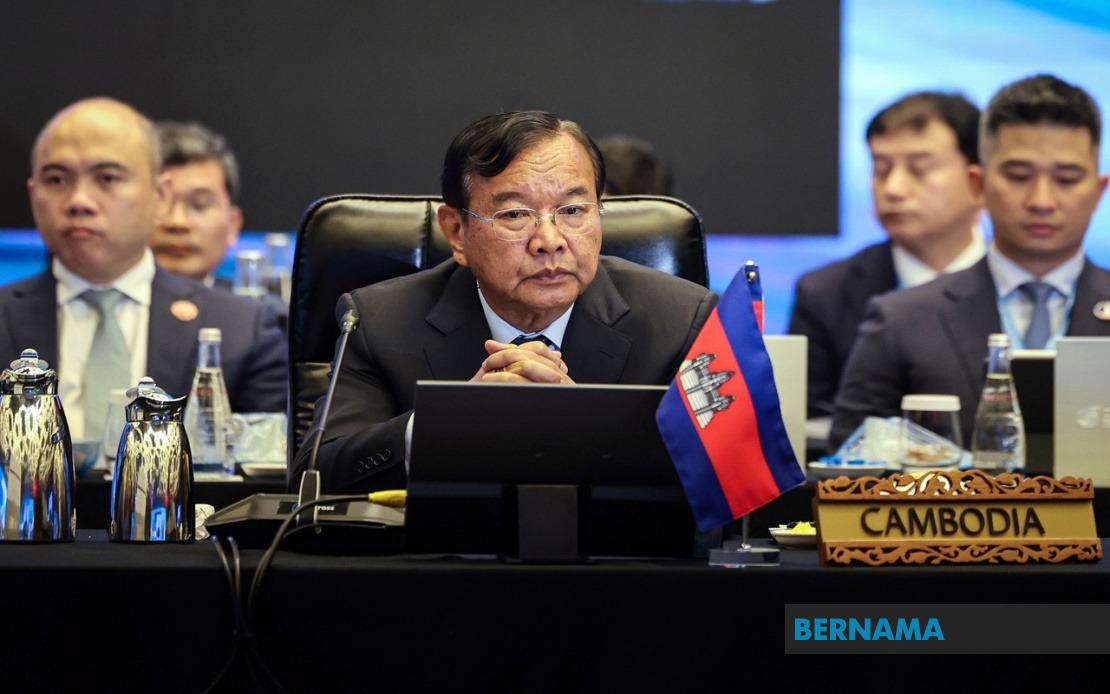
Cambodia's Foreign Affairs and International Cooperation Minister Prak Sokhonn has reaffirmed the Association of Southeast Asian Nations as a vital mechanism for preserving peace and stability across the region, speaking on the bloc's 59th anniversary. In remarks delivered on Friday, Sokhonn underscored ASEAN's foundational role in guiding regional relations through adherence to its Charter and the Treaty of Amity and Cooperation, the cornerstone frameworks that have governed member-state interactions since the organisation's inception.
Over nearly six decades of operation, ASEAN has fundamentally altered the trajectory of Southeast Asia, transforming what was once a volatile landscape characterised by division and unpredictability into a region increasingly anchored by structured dialogue, collaborative frameworks, and economic interdependence. This evolution represents one of the most significant regional achievements in postwar international relations, creating an institutional architecture that has enabled countries with competing interests to coexist and progress together. The bloc's success in maintaining relative peace across a region of diverse cultures, political systems, and historical grievances has become a model studied by regional organisations elsewhere.
Yet Sokhonn's assessment acknowledges a troubling reality that frames contemporary discussions about ASEAN's future relevance. The international environment has become markedly more volatile and unpredictable, with renewed military conflicts erupting across multiple regions, strategic competition between major powers intensifying, and established norms of international law and multilateral cooperation facing unprecedented strain. The rise of unilateralism, the weakening of consensus-based decision-making in global institutions, and the return of great-power competition create pressures that test ASEAN's capacity to maintain unity and independence.
The Cambodian minister's central argument carries particular weight for Malaysian observers: ASEAN cannot remain a passive reactor to external forces and shifting geopolitical currents. Instead, the bloc must position itself as an active architect of its own destiny, proactively shaping regional outcomes rather than merely responding after circumstances have already shifted. This perspective reflects growing regional concern that ASEAN's traditional approach of consensus and non-interference, while valuable, may require supplementation with more assertive agenda-setting in certain domains to ensure member states' interests remain protected.
Sokhonn's emphasis on ASEAN's unity and centrality directly addresses vulnerabilities that have become more apparent in recent years. Internal divisions on issues ranging from Myanmar's political crisis to disputed maritime claims have at times hampered the organisation's ability to speak with a unified voice on critical matters. Meanwhile, major powers have increasingly engaged individual ASEAN members through bilateral arrangements and groupings like the Quad, potentially fragmenting the regional consensus that has historically been ASEAN's greatest strength. The minister's call for renewed cohesion implicitly acknowledges these challenges.
Cambodia itself has played a distinctive role within ASEAN since its accession in 1999, following the country's emergence from decades of conflict and instability. Sokhonn highlighted his nation's contributions to regional integration and development, reinforcing Cambodia's stake in ASEAN's continued success. As the chair of ASEAN in 2022 and a consistent advocate for strengthening bloc mechanisms, Cambodia has positioned itself as invested in maintaining the organisation's relevance and effectiveness, particularly as it navigates relations with external powers.
The commitment to upholding the ASEAN Charter and Treaty of Amity and Cooperation represents more than symbolic reaffirmation; these documents encode principles of non-interference in internal affairs, peaceful settlement of disputes, and respect for sovereignty that have enabled countries with fundamentally different political systems and strategic interests to coexist. For Malaysia, which has long championed ASEAN's centrality in regional architecture, such emphasis on institutional fidelity is significant, as the bloc's rules-based approach provides smaller and mid-sized states with protections against domination by larger neighbours.
The composition of ASEAN has expanded significantly since its founding on August 8, 1967, when five nations established the bloc through the ASEAN Declaration. The organisation now encompasses Brunei, Cambodia, Indonesia, Laos, Malaysia, Myanmar, the Philippines, Singapore, Thailand, Vietnam, and Timor-Leste, representing over 650 million people and a combined GDP exceeding $3 trillion. This enlargement has deepened the organisation's diversity while simultaneously complicating consensus-building, as demonstrated in recent years by disagreements over Myanmar and South China Sea positions.
Looking forward, Sokhonn's message suggests that ASEAN faces a critical inflection point. The bloc's relevance will be determined not by nostalgia for past successes but by its capacity to adapt institutional mechanisms while preserving core principles. This includes strengthening ASEAN's engagement with dialogue partners, enhancing economic integration through initiatives like the ASEAN Regional Forum, and developing more robust mechanisms for addressing transnational challenges including cybersecurity, pandemic preparedness, and climate change.
For Malaysian policymakers and businesses, ASEAN's ability to maintain its strategic autonomy and cohesion carries direct implications. A fragmented ASEAN unable to coordinate policy risks creating vacuums that external powers would exploit, potentially undermining Malaysia's long-standing strategy of leveraging regional solidarity to protect national interests. Conversely, a united and proactive ASEAN can negotiate more effectively with major powers, secure better terms for regional development initiatives, and provide a stable foundation for bilateral relationships and commercial activities.
The Cambodian Foreign Minister's remarks ultimately represent a call to arms for ASEAN to embrace a more assertive posture without abandoning the consensus-based diplomatic traditions that have defined the organisation. Whether member states, including Malaysia, can maintain unity while addressing their divergent strategic interests and security concerns will largely determine ASEAN's trajectory through the remainder of this decade of geopolitical turbulence.

