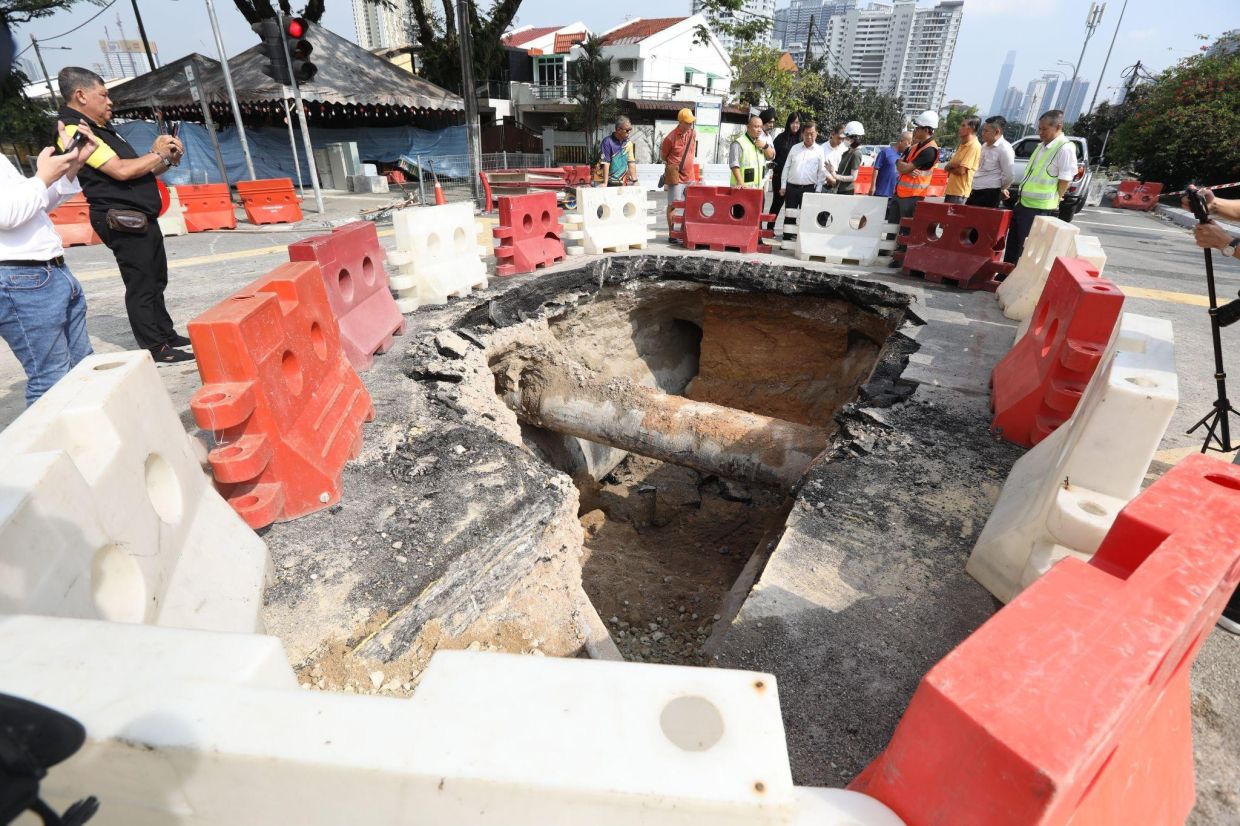
Intensifying rainfall patterns across Malaysia are bringing underground infrastructure into sharp focus, with sinkholes emerging as an escalating public safety concern. As extreme weather becomes the norm rather than the exception, the nation's sewerage network—a largely invisible but critical system—faces mounting pressure from climatic forces that threaten to undermine both urban safety and service continuity. The phenomenon of sudden ground collapse, while dramatic, is the visible symptom of deeper vulnerabilities within ageing infrastructure systems that were designed for conditions that no longer prevail.
Sinkholes develop through a complex interplay of geological, hydrological and structural factors that vary from incident to incident. Natural ground conditions, shifting underground water tables, construction vibrations and the deteriorating state of buried pipelines all contribute to creating conditions ripe for subsidence. Since each collapse unfolds through a unique combination of circumstances, pinpointing root causes demands rigorous technical forensics rather than speculation. However, understanding the general mechanisms—how and why the ground gives way—provides essential insight into prevention strategies that utilities like Indah Water Konsortium (IWK) must deploy at scale.
Managing approximately 22,500 kilometres of public sewer pipelines nationwide, IWK faces a formidable stewardship challenge. The utility has prioritised critical large-diameter concrete conduits measuring 600mm and above, which form the backbone of urban sewerage collection. These trunk sewers operate under relentless hydraulic stress, typically running at or near capacity with raw sewage flowing at high velocities. Over time, hydrogen sulphide gases accumulating inside these pipes accelerate concrete deterioration—a chemical corrosion process that weakens structural integrity and creates pathways for failure. This combination of mechanical and chemical stress means these critical assets require constant vigilance.
To counter these risks, IWK deploys a sophisticated suite of inspection technologies calibrated to different operational contexts. Ground Penetrating Radar (GPR) allows non-invasive assessment of subsurface conditions, while CCTV crawler systems capture detailed visual records of internal pipe conditions in accessible sections. Push rod and pole cameras reach confined spaces where larger equipment cannot venture. This technological arsenal, deployed strategically across the network based on asset criticality and risk profiles, generates the data necessary for informed decision-making about maintenance prioritisation. The insights gleaned from these inspections then guide targeted rehabilitation—trenchless relining techniques that restore structural integrity without excavation, or full pipeline replacement where necessary.
The relationship between extreme precipitation and underground infrastructure failure became more tangible through recent comments by IWK chief executive officer Narendran Maniam. Saturated ground loses load-bearing capacity while simultaneously exerting increased pore water pressure on buried structures. Heavy downpours drive substantial volumes of stormwater into sewer networks through cracks, joints and manhole covers—a phenomenon particularly acute in ageing systems where seals have deteriorated. This influx of water overwhelms designed hydraulic capacity, creating internal pressures that can fracture pipes or dislodge sections from their proper alignment. The consequences cascade: pipe misalignment causes blockages; cracks permit water exfiltration; failures allow surrounding soil to erode into the void spaces created by leaking sewage.
The progression from pipe failure to sinkhole formation follows a process of cumulative ground loss. As water escapes the damaged pipeline, it gradually washes fine soil particles into the expanding cavity beneath the surface. Over weeks or months, this void enlarges silently underground until the overburden becomes insufficient to support the weight above. Sudden collapse then opens a chasm that can swallow vehicles, damage buildings or, in worst cases, claim lives. What appears to occur overnight is typically the endpoint of a months-long subsurface process, though the accelerated timescale of modern extreme rainfall events may be compressing these development cycles.
Beyond immediate pipe failures, flooding of sewer networks itself warrants concern. Modern urban sewerage systems integrate surface drainage in many Malaysian cities, meaning intense rainfall inundates these networks with volumes for which they were not designed. Where sewer pipes are old and compromised, this hydrostatic pressure surge can split concrete, rupture joints or dislodge entire pipeline sections. The result is not merely reduced treatment capacity; it is the vulnerability of communities to waterborne contamination when raw sewage escapes or mixes with inundated surface areas. Older pipes throughout Malaysia's network are particularly susceptible, having operated for decades beyond their original design life.
Recognising that infrastructure resilience requires more than technical fixes, IWK recently conducted a comprehensive crisis simulation exercise at its Asian Sewerage Training, Research & Innovation Centre of Excellence (ASTRICE). The tabletop exercise modelled a catastrophic sinkhole involving casualties and major pipeline damage, testing emergency response protocols across multiple dimensions. Coordination mechanisms between IWK operational teams, the Fire and Rescue Department, Royal Malaysia Police and other agencies were put through structured scenarios. Communication flows, decision-making procedures and resource mobilisation timelines all came under scrutiny in a controlled environment designed to expose weaknesses before they matter operationally.
According to Narendran, the exercise validated existing procedures while illuminating gaps in coordination and situational awareness. Testing response capabilities in this structured manner allowed teams to refine their standard operating procedures, clarify role definitions and build muscle memory for crisis management. The findings will feed into revised protocols and enhanced training regimens across IWK's workforce. Such deliberate, repeated practice in hypothetical scenarios builds organisational capability that cannot be rushed or improvised when actual emergencies occur. The investment in simulation represents a form of insurance—expensive to conduct but far cheaper than the chaos of an uncoordinated response to a genuine crisis.
Beyond immediate crisis preparedness, the simulation exercise underscored a broader strategic imperative: as Malaysia's climate becomes increasingly unstable, sewerage infrastructure must be reimagined and rebuilt for conditions that historical data cannot predict. IWK's commitment to continuous asset assessment, targeted rehabilitation and coordinated emergency response reflects this reality. However, the scale of the challenge—22,500 kilometres of aging pipes—means that reactive management alone cannot succeed. Strategic capital investment in systematic pipeline replacement, smart monitoring systems that detect failures before they surface, and integrated stormwater management approaches must accompany the operational diligence IWK already demonstrates.
The sinkhole problem, ultimately, encapsulates a broader infrastructure maturity question confronting Malaysia and Southeast Asia more broadly. Rapid urbanisation in prior decades created extensive sewerage networks that now require simultaneous major maintenance just as climate change intensifies the stresses upon them. Funding constraints, competing priorities and technical capacity limitations all complicate this endeavour. Yet the consequences of underinvestment are visceral—the sudden opening of the earth beneath busy roads, the disruption to commerce and daily life, and the inherent risks to public safety. IWK's proactive risk management approach and commitment to emergency preparedness represent necessary but insufficient responses to a challenge that ultimately requires sustained political will and financial commitment to systematic infrastructure modernisation across Malaysia's cities.

