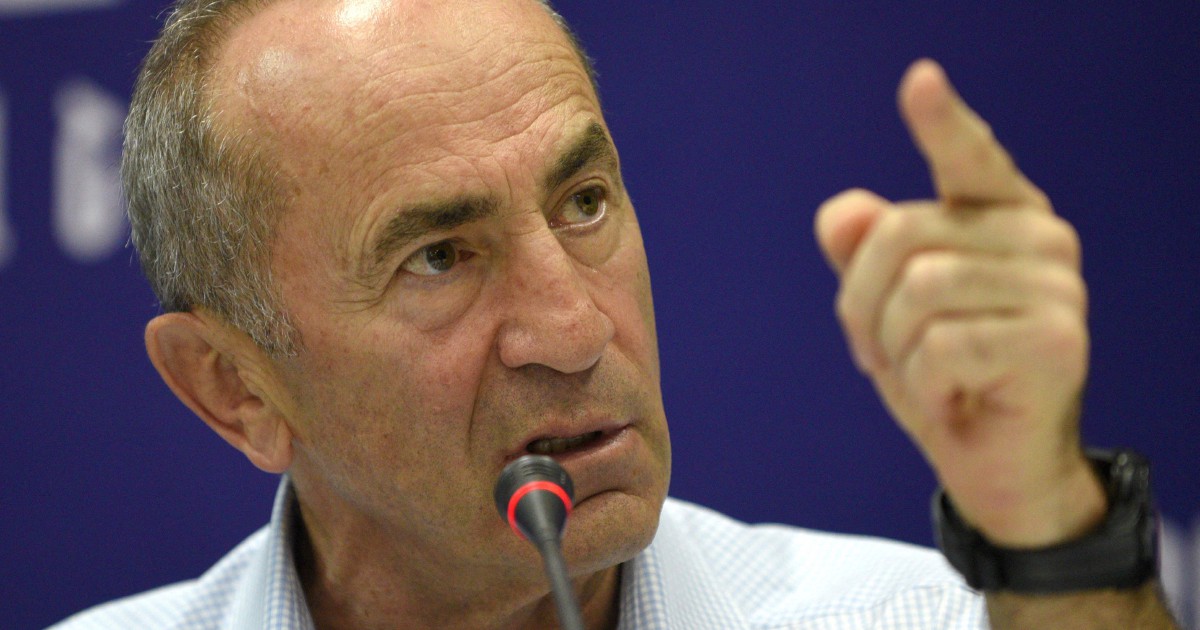
Authorities in Armenia moved decisively Tuesday when state prosecutors detained Robert Kocharyan, one of the country's most politically influential figures and a leading voice within the opposition movement, on allegations of systematic corruption spanning his presidential tenure. The detention and subsequent formal charges represent a watershed moment in post-Soviet Armenian politics, suggesting the country's legal institutions are pursuing accountability for alleged misuse of state resources during his administration.
Kocharyan held the presidency between 1998 and 2008, a decade marked by significant geopolitical tensions within the South Caucasus region and internal economic challenges. His period in office coincided with ongoing disputes with Azerbaijan over the Nagorno-Karabakh enclave, territorial tensions that have periodically escalated into armed conflict and continue to shape regional security architecture today. The former leader has remained a potent political force even after leaving the presidency, commanding substantial support among certain segments of the Armenian electorate and serving as a rallying figure for those opposing more recent administrations.
The corruption charges levelled against Kocharyan encompass multiple categories of alleged misconduct committed while he held executive authority. Such allegations typically involve questions about the disposition of state assets, potential embezzlement of public funds, or abuse of official position for personal enrichment—patterns frequently documented in post-independence investigations across former Soviet republics. The breadth of the charges suggests Armenian prosecutors have compiled what they consider comprehensive evidence of systematic wrongdoing rather than isolated incidents.
This development arrives amid Armenia's ongoing political tensions and governance challenges. The country has experienced substantial upheaval since the 2020 military conflict with Azerbaijan over Nagorno-Karabakh, which resulted in significant territorial losses and domestic recriminations about political and military leadership decisions. That conflict deepened societal divisions and intensified scrutiny of state institutions' effectiveness and integrity, creating pressure for visible accountability measures.
The detention of a former president on corruption charges reflects shifting patterns in South Caucasus politics, where several neighbouring countries have initiated high-profile prosecutions against previous leaders. Such developments often carry dual significance: they can demonstrate state commitment to rule of law and anti-corruption efforts, while simultaneously raising questions about political selectivity and weaponisation of the justice system. International observers typically scrutinise whether such prosecutions follow consistent legal standards or reflect political calculations.
Armenian civil society and international observers will likely monitor how the case proceeds, particularly given Kocharyan's sustained influence within domestic politics. The prosecution represents a test of whether the Armenian judiciary possesses genuine independence and capacity to hold powerful figures accountable, or whether legal mechanisms remain subject to political pressures that fluctuate with shifting power dynamics within the government.
For regional observers across Southeast Asia and beyond, the Armenian case underscores broader questions about governance, accountability, and institutional development that resonate across emerging democracies. Several Southeast Asian nations have similarly grappled with challenges of prosecuting former leaders while maintaining judicial credibility and political stability. The technical and procedural aspects of transitional justice frameworks—balancing accountability with national reconciliation—offer comparative lessons for diverse societies navigating similar dilemmas.
The implications extend beyond Armenian domestic politics. How Kocharyan's prosecution develops may influence regional confidence in Armenian institutions and signal the country's direction regarding democratic consolidation. Given Armenia's positioning between Russia and the West, and its historical relationships with diaspora communities worldwide, developments in governance and rule of law carry significance for international partnerships and foreign policy orientation.
Kocharyan's detention also reflects broader regional patterns where former state leaders face legal jeopardy following power transitions or security crises. The timing—occurring amid Armenian society's processing of the Nagorno-Karabakh conflict's consequences—suggests authorities may perceive space to pursue accountability for historical grievances, whether motivated by genuine rule-of-law commitments, political manoeuvring, or combinations thereof.
The formal charges against Kocharyan represent the opening phase of a potentially lengthy legal process. His formal charging enables prosecutors to proceed with investigation and trial preparation while potentially restricting his political activities, depending on bail conditions and legal procedures. The outcome will substantially affect Armenian political dynamics and may establish precedent regarding accountability expectations for senior officials.

