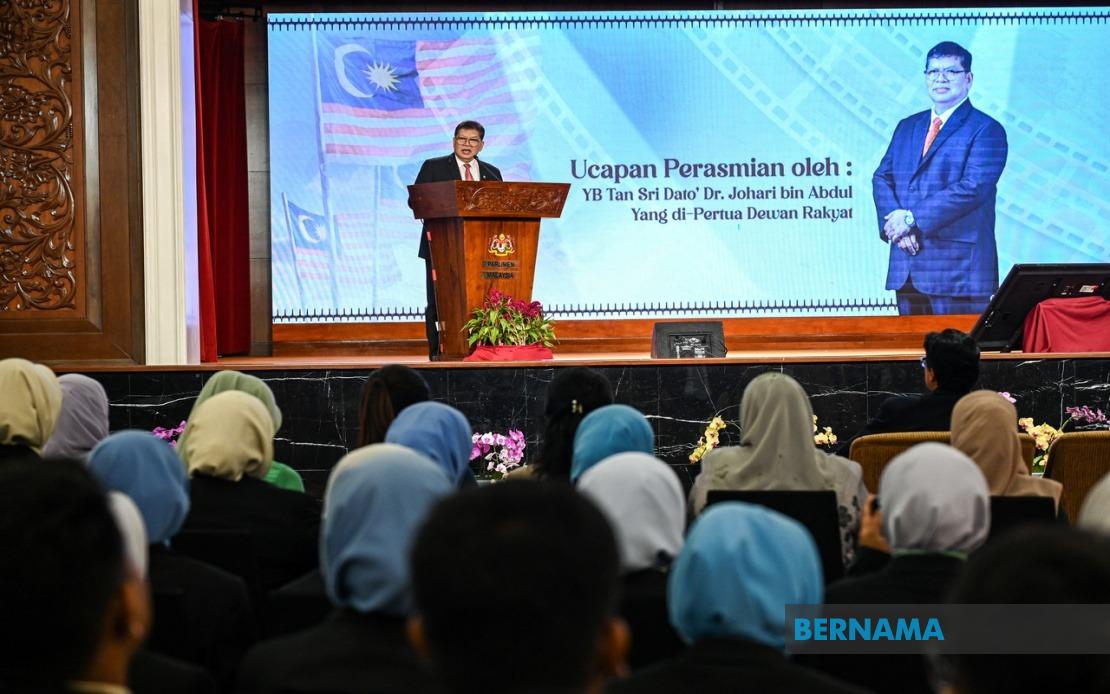
Parliament has unveiled a short film titled Arkitek Bangsa designed to kindle leadership aspirations and patriotic sentiment among Malaysia's younger generation. The production represents a strategic effort to reshape how young people perceive their role in the country's future, moving beyond passive citizenship toward active nation-building. The screening, held at the Parliament Building in Kuala Lumpur, signals Parliament's commitment to leveraging multimedia content as a tool for civic engagement and values education.
The initiative stems from a conviction that leadership emerges through deliberate cultivation rather than innate talent. Johari, speaking at the event, emphasised that young Malaysians must recognise their potential to shape national destiny and move beyond viewing themselves as passive observers of history. His framing of youth as architects of the nation carries both metaphorical and practical weight—just as physical structures require time, planning, and skilled hands to construct, so too does a resilient nation demand committed young leaders willing to invest in its development. This messaging directly counters fatalism or apathy among teenagers and young adults navigating an increasingly complex socio-political landscape.
The call for pride in Malaysian identity addresses a genuine concern in multicultural nations: the risk that young people, exposed to global influences and occasional social divisions, may lose connection to shared national narratives. By framing citizenship as something to take pride in rather than merely inherit, Parliament aims to strengthen emotional attachment to the country and its institutions. The phrase "Thank God I was born here. I am Malaysian" encapsulates this aspirational messaging, designed to resonate across diverse communities and reinforce belonging.
Parliament's parallel initiatives suggest a comprehensive approach to youth engagement. The Parliament School Programme has successfully brought over 1,000 schools to the legislative chamber, exposing more than 1,000 schools' worth of students to the mechanics of democracy and parliamentary procedure. This direct exposure to institutions often remains abstract in classroom settings, making in-situ learning particularly valuable for developing informed citizenship. Such programmes help demystify governance and allow young people to envision themselves as future decision-makers rather than distant observers.
The expansion of Youth Parliament represents a substantive commitment to adolescent representation and voice. Doubling membership from 100 to 222 signals Parliament's intent to broaden participation beyond elite circles, while introducing proportional representation ensures that youth elected bodies better reflect demographic diversity. These structural changes move beyond tokenism, offering genuine platforms where young people can debate, propose, and experience the compromise and collaboration inherent in democratic systems. For participants, such hands-on experience proves invaluable in developing practical leadership competencies.
Parliament's involvement in the National Service Training Programme (PLKN) through a dedicated select committee underscores recognition that leadership development requires sustained engagement across multiple channels. PLKN reaches conscripted young adults during a formative period, and Parliament's participation in steering this programme allows civic and parliamentary education to become embedded within national service curricula. This integration ensures that leadership messaging reaches even those who might not voluntarily seek parliamentary engagement.
The metaphor of construction versus destruction carries particular relevance in Malaysia's context. The country has navigated decades of relative stability and institutional continuity, yet recent political upheaval and social media-driven polarisation have exposed vulnerabilities in public trust and social cohesion. Johari's warning that destruction occurs swiftly while construction requires patience reflects concerns about erosion of institutional respect and democratic norms. By targeting youth before they develop entrenched views, Parliament seeks to build resilience against divisive narratives and strengthen commitment to shared institutions.
FINAS, Malaysia's national film development body, brought production expertise to the Arkitek Bangsa project, elevating the film's technical quality and broader appeal. Leveraging cinema as a medium aligns with how young people increasingly consume information and form perspectives. Well-produced content spreads more readily through informal networks and school screenings, multiplying the film's reach beyond formal parliamentary channels. This multimedia strategy recognises that values education proves most effective when delivered through familiar, engaging formats rather than traditional lectures.
The planned distribution through government ministries and agencies significantly amplifies impact potential. Rather than confining the film to parliamentary spaces, widening dissemination ensures that youth in schools, community centres, and government programmes encounter the messaging. This institutional embedding transforms a single production into a coordinated nation-building effort, signalling government-wide alignment on developing leadership capacity among young people. For schools and agencies, incorporating the film into existing curricula or programmes requires minimal additional resource investment while contributing to national objectives.
Historical consciousness forms an implicit undercurrent in this initiative. The reference to understanding "the country's history and appreciate the sacrifices and contributions of earlier generations" acknowledges that leadership grounded in historical awareness differs markedly from leadership divorced from context. Young people who recognise the struggles preceding Malaysia's independence, the compromises embedded in its founding agreements, and the incremental progress toward development prove more likely to approach contemporary challenges with perspective and measured judgment rather than impulsive radicalism.
The Arkitek Bangsa programme ultimately reflects Parliament's recognition that institutional legitimacy depends on cultivating the next generation of citizens and leaders. In democracies, formal rules and procedures carry weight only insofar as citizens respect and participate in them. By investing in youth values and leadership development, Parliament attempts to create a virtuous cycle where young people internalise the importance of democratic norms, eventually assuming leadership roles with embedded commitment to institutional integrity and inclusive governance.

