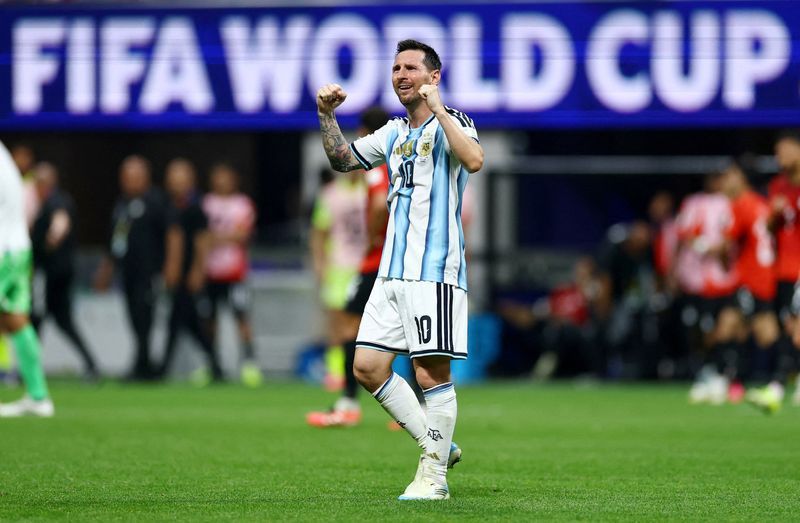
Argentina's path to defending their World Cup title has taken a decidedly rocky turn since the group stage concluded, yet the holders remain alive and heading toward a quarter-final showdown with Switzerland in Kansas City on Saturday. The defending champions' journey through the knockout rounds has proven far more treacherous than their commanding performances against Algeria, Austria and Jordan suggested it would be, raising questions about whether their group stage dominance can be recaptured when it matters most.
The most dramatic chapter came on Tuesday in Atlanta, where Argentina faced what appeared to be elimination against Egypt only to produce one of the tournament's most compelling comebacks. Trailing 2-0 with just eleven minutes of regular time remaining, Lionel Messi orchestrated an extraordinary turnaround that saw Argentina level the match and ultimately prevail 3-2 after extra time. The psychological impact of such a reversal cannot be overstated—a team that could have exited the competition found instead a pathway forward defined by refusal to surrender.
For Argentina supporters accustomed to their side's earlier near-flawless performances, the defensive frailties exposed during the knockout rounds represent a stark departure from what was witnessed in group play. The South American champions conceded four goals across two knockout matches after managing just a single goal against them throughout the entire group phase—and that came when manager Lionel Scaloni deliberately rotated his starting lineup and rested key personnel against Jordan. The disparity underscores how the intensity and tactical sophistication of knockout football differs fundamentally from the more methodical group stage encounters.
Scaloni's assessment of his team's performance against Egypt differed somewhat from the chaotic scoreline might suggest. The Argentina manager argued that the tactical display improved markedly compared to their extra-time victory over Cape Verde, noting that his side created numerous opportunities during the opening period and even squandered a penalty kick when Messi, remarkably, failed to convert from the spot. This perspective highlights how tournament football can obscure underlying quality—a team may dominate possession and chance creation yet still find itself chasing a deficit due to defensive lapses or conversion misfortune.
The character displayed by Argentina's players throughout the ordeal has emerged as perhaps the most valuable commodity they have demonstrated. Messi, despite the missed penalty, remained instrumental in orchestrating the comeback, while midfielder Leandro Paredes articulated the collective mentality that has sustained the team through adversity. "We never felt out of it, we never stopped believing," Paredes explained, capturing the determination that separated Argentina from potential elimination. This unwillingness to accept defeat resonated through the squad's commentary in the immediate aftermath, suggesting that whatever tactical adjustments Scaloni implements, the foundational commitment to fighting remains intact.
Former Argentina striker Carlos Tevez, observing from the ESPN Argentina broadcast booth, distilled the essence of what the team demonstrated through two difficult knockout encounters. Rather than fixating on the quality of performance or the statistical measures of dominance, Tevez emphasized the emotional resilience and determination his former teammates displayed—attributes that often prove decisive when tournament pressure reaches its apex. The heart shown against Egypt may ultimately define Argentina's entire campaign if they progress through the remaining stages, serving as the narrative thread that binds together their World Cup story.
The upcoming quarter-final against Switzerland represents a markedly different challenge from what Argentina faced in Atlanta. Scaloni was emphatic in his respect for the Swiss team, describing them as possessing an "incredible World Cup tradition" alongside "outstanding players" with extensive tournament experience. Switzerland's consistency across multiple World Cup cycles suggests they will present a more organized and tactically sophisticated opponent than the African representatives—a team that can exploit Argentina's newly exposed defensive vulnerabilities while potentially neutralizing the attacking prowess that emerged during the comeback against Egypt.
Argentina's training resumed on Wednesday evening in Kansas City, allowing Scaloni limited time to address the defensive issues that nearly proved fatal against Cairo. The manager faces the familiar World Cup dilemma of balancing tactical adjustment against team continuity, knowing that wholesale changes risk disrupting the momentum and confidence that the Egypt victory provided. With Saturday's quarter-final looming, every training session becomes crucial for both fine-tuning defensive organization and maintaining the psychological momentum that has become Argentina's lifeline in this tournament.
The broader context of Argentina's defensive struggles reflects not merely individual errors but potentially deeper structural issues within how the team transitions from attack to defense. The pace at which modern World Cup football is contested punishes hesitancy during these transitions, and the four goals conceded in two knockout matches suggest systematic vulnerabilities rather than isolated incidents. Whether Scaloni can address these concerns while preserving the attacking impetus that has defined Argentina's campaign throughout the tournament will determine not only their prospects against Switzerland but their realistic hopes of successfully defending their title through the increasingly difficult path that remains.

