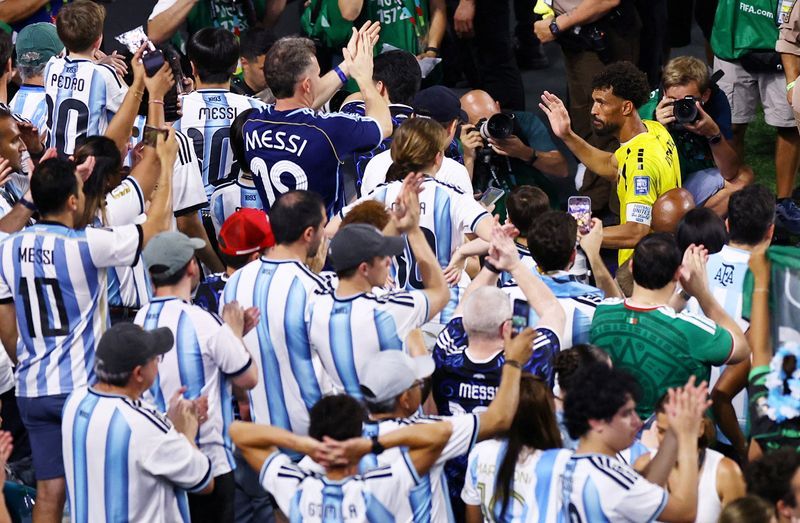
Argentina's progression to the World Cup round of 16 came with a troubling asterisk after the reigning champions required extra time to dispatch Cape Verde 3-2 in Kansas City, Missouri on July 4. The narrow victory against tournament debutants, who appeared on the world's largest football stage for the first time, has triggered fresh concerns about the South American powerhouse's capacity to withstand pressure from more dangerous opponents. Despite dominating the group stage with commanding performances against Algeria, Austria, and Jordan, Argentina's relative ease through the opening round now appears potentially misleading regarding their true competitive standing.
The match narrative belonged entirely to Cape Verde, whose resilience and tactical discipline forced Argentina into a position of vulnerability rarely seen from Lionel Scaloni's squad. The African side recovered from trailing twice during regular play, demonstrating that tournament debutants need not be intimidated by pedigree or recent success. Argentina's inability to convert their territorial advantage into decisive action created openings that Cape Verde's determined pressing exploited repeatedly. Only Cristian Romero's header, inadvertently redirected into the net by Cape Verde's Diney Borges in extra time, finally provided the breakthrough that separated the two teams.
Scaloni had publicly anticipated such difficulty beforehand, having observed Cape Verde's respectable group stage results against Spain and Uruguay. However, the specific manner in which the newcomers troubled Argentina suggested something beyond merely competitive spirit. The reigning champions' defensive organisation fractured under sustained Cape Verde pressure, and their midfield struggled to maintain the possession-based control that had characterised their earlier matches. This tactical vulnerability represents a qualitative difference from simply facing a determined opponent, pointing toward structural issues that stronger World Cup competitors will undoubtedly target with greater efficiency and precision.
The scrutiny surrounding Argentina's true competitive level intensifies given their group stage opposition profile. Questions about fixture difficulty had circulated throughout their preparation phase, notably highlighted by Iceland serving as their final European test ahead of the tournament—their first since lifting the 2022 World Cup. This scheduling reality, combined with their relatively straightforward group assignment, meant Argentina's defence had essentially faced no meaningful resistance until Cape Verde arrived. The absence of pressure-testing matches creates dangerous blind spots in tournament football, where teams that appear invincible in easier circumstances frequently encounter rude awakenings against tougher opposition.
Marcelo Gallardo, the former River Plate manager and 1998 and 2002 World Cup participant, viewed the narrow escape as potentially beneficial provided Argentina responded appropriately. His comments on ESPN Argentina emphasised that adversity, when processed correctly, can sharpen teams for subsequent challenges. Scaloni himself shifted focus toward his squad's demonstrated resilience during difficult moments, arguing that the capacity to recover and ultimately prevail carried significance beyond pure performance aesthetics. This philosophical framing—prioritising mentality and reaction over clean execution—reflects tournament football's reality, where many variables beyond tactical perfection determine ultimate outcomes.
Lionel Messi, whose record-extending twentieth World Cup goal arrived during first-half proceedings, acknowledged the physical and tactical demands that Cape Verde imposed. The 39-year-old captain directly identified Argentina's pressing deficiency and spatial cohesion issues, noting that disconnected defensive lines prevented his team from regaining possession at the pitch's higher regions where such advantages prove most valuable. His admission that he finished exhausted, despite Argentina theoretically controlling possession and game flow, indicates that Cape Verde's aggressive defensive profile drained Argentine energy through relentless work-rate demands. This observation carries particular weight given Messi's experience across numerous World Cups and his understanding of fixture-specific demands.
Two Argentine defenders whose recovery from injury proved especially symbolic contributed decisively to the eventual victory. Lisandro Martinez, returning from anterior cruciate ligament injury sustained in early 2025, scored Argentina's second goal while reasserting his presence in Scaloni's system. Romero, who had previously missed tournament matches through knee complications, provided the crucial defensive intervention that settled the contest. Martinez's post-match comments emphasised the emotional weight accompanying his return, describing his contribution as validating the considerable rehabilitation efforts undertaken with club support and national team backing. These individual redemption narratives, whilst emotionally compelling, mask the broader reality that Argentina's tactical structure required contribution from defenders specifically to overcome a team ranked considerably lower in global standings.
The immediate challenge confronting Argentina involves processing this unexpected difficulty ahead of their round-of-16 encounter with Egypt scheduled for Tuesday in Atlanta. The Egyptian side, whilst hardly considered among tournament favourites, demonstrated sufficient competence to advance from their group and possesses attacking capacity capable of exploiting the defensive vulnerabilities that Cape Verde so thoroughly exposed. Argentina's training resumption in Miami on Saturday provides limited time for extensive tactical restructuring or detailed video analysis. Scaloni's challenge involves maintaining confidence whilst addressing the specific pressure-testing deficiencies that emerged, a balancing act requiring considerable coaching sophistication.
For Southeast Asian observers and regional football analysts, Argentina's unexpected resistance to Cape Verde carries broader implications for how tournament progression unfolds when elite sides face determined lesser-ranked competitors. The match reinforced fundamental tournament football lessons: fixture difficulty matters considerably in determining knockout stage readiness, defensive vulnerability exposed during comfortable group stages threatens against opponents who specifically target such weaknesses, and psychological factors including injury returns and squad depth prove as consequential as tactical brilliance. Argentina's path to potential World Cup repeat remains entirely feasible, yet their Cape Verde experience has definitively punctured the narrative of invincibility that surrounded their group stage dominance.

