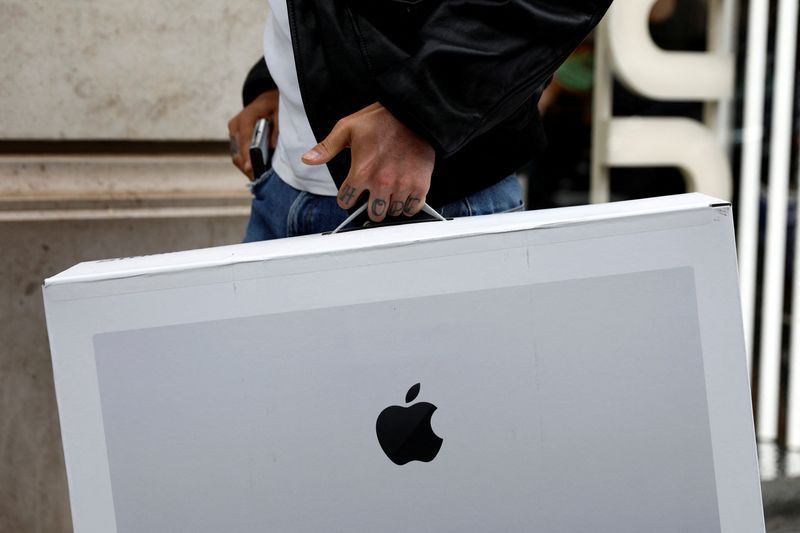
Apple has reclaimed the title of world's most valuable company, edging past chipmaking giant Nvidia on Friday as the market reassesses which technology leaders are best positioned to profit from the artificial intelligence revolution. The Cupertino firm's market capitalisation reached $4.88 trillion while Nvidia's declined to approximately $4.86 trillion following a 3.5 per cent slide in its share price. This reversal marks Apple's return to the summit for the first time since April 2023, representing a significant reshuffling among technology's most valuable enterprises.
The changing hierarchy reveals how investor perspectives on AI's commercial potential have evolved considerably over recent months. Nvidia held the top position for nearly a year, riding the crest of extraordinary demand for its graphics processing units, which have become essential infrastructure for developing and deploying large language models and generative AI applications. That dominance reflected the market's focus on the most direct beneficiaries of the AI boom—companies manufacturing the chips and computing infrastructure that power this technological wave. Yet the current rotation suggests investment strategies are broadening, with capital flowing toward firms positioned differently in the AI ecosystem.
Apple's ascendancy is particularly striking given the company's earlier reputation as a laggard in artificial intelligence development. Unlike competitors aggressively building proprietary large language models and investing heavily in foundational AI research, Apple has adopted a more measured approach. Toni Meadows, head of investment at BRI Wealth Management, observes that sentiment has fundamentally shifted. Whereas investors once penalised Apple for not spending extravagantly on developing AI models, they now recognise advantages in its different business model. The company's strength lies in monetising artificial intelligence through services, leveraging ecosystem lock-in, and driving hardware upgrades—strategies requiring far less capital intensity than building foundational models.
This rerating reflects growing confidence in Apple's ability to generate durable earnings from AI rather than speculative promises of future dominance. The distinction matters profoundly: investors are increasingly discerning between companies chasing technological achievements in artificial intelligence and those positioned to extract concrete financial returns from the technology's application. Apple's substantial existing user base, services revenue, and hardware ecosystem provide multiple channels for translating AI capabilities into customer value and shareholder returns.
The timing carries particular significance for Apple's leadership transition. Chief Executive Officer Tim Cook is preparing to hand over the reins to John Ternus, a hardware executive, in September. Achieving the number-one valuation position during Cook's final months at the helm represents a noteworthy capstone to his stewardship. The company's recent efforts to reassert itself in artificial intelligence include a long-overdue overhaul of Siri, its digital assistant, which had fallen considerably behind competitors' offerings. This upgraded assistant represents Apple's gambit to narrow the gap with other technology giants and ambitious startups competing in the critical AI race.
Some industry analysts contend that Apple possesses an underutilised asset capable of transforming its AI ambitions: the vast personal data residing on every iPhone worldwide. This information—encompassing user preferences, usage patterns, location history, and countless other details—could theoretically enable Siri to provide more contextually relevant responses and significantly enhance the assistant's capabilities. The technical foundation exists to leverage this data advantage. However, formidable obstacles remain. Apple has constructed its brand and competitive moat partly on privacy protections, keeping personal data encrypted and isolated within device operating systems. Extracting and utilising this information would require navigating substantial privacy considerations and potentially contradicting the company's public positioning on data protection.
Nvidia's displacement from the top position should not be interpreted as permanent decline or diminished importance. The chipmaker continues capturing enormous value from artificial intelligence infrastructure spending, as its graphics processors power the generative AI applications proliferating across enterprises and consumer markets globally. Nvidia could readily reclaim the top valuation ranking if investor sentiment shifts once more—a distinct possibility given the volatile nature of technology stocks and ongoing uncertainties about artificial intelligence's ultimate commercial trajectory. Benjamin Hall, vice president of alpha research at Segal Marco Advisors, emphasises that Nvidia will remain a significant participant whatever unfolds in the AI landscape.
Apple itself faces challenges that could constrain its trajectory. The company has pursued price increases to offset rising manufacturing and development costs—a strategy historically risky in consumer electronics, where affordability significantly influences purchasing decisions. Higher prices could suppress demand at precisely the moment Apple needs strong iPhone sales to justify its valuation premium. Additionally, Apple's position remains delicate given heavy reliance on demonstrating concrete AI benefits that justify premium pricing to consumers who have grown accustomed to free or low-cost AI features from competitors.
Meanwhile, the enthusiasm for artificial intelligence-related investments has begun dispersing beyond the chip designers and computing infrastructure providers that dominated earlier phases of the boom. Memory chipmakers have emerged as unexpected beneficiaries, with Micron crossing one trillion dollars in market value in May as investors recognised memory chips' essential role in AI infrastructure. South Korea's SK Hynix, another memory specialist, listed on the Nasdaq earlier this month, introducing additional competition for investor attention. These developments suggest the semiconductor industry's benefits from artificial intelligence will spread across a wider array of manufacturers than many initially anticipated.
Yet recent market turbulence has tempered semiconductor enthusiasm. The Philadelphia Semiconductor Exchange index declined nearly 19 per cent from its all-time highs during July as investors reassessed the sustainability of artificial intelligence's explosive growth trajectory and questioned whether recent valuations remain justified. Despite this significant pullback, the semiconductor index has still outperformed Nvidia on a year-to-date basis, indicating that diversification across chip specialists has provided better returns than concentration in any single company. This performance divergence reinforces the observation that artificial intelligence's investment landscape is maturing, transitioning from a narrow bet on a handful of companies toward a more nuanced allocation across multiple businesses positioned at different points in the AI value chain.

