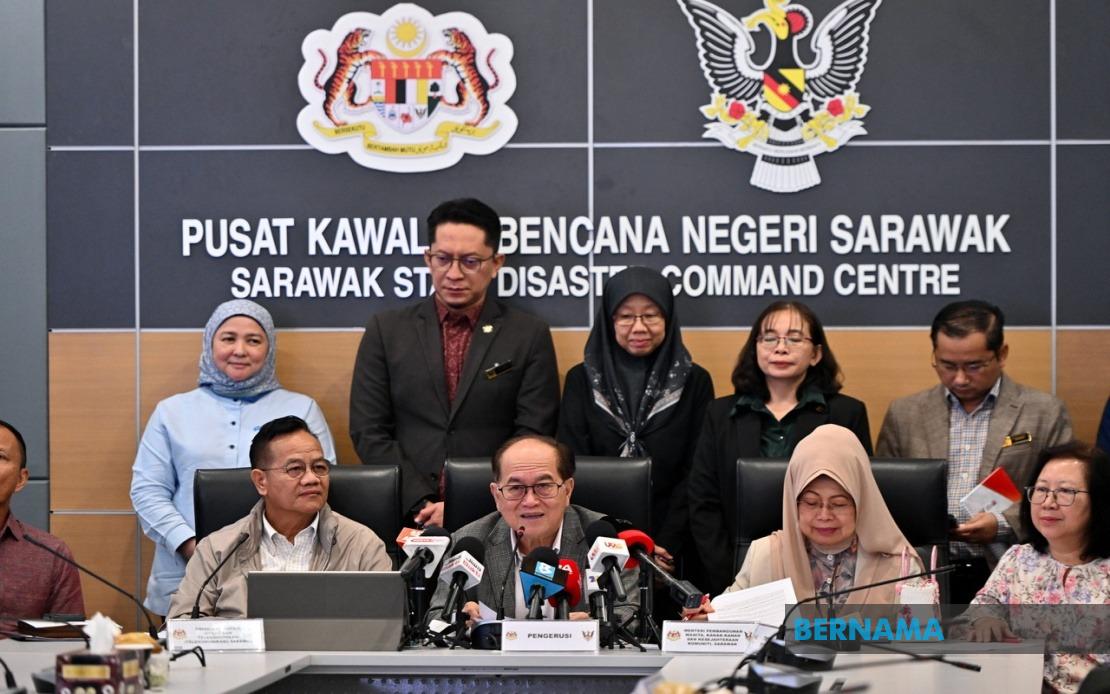
Sarawak's Deputy Premier Datuk Amar Douglas Uggah Embas has established a clear threshold for declaring a state of emergency as the region grapples with transboundary haze pollution. Speaking in Kuching on August 31, Uggah announced that an Air Pollutant Index reading of 500 would automatically trigger emergency protocols across affected areas of the state, marking a significant escalation in crisis management procedures.
Once such a critical pollution level is recorded, the matter will be escalated to the National Disaster Management Agency in Kuala Lumpur for coordination at the federal level. This escalation ensures that responses follow established disaster management frameworks and that resources are mobilized through appropriate national channels. The protocol reflects Malaysia's tiered approach to environmental emergencies, where state-level incidents with severe implications are integrated into the broader federal disaster response system.
The emergency declaration would have sweeping consequences for normal economic and social activity. Uggah clarified that all government offices, as well as public and private sector establishments in the affected zones, would be mandated to close operations. The only exception would be essential services deemed critical to public safety and welfare, such as hospitals, utilities, and emergency response units. This comprehensive shutdown approach underscores the serious health threat posed by extreme air pollution levels.
However, Uggah emphasized that managing transboundary haze remains fundamentally a regional challenge requiring coordinated diplomatic engagement. The issue cannot be resolved through unilateral state actions alone, as pollution sources often originate across international borders. Sarawak's State Disaster Management Committee has therefore engaged Natural Resources and Environmental Sustainability Minister Datuk Seri Arthur Joseph Kurup to facilitate discussions with Indonesia through established ASEAN frameworks and diplomatic channels.
The involvement of ASEAN mechanisms reflects the reality that Southeast Asian nations share common air basins and must work collaboratively to address environmental crises that transcend political boundaries. Rather than pursuing separate initiatives, the Sarawak state government is channelling concerns through formal regional structures, recognizing that sustainable solutions require commitment from all affected countries. This approach acknowledges that enforcement and prevention efforts must be coordinated multilaterally to be effective.
The State Disaster Management Committee has committed to continuing cooperation with the federal government to ensure that Sarawak's specific concerns and needs are properly represented in national-level discussions and ASEAN forums. Additionally, any proposals to provide technical or material assistance to neighbouring countries will be vetted and coordinated by the federal government through appropriate diplomatic channels, preventing ad hoc responses that could complicate international relations.
Beyond emergency preparedness, Sarawak is implementing proactive measures to mitigate current haze conditions. Cloud seeding operations are scheduled to commence from September 3 to 5, subject to prevailing weather conditions at the time of execution. This initiative serves a dual purpose beyond haze reduction: it aims to replenish critical water resources that have become depleted following an extended dry season affecting the region.
The water scarcity dimension adds urgency to the cloud seeding programme, as four major water catchment areas are currently experiencing significant depletion. These catchments—Simunjan, Lingga, Spaoh, and Lijok—supply essential water for both domestic consumption and industrial use across their respective regions. The prolonged dry spell has strained these resources, making artificial rainfall generation a practical response to multiple concurrent environmental pressures rather than solely an anti-haze measure.
For Malaysian observers, the situation illustrates how climate variability and transboundary pollution create cascading crises that demand sophisticated, multi-layered responses. The haze problem, while often discussed in isolation, intersects with water security, emergency management capacity, and regional diplomatic relations. Sarawak's approach demonstrates how a state government must simultaneously prepare for worst-case scenarios through emergency protocols, engage in patient diplomatic dialogue through established channels, and implement interim technical solutions to mitigate immediate harm.
The API 500 threshold carries particular significance for Malaysia's eastern states, where seasonal haze typically impacts air quality most severely during dry periods. Unlike the 2015 haze crisis that achieved international prominence, current protocols reflect lessons learned about coordinated response, transparent thresholds, and integrated resource management. The emphasis on formal channels rather than emergency declarations also signals maturation in how Malaysia approaches regional environmental governance, treating haze as a chronic challenge requiring institutional frameworks rather than crisis intervention.
For businesses and residents in affected Sarawak areas, the announced threshold provides clarity about when full economic disruption may occur, allowing contingency planning. The September 3-5 cloud seeding window represents the first concrete intervention, offering a potential reprieve if weather patterns cooperate. However, the underlying issue remains that resolution depends heavily on neighbouring countries' commitment to addressing land-clearing practices and agricultural burning—factors beyond Malaysia's direct control but within ASEAN's diplomatic reach.

