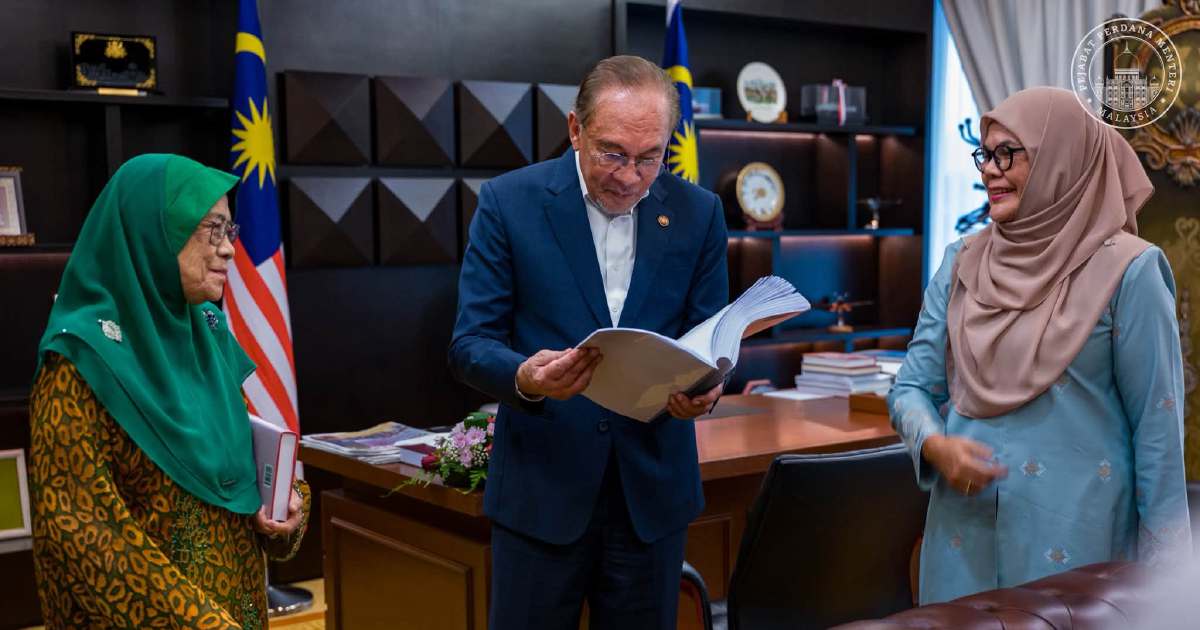
Prime Minister Datuk Seri Anwar Ibrahim has released a substantial work titled Gagasan Anwar Ibrahim Dalam Peradaban Budaya Bangsa, a compendium that weaves together decades of his accumulated wisdom on governance, societal progress and personal integrity. The volume represents an attempt to crystallise the core philosophical and practical principles that have shaped his approach to nation-building, capturing both his intellectual outlook and the experiential lessons drawn from a career spanning multiple roles in Malaysia's political landscape.
The decision to formally document his ideas through this comprehensive publication signals a deliberate move to institutionalise his political thought at a critical juncture in Malaysia's development. As Prime Minister navigating the country through economic complexity and social polarisation, Anwar appears intent on establishing a philosophical foundation that transcends his tenure in office. This approach reflects an understanding that sustainable national progress depends not merely on individual leadership but on the transmission of coherent, tested principles to rising generations of policymakers and civil society leaders.
The book's emphasis on character development alongside nation-building indicates Anwar's conviction that Malaysia's future prosperity hinges fundamentally on the moral and ethical quality of its leadership cadre. In an era marked globally by declining trust in institutions and political cynicism, the Prime Minister's focus on integrating personal integrity with public governance represents a counter-narrative grounded in the belief that systemic reform and individual transformation are inseparable. This philosophy carries particular resonance in Southeast Asia, where questions of accountability and institutional resilience remain contested within post-authoritarian democracies.
For Malaysian readers, the publication offers direct insight into the intellectual underpinnings of current government policies and the values animating decisions across multiple portfolios. Understanding the philosophical framework that shapes the Prime Minister's approach to economic policy, democratic reform and multicultural governance provides crucial context for evaluating both present initiatives and long-term strategic direction. The book essentially functions as a window into the reasoning behind Malaysia's current trajectory under his leadership.
The reference material value Anwar envisions for his work extends beyond academic or archival interest. By positioning the book as a deliberate tool for generational knowledge transfer, the Prime Minister is establishing a template for leadership succession that prioritises ideological clarity and principled governance. In Malaysia's political ecosystem, where transition planning often remains opaque and factional struggles frequently obscure policy substance, this attempt to codify a coherent vision of statecraft represents a refreshingly explicit approach to creating institutional memory.
The compilation of personal life experiences within the text adds an autobiographical dimension that elevates it beyond mere policy documentation. Anwar's journey from academic economist to political actor across different party affiliations, through imprisonment to his current position, provides a narrative arc that illustrates the practical application of his theoretical commitments. This lived dimension potentially gives the work greater persuasive power for young leaders grappling with questions of principle and pragmatism in their own careers.
For Southeast Asian observers monitoring Malaysia's institutional development, the book serves as a marker of how the current government seeks to define its intellectual legacy. The choice to ground nation-building discourse explicitly in cultural civilisation—as the Malay title's reference to peradaban budaya suggests—indicates an effort to indigenise political philosophy rather than importing wholesale external frameworks. This approach acknowledges that effective governance must be rooted in local historical understanding and cultural specificity while remaining open to universal principles of justice and efficiency.
The timing of the publication coincides with Malaysia's ongoing efforts to rebuild institutional confidence following years of political turbulence. As the country undertakes economic restructuring and faces regional geopolitical pressures, the availability of a text articulating the government's foundational principles could serve to stabilise expectations and provide clarity on long-term commitments across policy areas from education to economic management. Citizens, investors and regional partners may find in the documentation useful guidance regarding the consistency and staying power of current developmental priorities.
Educational institutions, think tanks and civil society organisations across Malaysia now possess a primary source text for studying contemporary Malaysian political thought and governance philosophy. This democratisation of access to the Prime Minister's intellectual framework—rather than relying on fragmentary speeches or media interpretations—represents an important contribution to public discourse. Students of Asian governance, policy analysts and future leaders can engage directly with the documented reasoning shaping Malaysian policy rather than working from incomplete secondary accounts.
The book's intended role as a reference for character development carries particular significance in an educational context. Malaysian universities, leadership development programmes and civil service training institutions may incorporate material addressing personal integrity and ethical reasoning, addressing a perennial challenge in developing robust institutional cultures resistant to corruption and motivated by public interest rather than factional advantage. If adopted within such frameworks, the text could influence how successive cohorts of Malaysian leaders conceptualise their responsibilities and obligations to the nation.

