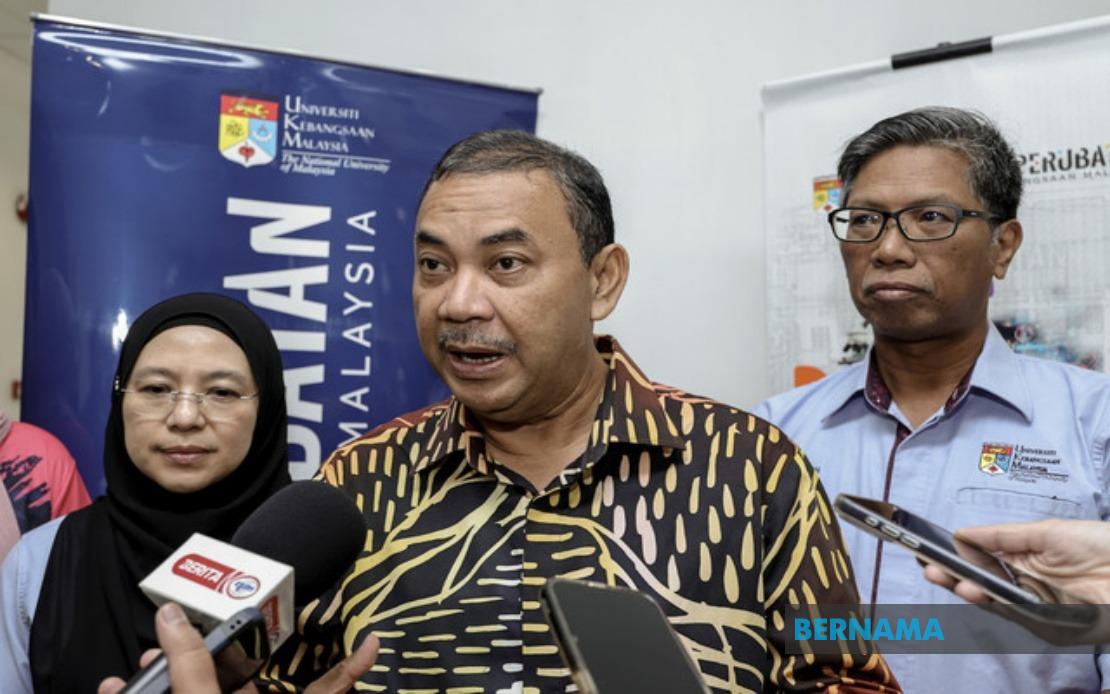
The MADANI Government under Prime Minister Datuk Seri Anwar Ibrahim is reaping considerable recognition for its economic stewardship and financial management, according to Datuk Azman Abidin, who serves as the Prime Minister's political secretary. Speaking at the opening of a STEM education programme at Universiti Kebangsaan Malaysia, Azman articulated what he characterised as an undeniable record of achievement spanning investment flows, broader economic performance, and the stability of Malaysia's currency in international markets. These accomplishments, he suggested, demonstrate Anwar's capacity to govern effectively and provide a compelling argument for voters to grant his coalition another term at the ballot box.
The political secretary's remarks reflect confidence within Anwar's administration that its economic credentials will resonate with voters when Malaysia eventually returns to the polls. Azman specifically referenced acknowledgment from multiple quarters—a phrase that encompasses both domestic observers and international stakeholders—validating the government's approach to fiscal and monetary policy. By framing economic performance as mutually recognised rather than merely self-assessed, the statement attempts to shift the political narrative away from governance controversies toward measurable outcomes in areas that affect household and business welfare directly.
Azman indicated that the government intends to capitalise on its achievements through a series of announcements scheduled before the National Day and Malaysia Day festivities, with the tabling of Budget 2027 serving as another platform to showcase planned initiatives. This timing strategy suggests deliberate efforts to maintain momentum around economic messaging during periods of heightened national attention and patriotic sentiment. For Malaysian observers, such sequencing often signals an administration preparing ground for electoral competition, using ceremonial occasions and budget presentations as natural venues for policy announcements that demonstrate forward planning and commitment to public welfare.
Beyond economics, the occasion also underscored the government's emphasis on science and technology education as a national priority. The STEM Exploration 2.0 programme brought together 200 Form Three students from the Klang Valley and Negeri Sembilan region for hands-on exposure to scientific disciplines. Participants engaged in experiments, microbiology activities, immunology demonstrations, and observed 3D printing applications in medical contexts—initiatives designed to kindle interest in scientific careers among secondary-level students at a formative stage of their educational trajectories.
Azman used the platform to advocate for elevating STEM from optional to compulsory status within Malaysia's education framework, framing this not merely as pedagogical preference but as essential national infrastructure for competing in an increasingly technology-dependent global economy. This argument reflects broader Southeast Asian anxieties about workforce preparedness and the risk of falling behind in high-value sectors. For Malaysia specifically, where economic diversification beyond palm oil and traditional manufacturing remains a strategic objective, STEM capability serves as both a domestic economic driver and a source of competitive advantage in attracting foreign direct investment in technology and advanced manufacturing sectors.
The political secretary encouraged participating students to view their experience as a foundation for larger ambitions, employing the aphorism that great achievements begin with foundational learning. His rhetoric positioned scientific inquiry and medical advancement as pathways to national leadership and influence, implicitly suggesting that cultivating scientific talent constitutes nation-building in tangible form. This framing appeals to both utilitarian arguments—economic necessity—and aspirational ones, wherein a generation educated in science becomes architects of Malaysia's future prosperity.
Azman expressed confidence that citizens would evaluate the government's track record judiciously when assessing their electoral choices in due course. This assertion carries implicit acknowledgment that governance ultimately depends on public consent and that economic performance, while important, must be communicated effectively and perceived as benefiting ordinary Malaysians across social strata. The statement also suggests awareness that some segments may remain unconvinced by the administration's narrative, necessitating ongoing efforts to demonstrate that policy achievements translate into tangible improvements in living standards, job creation, and economic mobility.
For Southeast Asia more broadly, Malaysia's economic management under Anwar carries implications for regional stability and investment flows. As the region's third-largest economy, Malaysian performance influences investor confidence across the bloc. Currency stability, in particular, signals effective macroeconomic management and reduces business uncertainty in supply chains linking Malaysia to neighbours like Thailand, Vietnam, and Indonesia. When Malaysian officials highlight currency strength, they implicitly signal successful navigation of global financial volatility and domestic fiscal discipline—attributes that extend Malaysia's influence as a relatively stable investment destination.
The government's explicit commitment to expanding the STEM programme nationwide reflects recognition that current provision remains geographically concentrated and insufficient to meet identified talent needs. This expansion agenda, if realised, would constitute significant institutional development and require coordination across federal and state education authorities. For students outside major urban centres, such expansion could materially alter educational opportunities and career pathways in regions currently underserved by specialised scientific facilities and expertise.
Azman's broader message—that the MADANI Government deserves continued electoral backing based on demonstrable achievement—represents the opening salvo in what will likely be an extended campaign of governance validation. Economic narratives provide measurable terrain upon which political arguments can be constructed and tested against available data. However, their persuasiveness ultimately depends on whether household incomes, employment security, and access to opportunity have visibly improved from voters' perspectives, particularly among lower and middle-income groups who often decide electoral outcomes.

