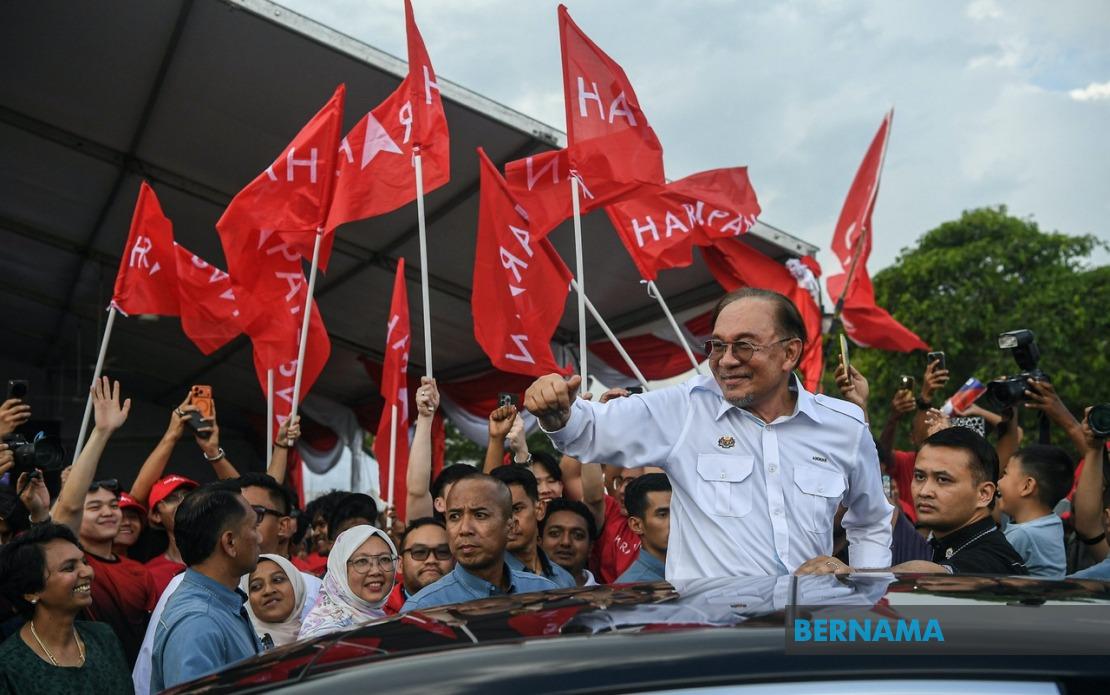
Pakatan Harapan's campaign apparatus in Johor has gained considerable momentum from the direct involvement of Prime Minister Datuk Seri Anwar Ibrahim, whose presence at multiple rallies across the state has mobilized significant grassroots support among voters. Communications Minister Datuk Fahmi Fadzil credited the coalition's leadership with generating tangible enthusiasm from communities across Johor, highlighting what he characterized as spontaneous and organic reactions from residents during recent campaign stops.
Fahmi observed the coalition's campaign energy firsthand while accompanying Anwar at two separate events held in Senggarang and Semerah within the Batu Pahat district. The minister drew attention to a particularly telling moment when an elderly resident travelled by trishaw with his wife specifically to greet the Prime Minister, illustrating the level of personal connection that Anwar's campaign presence has achieved. Such anecdotal evidence, according to Fahmi, underscores the broader shift in voter sentiment and demonstrated the coalition's capacity to translate high-profile leadership engagement into meaningful electoral advantage.
The intensity of Anwar's campaign effort has been substantial. Between July 4 and July 5, the Prime Minister attended fifteen separate events distributed throughout Johor, a schedule designed to maximize visibility and provide direct encouragement to PH's candidates and party workers operating on the ground. This concentrated push represents a strategic allocation of resources by coalition leadership, signalling the significance Pakatan Harapan places on the Johor contest and its potential implications for the party's broader political positioning in the country.
Pakatan Harapan's organizational footprint in this election cycle reflects an ambitious scope. The coalition is contesting all fifty-six State Legislative Assembly seats across Johor, representing complete electoral participation and demonstrating confidence in the party's competitiveness. This comprehensive fielding of candidates contrasts with potential limitations in earlier cycles and suggests that PH has consolidated sufficient organizational capacity to mount a statewide challenge across all constituencies.
The electoral landscape remains competitive, with a total of one hundred seventy-two candidates vying for the fifty-six available seats, indicating an average of roughly three candidates per constituency. This distribution reflects the fragmented nature of Malaysian electoral competition, where multiple parties and independent candidates typically contest each seat. The presence of such competition underscores that victory in Johor will require sustained mobilization and clear differentiation of PH's policy message from competing alternatives.
Fahmi, speaking in his capacity as both Communications Minister and PH Communications director, characterized the voter response as reflecting genuine interest in the coalition's campaign narrative throughout the election period. He suggested that the visible enthusiasm and large turnouts that accompanied Anwar's appearances represented not merely ceremonial political engagement but rather substantive voter curiosity about PH's direction and agenda. The minister projected that such visible interest would translate into either direct electoral support or at minimum sustained voter attention on the state election's outcome.
The timing of this campaign intensity—with the official polling day scheduled for Saturday, July 11, and early voting having occurred on the day Fahmi made these observations—placed Anwar's campaign schedule in the final sprint before voters actually cast ballots. This concentration of leadership effort in the closing stages of the campaign reflected a deliberate strategy to capitalize on voter attention and shape final impressions before ballot papers were distributed.
For Malaysian political observers, the Johor state election carries significance beyond the immediate contest for state assembly seats. Johor remains economically important and strategically consequential within Malaysia's federal political architecture, and performance in state-level contests often influences perceptions of party viability ahead of future national elections. Pakatan Harapan's demonstrated capacity to mobilize supporters and generate grassroots enthusiasm in Johor provides potential indicators about the coalition's electoral health and resilience in key battleground states.
The campaign dynamics reflected in Fahmi's observations also hint at broader patterns within PH's political strategy. The coalition has emphasized direct leadership engagement and personal connection between senior figures like Anwar and voters, suggesting an approach that prioritizes relationship-building and presidential-style campaigning over purely organizational or issue-based strategies. Whether such personalized engagement translates into durable electoral advantage or represents merely short-term campaign momentum would become clearer once voting results were tallied.
From a Southeast Asian perspective, Malaysia's state elections often reflect currents within ASEAN's broader democratic processes, demonstrating how coalitions manage internal tensions while competing against opposition forces. The PH campaign in Johor exemplified the balancing acts required of multi-party electoral coalitions, wherein diverse political entities must maintain unified messaging while respecting constituent parties' interests and territorial concerns. The visible leadership by Anwar served as a unifying symbol around which coalition members could rally.
The coalition's strategic focus on Johor also reflected calculations about which state contests would provide meaningful electoral returns and justify leadership resource allocation. Johor's size and demographic weight meant that performance there would carry disproportionate influence on overall perceptions of coalition momentum entering any potential future national election cycle. This consideration likely informed decisions about the intensity and timing of Anwar's personal campaign involvement.

