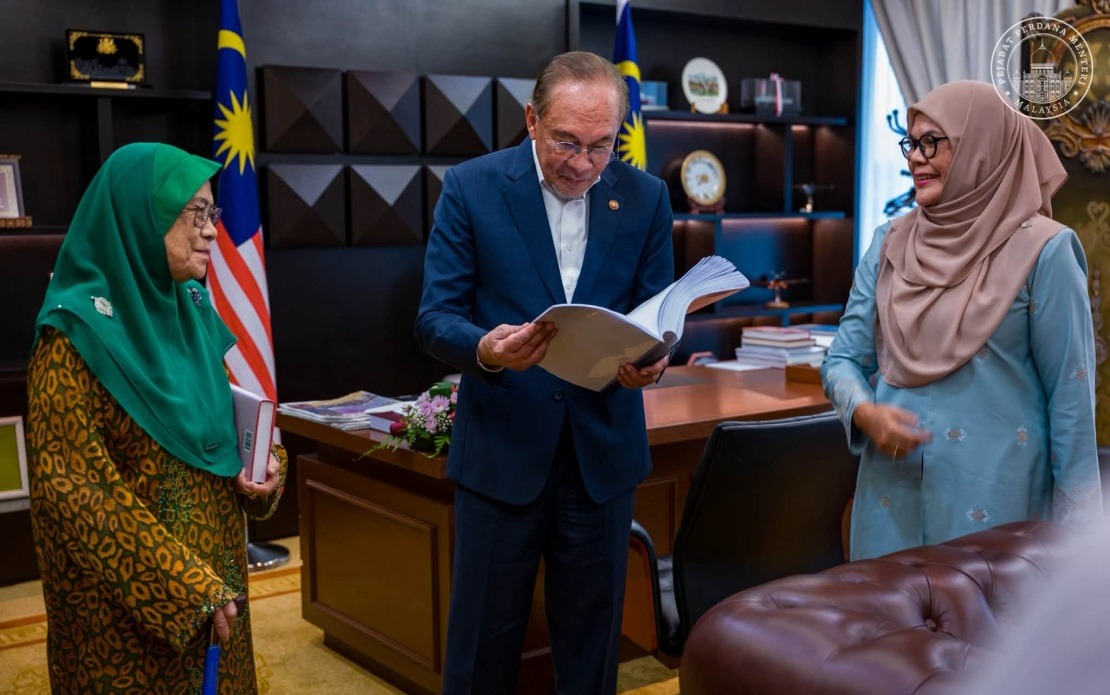
Prime Minister Datuk Seri Anwar Ibrahim is backing a new biographical and intellectual study that aims to chronicle his political thinking and life philosophy, expressing optimism that the work will eventually become essential reading for those seeking guidance on governance and personal development. The book, authored by Professor Dr Salinah Ja'afar—a lecturer and linguist affiliated with the Academy of Malay Studies at Universiti Malaya—represents a systematic attempt to capture the evolution of the Prime Minister's worldview as it has developed through decades of public service, personal reflection, and extensive scholarship.
Anwar disclosed his involvement with the project through a Facebook announcement on July 1, revealing that he had actively participated in shaping the manuscript by reviewing drafts and offering substantive feedback to ensure accuracy and comprehensiveness. This hands-on approach reflects the importance the Prime Minister places on how his intellectual legacy is documented and interpreted for posterity. Rather than leaving the task entirely to independent scholars, Anwar's engagement with the authoring process suggests a desire to influence the narrative surrounding his contributions to Malaysian political thought and nation-building philosophy.
The academic credibility of the project has been substantially reinforced through the involvement of Professor Emeritus Datuk Dr Nik Safiah Abdul Karim, a highly respected language scholar and intellectual figure in Malaysia. As the book's academic adviser, Nik Safiah brought her considerable expertise and scholarly standing to the endeavour, lending institutional legitimacy to what might otherwise be viewed as a partisan exercise. Her presence in an advisory capacity indicates that the work aspires to meet rigorous academic standards rather than functioning as mere political propaganda, a distinction that could prove significant in determining the book's reception within educational and intellectual circles.
The research methodology employed by Professor Ja'afar and her academic team included exclusive interviews with Anwar himself, providing the Prime Minister with a platform to articulate his thinking in his own words while allowing the scholars to probe deeper into the philosophical foundations and practical influences shaping his approach to leadership and public policy. These interviews apparently covered substantial ground, examining how Anwar's personal experiences—both his periods in government and his time in opposition—have informed his contemporary political stance and his vision for Malaysia's development trajectory.
Anwar's framing of the book's purpose emphasises its potential utility for future generations, particularly those engaged in the foundational work of nation-building and the cultivation of ethical leadership. This positioning suggests that the Prime Minister views the documentation of his ideas not as hagiography but as a contribution to a broader Malaysian intellectual tradition on governance, citizenship, and moral development. By situating the work within these universal themes rather than narrow partisan concerns, Anwar appears to be attempting to ensure the book's relevance transcends the immediate political moment.
The initiative reflects a broader trend among senior Asian political figures to commission or support biographical and intellectual studies aimed at preserving their leadership legacies. In an era of rapid political change and contested historical narratives, such projects serve multiple functions: they provide authoritative accounts of a leader's thinking, establish foundational texts for future scholarship, and attempt to influence how subsequent generations understand a particular political era. For Malaysia, where questions of national identity, governance philosophy, and the balance between different social and economic imperatives remain contested, such intellectual documentation assumes additional significance.
The involvement of specialists in Malaysian language and linguistics suggests that the book may also engage with how Anwar articulates his ideas—the rhetorical strategies, cultural references, and linguistic choices through which he communicates with Malaysian audiences. This linguistic-cultural dimension could distinguish the work from purely policy-focused political biographies, offering insights into the deeper patterns of how Malaysia's contemporary leadership frames national issues and aspirations.
For policymakers and students of Southeast Asian politics, such a scholarly compilation could provide valuable material for comparative analysis of leadership models and governance philosophies across the region. Malaysia's position as a multicultural, multi-religious democracy navigating complex economic and social challenges means that documented reflections from its Prime Minister on nation-building could offer insights applicable beyond Malaysia's borders, particularly for neighbouring countries grappling with similar governance questions.
The timing of the book's development—occurring during Anwar's tenure as Prime Minister rather than in retrospective retirement—adds another dimension to its significance. Publishing such a work while still in office allows for real-time engagement with contemporary challenges and decisions, potentially creating a more immediate and dynamic record of leadership thinking than works published after political careers have concluded. However, it also invites questions about how current political pressures and immediate policy concerns might shape the framing of broader philosophical principles.
The project ultimately represents an attempt to ensure that Malaysia's intellectual and political heritage is systematically recorded and made available to students, scholars, and citizens seeking to understand the nation's governance traditions and leadership philosophies. Whether the book achieves Anwar's hope of becoming a foundational reference for future generations will likely depend on its analytical depth, scholarly rigour, and the degree to which it grapples honestly with both the achievements and complexities of the political philosophy it documents.

