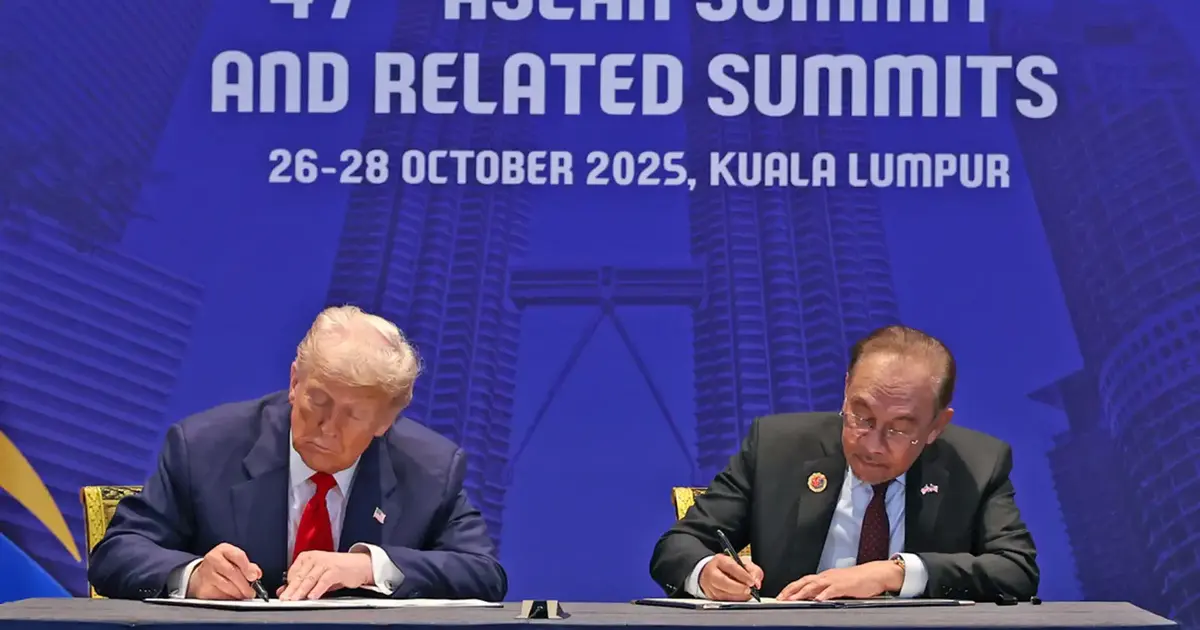
The Malaysian government and Prime Minister Anwar Ibrahim have responded to opposition lawmakers' legal challenge against the Malaysia-US reciprocal trade agreement by filing applications to have the case dismissed entirely. The motion to strike out represents the administration's opening salvo in what could become a protracted constitutional battle over the trade pact's validity and the government's authority to enter into such agreements without additional parliamentary sanction.
Opposition members of parliament have simultaneously pursued a parallel legal strategy, submitting their own application that seeks to escalate the dispute to the Federal Court. Their move requests the court to refer specific constitutional questions for adjudication at the nation's highest judicial level. This bifurcated approach demonstrates the seriousness with which opposition parliamentarians view potential constitutional implications embedded within the trade arrangement.
The Malaysia-US reciprocal trade agreement has emerged as a flashpoint for constitutional debate within Malaysian political circles. Opposition figures contend that the arrangement warrants enhanced scrutiny under Malaysia's constitutional framework, particularly regarding how trade treaties should be ratified and whether existing parliamentary procedures sufficiently protect national interests when entering such bilateral commitments.
The legal proceedings highlight broader questions about executive authority in foreign affairs and trade matters. Malaysian constitutional law traditionally grants the government considerable latitude in negotiating and concluding international agreements, yet the opposition's intervention signals growing parliamentary assertiveness around trade policy. This represents a significant shift from historical deference, reflecting evolving expectations that lawmakers should exercise meaningful oversight of major economic agreements.
For Malaysian business stakeholders and investors, the litigation introduces uncertainty about the trade deal's eventual status and implementation timeline. Companies planning operations based on the agreement's terms now face ambiguity regarding its enforceability pending judicial resolution. The dispute could delay tariff changes, market access modifications, and regulatory harmonisations that both Malaysian and American businesses anticipated from the bilateral arrangement.
The constitutional questions raised by opposition MPs likely centre on whether the government required parliamentary approval beyond standard treaty-signing procedures, what role the Dewan Rakyat should play in ratifying reciprocal trade agreements, and whether existing legislation adequately governs Malaysia's entry into such pacts. These questions possess implications extending beyond the immediate US trade deal, potentially establishing precedents affecting future trade negotiations with other partners.
Anwar's government faces strategic choices in defending the agreement's validity and its own constitutional authority. The administration must balance reassuring its own coalition members and managing international relations with the United States whilst responding to legitimate constitutional concerns the opposition has raised. Any perception that the government is suppressing judicial scrutiny could inflame parliamentary tensions and weaken public confidence in the administration's commitment to constitutional governance.
The Federal Court's potential involvement in the matter would elevate proceedings significantly. Constitutional referrals to Malaysia's apex court carry substantial weight and draw intensive judicial examination of governmental actions. A ruling by the Federal Court could reshape how Malaysia approaches future trade negotiations, potentially requiring greater parliamentary involvement or amended ratification procedures depending on judicial interpretation of constitutional provisions.
Southeast Asian observers are monitoring the dispute closely, recognising that Malaysia's approach to trade agreement governance influences regional dynamics. The outcome could affect how other ASEAN nations structure their own bilateral negotiations and parliamentary oversight mechanisms. If Malaysia's courts impose stricter requirements for trade agreement approval, it might establish expectations that resonate throughout the region.
The opposition's constitutional strategy reflects broader global trends wherein domestic parliaments increasingly assert influence over trade policy that traditionally fell within executive domains. Many democracies have witnessed rising parliamentary activism around trade agreements, driven by concerns about labour standards, environmental impacts, and national economic interests. Malaysia's current legal dispute channels similar sentiments within the domestic political context.
The litigation timeline remains uncertain, though Malaysian courts typically require several months to resolve strike-out applications before proceedings advance further. Should the government succeed in dismissing the case entirely, opposition parties would face limited remedies. Conversely, if courts permit the lawsuit to proceed and refer constitutional questions to the Federal Court, the dispute could occupy judicial dockets throughout 2024 and beyond.
Beyond immediate legal mechanics, the dispute underscores persistent tensions between executive-driven foreign policy and parliamentary aspirations for enhanced consultative roles. Whether courts ultimately side with the government or opposition, the very existence of this litigation signals that Malaysian lawmakers increasingly regard major trade agreements as matters warranting constitutional scrutiny rather than treating them as purely executive prerogatives delegated to the Prime Minister's office.
The Malaysia-US reciprocal trade agreement's fate now hinges on judicial determinations about constitutional authority, parliamentary rights, and governmental procedures. As courts deliberate strike-out applications and potential constitutional referrals, Malaysian stakeholders across business, labour, agriculture, and manufacturing sectors await clarity about the agreement's ultimate status and enforceability.