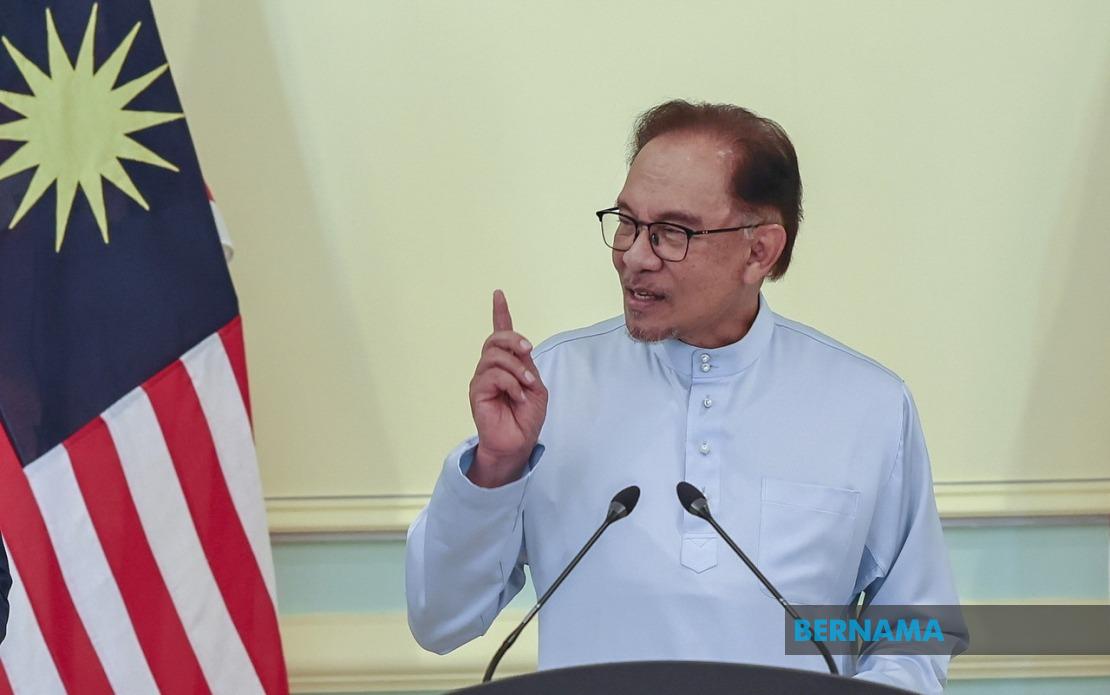
Prime Minister Datuk Seri Anwar Ibrahim's handling of the Gaza humanitarian catastrophe represents a calculated blend of moral leadership, legal grounding and pragmatic diplomacy that warrants regional attention, according to analysts examining Malaysia's foreign policy framework. The strategy signals how a nation of Malaysia's standing can translate principled positions into concrete international action without overstating its influence, a distinction that carries implications across Southeast Asia as the region navigates competing global pressures.
The scale of human suffering in Gaza provides the backdrop for understanding why Malaysian leadership has chosen to engage on multiple fronts simultaneously. After more than 1,000 days of conflict, the territory has experienced devastating toll: 73,066 deaths alongside 173,514 injured persons, while 5,400 individuals have sustained permanent disabilities including amputations. The demographic impact proves particularly alarming, with 21,730 children killed, 45,113 injured and 59,054 rendered orphans. These figures underscore why international response mechanisms matter beyond rhetorical posturing.
The physical destruction compounds the human tragedy in ways that extend beyond immediate casualty figures. Over 90 percent of Gaza's infrastructure now lies damaged or destroyed, with 81 percent of structures affected, 92 percent of residential housing impacted and sanitation systems deteriorating across 90 percent of coverage areas. Water infrastructure damage has left 91 percent of households confronting severe shortages, creating cascading public health emergencies that blur distinctions between military conflict and humanitarian catastrophe. This transformation of the crisis into a comprehensive civilisational challenge justifies Malaysia's elevated engagement.
Anwar's diplomatic strategy encompasses both institutional mechanisms and coalition-building designed to sustain international pressure through multiple channels. Malaysia's support for South Africa's genocide convention case against Israel at the International Court of Justice exemplifies this approach—moving beyond symbolic condemnation to activate formal legal accountability frameworks. By anchoring advocacy within established international law rather than relying solely on political statements, Malaysia positions itself as defending universal humanitarian principles rather than advancing narrow partisan interests, a distinction that strengthens legitimacy across diverse international audiences.
The Prime Minister has leveraged Arab-Islamic forums to mobilise collective responses while maintaining diplomatic space for humanitarian negotiations and aid operations. This multilayered approach allows Malaysia to simultaneously pursue justice mechanisms, strengthen support for UNRWA operations, advocate weapons embargoes and facilitate humanitarian access—objectives that often compete but remain mutually reinforcing when pursued through complementary channels. The strategy reflects recognition that no single pressure point resolves such entrenched crises; instead, sustained pressure across legal, diplomatic and humanitarian domains creates cumulative effect.
Malaysia's material commitment reinforces rhetorical positioning through an initial RM100 million humanitarian allocation directed toward Gaza at a moment when 1.97 million residents face acute food insecurity. The allocation addresses immediate nutritional collapse: 641,000 persons experience famine or catastrophic hunger levels, with malnutrition claiming 466 lives and affecting 17,800 children under five in 2025 alone, climbing to 68,996 severe malnutrition cases in the same cohort by May 2026. Healthcare infrastructure has collapsed under systematic targeting, with 40 hospitals and 158 primary facilities struck in 825 documented attacks, killing 1,723 healthcare workers while detaining another 362.
The approach transcends ceasefire advocacy to encompass political reconstruction—Anwar emphasises establishing a sovereign Palestinian state as prerequisite for stable resolution. This stance positions Malaysia within what analysts term 'active non-alignment,' enabling principled positioning grounded in defence of civilian protection, humanitarian access, legal accountability and self-determination rights. Rather than constraining Malaysia's influence through non-aligned positioning, this framework permits advocacy unshackled from great-power patronage, allowing smaller nations to articulate positions based on substantive principle rather than strategic calculation.
Malaysia's multilateral approach recognises fundamental asymmetry in power structures: no middle-ranking nation independently resolves regional conflicts. However, sustained advocacy through international courts, diplomatic forums, multilateral bodies and public discourse preserves issue salience within global consciousness while supporting institutional mechanisms that outlast momentary political cycles. This patient accumulation of pressure through diverse channels represents pragmatic understanding of how principled states amplify influence beyond inherent capabilities.
The diplomatic model emerging from Anwar's Gaza engagement offers instructive lessons for Southeast Asian nations navigating complex geopolitical environments where pure neutrality becomes increasingly untenable. By grounding advocacy in universally recognised legal frameworks, maintaining humanitarian rather than sectarian emphasis, and distinguishing between institutional and political accountability mechanisms, Malaysia demonstrates how regional actors can engage global crises without either surrendering agency to great powers or descending into performative politics detached from consequence.
For Malaysian stakeholders and broader Southeast Asian audiences, the significance extends beyond immediate Palestinian circumstances. The framework establishes precedent for how regional middle powers might approach future humanitarian emergencies, conflicts threatening international stability or violations of accepted norms. By demonstrating that principled advocacy need not paralyse practical engagement, Malaysia's model suggests alternative pathways to influence that depend less on military capability or economic dominance than on institutional legitimacy, moral clarity and sustained diplomatic commitment. Such approaches become increasingly valuable as traditional power structures fragmentise and legitimacy across diverse populations depends more heavily on perceived consistency between stated values and demonstrated action.

