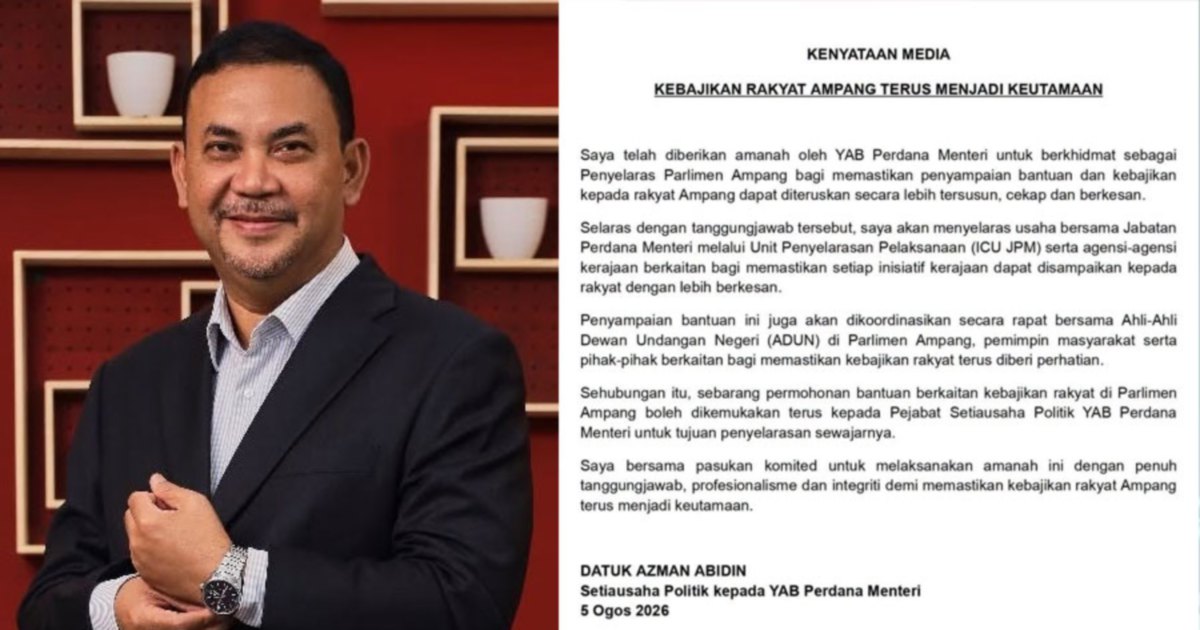
A senior aide from Prime Minister Datuk Seri Anwar Ibrahim's office has assumed the role of parliamentary coordinator for the Ampang constituency, marking a significant intervention in local constituent services following the suspension of Ampang MP Rodziah Ismail's access to the MyKhas system, the mechanism through which lawmakers typically administer constituency development funds and programmes.
The appointment underscores deepening tensions within PKR's Ampang division and signals the party leadership's willingness to bypass its elected representative when managing public resources and grassroots engagement in this crucial Selangor seat. MyKhas, the digital platform that provides MPs with administrative autonomy over localised development allocations and community-facing initiatives, represents a critical political asset for any elected official seeking to maintain constituent loyalty and visibility.
Rodziah Ismail, who has represented Ampang since 2018, saw her system privileges revoked under circumstances that have not been publicly detailed, though party sources indicate the action stems from internal disciplinary matters within PKR's organizational structure. The loss of direct control over constituency funds fundamentally alters how the MP can engage with residents and deliver the tangible services that typically characterise parliamentary representation in Malaysia's electoral system.
The transfer of coordination duties to a Prime Minister's aide rather than to another elected party member or traditional party machinery suggests a centralization of power within the Prime Minister's Office over the constituency's political operations. This move reflects broader patterns within Anwar Ibrahim's administration, where close advisors increasingly wield authority over regional party structures and resource distribution, a development that observers note marks a shift from traditional power-sharing arrangements that previously characterised coalition governance at the state and federal levels.
Ampang, a key urban constituency in Selangor that encompasses diverse middle and working-class communities, has historically been a competitive battleground between coalition and opposition forces. The constituency's political stability and the ruling coalition's performance here carries implications for overall regional dynamics heading toward future electoral cycles. Any perception of internal dysfunction or diminished constituent services could provide openings for opposition parties to challenge the current MP's hold on the seat.
The MyKhas suspension raises questions about the nature of internal PKR dynamics and the relationship between the party's parliamentary faction and its party leadership structures. Removing an MP's administrative access to constituency funds represents an extraordinary intervention that goes beyond standard disciplinary mechanisms and effectively removes the elected representative's ability to function in a core parliamentary role. This escalation suggests serious underlying disagreements either about political allegiance, party discipline, or resource management practices.
For residents of Ampang, the procedural implications are substantial. Whether the interim coordinator can deliver the same responsive, personalised service that typically flows through an MP's constituency office remains uncertain. The effectiveness of development programmes and the speed of assistance claims often depend on the MP's direct engagement and advocacy within their own political network and administrative circles. The relocation of these functions to a federal-level office introduces an additional bureaucratic layer that may slow response times and reduce the visible political presence that constituents expect from their elected representative.
This appointment also carries broader ramifications for PKR's internal cohesion at a moment when the party faces scrutiny over leadership transitions and member retention. The public nature of the suspension and the visible appointment of a federal aide to supersede a sitting MP sends a message about the limits of autonomy for elected representatives, particularly those who may face internal party challenges. Such moves, while sometimes necessary for organizational discipline, risk demoralizing party members and activists who may perceive their electoral efforts as insufficient to protect representatives from centralized intervention.
The timing of this action within Malaysia's political calendar is also significant. With electoral cycles approaching and coalitions continuously jockeying for position, maintaining visible and effective parliamentary representation becomes crucial for deterring opposition challenges. Ampang's status as an urbanised, swing-prone constituency means that lapses in constituent service or visible internal party dysfunction could provide openings for opposition movements to gain ground, potentially shifting Selangor's broader political balance.
Industry observers note that such suspensions and interim coordinations, while sometimes presented as temporary measures pending investigation or resolution of internal matters, frequently become permanent arrangements. The infrastructure and relationships established by the interim coordinator may become entrenched, creating political facts on the ground that effectively diminish the original MP's capacity to reclaim full parliamentary authority even after any underlying disputes are formally resolved.
As Malaysia's political landscape continues to evolve following the 2022 electoral restructuring and coalition realignments, the balance between centralized leadership authority and distributed parliamentary autonomy remains contested within ruling coalition parties. The Ampang appointment represents another data point in this broader negotiation about how power flows within PKR and the wider Pakatan Harapan coalition, with implications extending beyond this single constituency to shape how lawmakers and their party structures interact across multiple levels of Malaysian governance.

