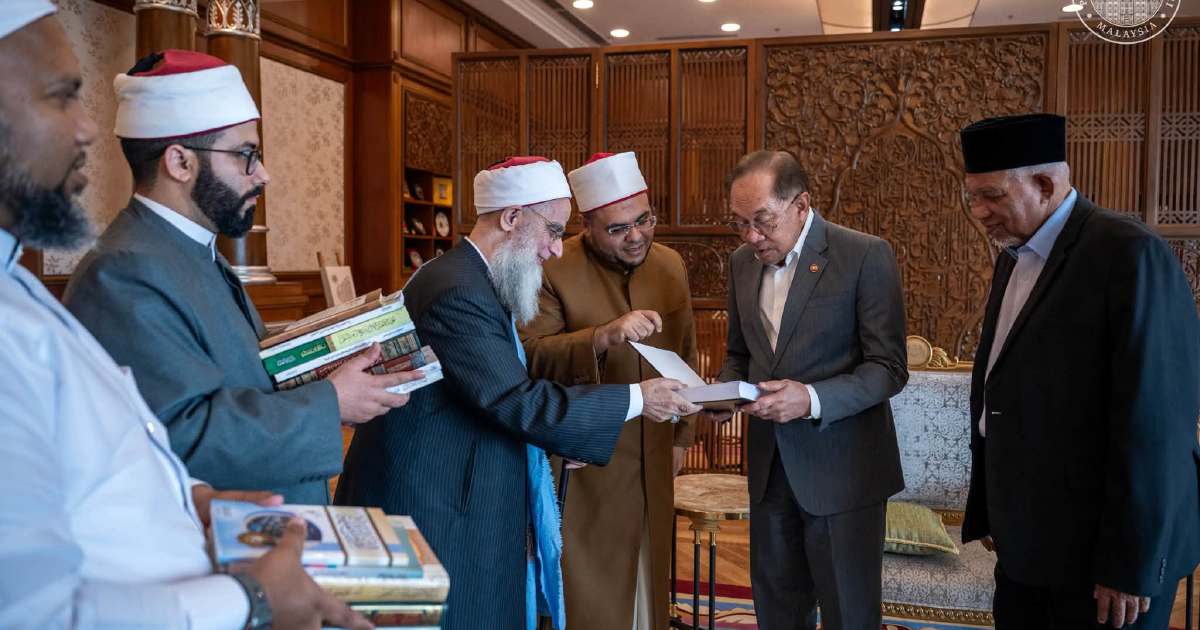
Prime Minister Datuk Seri Anwar Ibrahim received Sheikh Dr Mustafa An-Nadwi Al-Hasani Mansurah, a distinguished Islamic scholar from Egypt, during an official visit to the Prime Minister's office in Putrajaya. The meeting underscores Malaysia's ongoing efforts to strengthen intellectual and diplomatic ties with prominent figures from the broader Islamic world, particularly from the Middle East.
Sheikh Dr Mustafa An-Nadwi represents a significant voice in contemporary Islamic thought and scholarship. His presence in Malaysia reflects the country's role as a hub for interfaith dialogue and Islamic intellectual discourse within Southeast Asia. The visit comes at a time when Malaysia continues to position itself as a bridge between the Islamic world and the broader international community, particularly under Anwar Ibrahim's leadership.
The reception of international Islamic scholars at the highest levels of government demonstrates Malaysia's commitment to maintaining dialogue channels with influential figures across the Muslim world. Such engagements typically encompass discussions on contemporary challenges facing the Islamic ummah, educational initiatives, and the promotion of moderate Islamic perspectives that align with Malaysia's own approach to religious matters.
Egypt, as the Arab world's most populous nation and home to Al-Azhar University, one of Islam's most respected centres of learning, holds considerable cultural and intellectual influence across Muslim-majority countries. Scholars emanating from Egyptian institutions often carry significant weight in shaping Islamic discourse regionally and globally. The emphasis placed on hosting such figures at the Prime Minister's office sends a clear signal about the importance Malaysia attaches to these relationships.
Anwar Ibrahim's premiership has been characterised by an emphasis on engaging with global intellectual circles and fostering partnerships that go beyond conventional diplomatic channels. His background in Islamic affairs and his position as a respected voice within Muslim intellectual spaces make him a natural interlocutor for visiting scholars of Dr Mustafa's stature. These informal yet formal meetings often lay groundwork for broader cooperative arrangements between institutions and governments.
The timing of such visits can also reflect Malaysia's strategic interests in the wider Muslim world. Egypt occupies a crucial geopolitical position and serves as a cultural cornerstone for the Arab region. Maintaining warm relations with Egyptian intellectual leaders helps Malaysia cultivate soft power and strengthen its standing as a voice for moderation and tolerance within the Islamic community.
Visits of this nature typically involve substantive discussions on topics ranging from Islamic education and curriculum development to interfaith understanding and the role of religious institutions in contemporary society. Malaysian universities and Islamic institutions may seek to establish scholarly partnerships or facilitate academic exchanges that benefit both nations' academic communities.
The Prime Minister's personal engagement with visiting scholars also reflects Malaysia's broader diplomatic strategy of nurturing relationships with key opinion-formers and intellectual leaders from allied nations. In an era where influence often extends beyond government-to-government relations, cultivating connections with influential academics and religious figures has become an important component of modern statecraft.
For the Egyptian scholar, the visit to Malaysia provides an opportunity to engage with Southeast Asian perspectives on Islamic governance and contemporary religious issues. Malaysia's experience in managing a multicultural, multi-religious society offers valuable insights that may be of interest to observers from predominantly Muslim nations grappling with their own challenges around social cohesion and modernity.
Such diplomatic courtesies also serve to reinforce Malaysia's identity within the Organisation of Islamic Cooperation and broader networks of Muslim-majority nations. By actively hosting and engaging with prominent Islamic intellectuals, Malaysia signals its commitment to intellectual leadership within these spheres and its openness to collaborative efforts on issues of mutual concern.
The office-based meeting format, rather than a larger public reception, suggests the visit prioritised substantive dialogue over ceremonial pomp. This approach often yields more candid and productive exchanges, allowing both parties to discuss matters of strategic importance without the constraints of formal state protocols. Such private engagements frequently generate follow-up initiatives and longer-term collaborative frameworks that may not be immediately publicised.
This engagement fits within Malaysia's broader pattern of leveraging its unique position as a developed, democratic Muslim-majority nation to serve as a platform for Islamic intellectual discourse and dialogue. As regional and global dynamics continue to shift, Malaysia's investments in relationships with leading Islamic scholars and institutions help ensure the nation remains a relevant and respected voice in shaping contemporary Islamic thought and policy perspectives.

