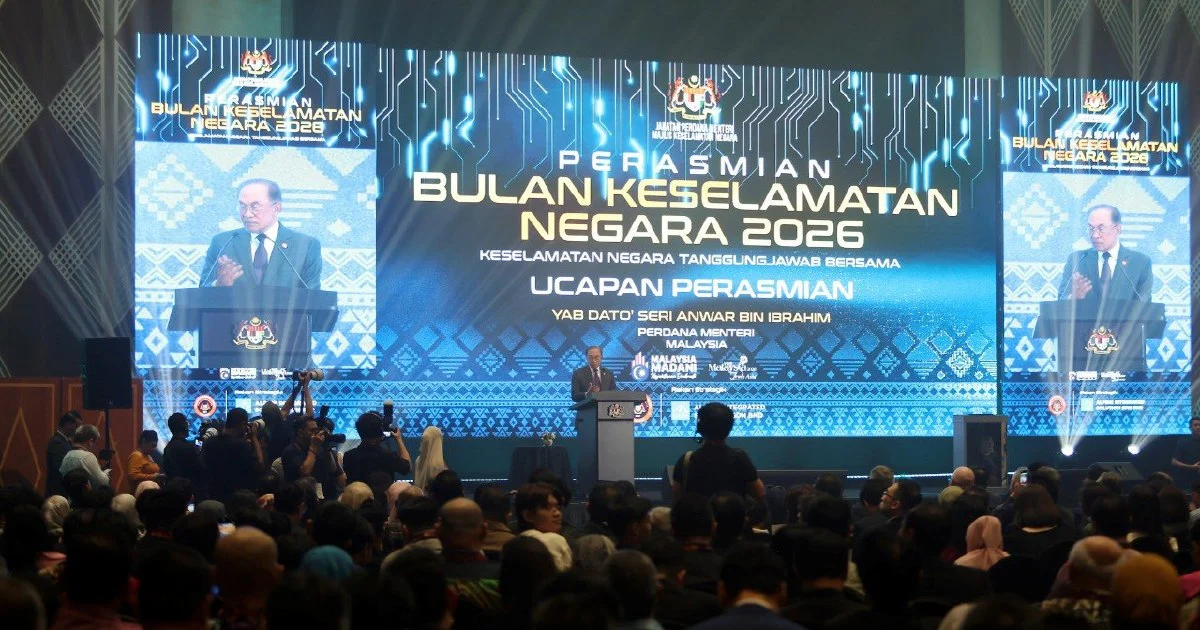
Prime Minister Datuk Seri Anwar Ibrahim has sounded the alarm over the resurgence of racial and regional divisions in Malaysia's political discourse, particularly as Johor prepares for its forthcoming state elections. Speaking from Putrajaya, the Prime Minister expressed concern that the country risks becoming ensnared by longstanding communal narratives and geographic fault lines that have historically defined electoral contests, cautioning that such polarising rhetoric poses a threat to national cohesion and progress.
Anwar's intervention comes at a critical juncture for Malaysian politics. The Johor state election carries symbolic weight beyond the southern state's boundaries, serving as a barometer for national sentiment and the effectiveness of the coalition government's efforts to move beyond divisive electoral strategies. By explicitly flagging the dangers of racial politicking, Anwar has signalled his administration's desire to steer the campaign toward substantive policy debates centred on economic development, governance, and service delivery rather than communal grievance narratives.
The timing of the Prime Minister's remarks reflects deeper anxieties within the federal government about the direction of Malaysian political culture. Despite efforts by Anwar's administration to chart a more inclusive and forward-looking path, entrenched patterns of identity-based voting and community-focused campaigning remain deeply embedded in state and federal politics. Johor, historically a stronghold of the Barisan Nasional coalition and a state where demographic diversity has sometimes been weaponised in political messaging, represents a test case for whether Malaysian politics can evolve beyond these fault lines.
Racial and regional narratives have long served as powerful electoral tools across Malaysia. Political parties of various hues have historically mobilised communities by emphasising threats to group interests, cultural preservation, or economic advancement tied to ethnic or geographic identity. These strategies have proven electorally potent because they tap into genuine anxieties and historical grievances. However, Anwar's warning suggests that the federal government believes such approaches are ultimately counterproductive, fragmenting the nation and preventing the unified focus needed to tackle contemporary challenges including economic growth, education reform, and infrastructure development.
The specific invocation of Johor's imminent polls reflects the state's particular political complexities. As Malaysia's second-most populous state and a crucial economic hub, Johor's election will influence perceptions of Anwar's coalition's popularity and governance record. A campaign dominated by racial and regional divisions could undermine efforts to consolidate support based on developmental achievements and administrative competence. Conversely, an election contested primarily on policy grounds might reinforce the federal government's narrative of pragmatic, non-partisan governance focused on delivery.
For Malaysian voters, and particularly those in Johor, Anwar's caution presents an implicit argument for evaluating political parties and candidates on their track records and policy platforms rather than their appeals to communal sentiment. This represents a departure from campaign traditions in which political messaging has frequently emphasised what political competitors might do to or for particular ethnic or religious communities. The Prime Minister's framing suggests that national development and effective administration should be the primary metrics by which leaders and governments are judged.
The concern raised by Anwar also resonates with international observations about polarisation in Malaysian politics. Political analysts have noted that despite significant democratic achievements, Malaysia's electoral contests have sometimes been marred by divisive rhetoric that heightens intercommunal tensions rather than encouraging collaborative problem-solving. This pattern has historical roots extending back to Malaysia's independence and the communal negotiations that established the nation's constitutional architecture. However, contemporary challenges—from climate change to digital transformation to post-pandemic economic recovery—arguably demand coalition-building and consensus-seeking rather than zero-sum communal competition.
Within the context of Southeast Asian politics more broadly, Anwar's intervention positions Malaysia as grappling with challenges familiar to other pluralistic societies in the region. Nations including Indonesia, Thailand, and the Philippines have similarly wrestled with the tension between identity-based political mobilisation and efforts to foster inclusive, policy-focused electoral contests. Malaysia's experience offers insights into how established democracies might address persistent patterns of polarisation without undermining legitimate expressions of community interest or cultural identity.
The practical implications of Anwar's warning remain to be seen as Johor's election campaign unfolds. Political parties will face choices about whether to heed the Prime Minister's caution or continue relying on established mobilisation strategies. The electorate's response—whether voters reward parties that prioritise policy substance or whether traditional communal alignments reassert themselves—will indicate whether Malaysian political culture can genuinely shift toward the more inclusive, development-focused model that Anwar advocates. The outcome will carry reverberations well beyond Johor's borders, shaping expectations for how future Malaysian elections are contested and the terms around which political competition will be organised.

