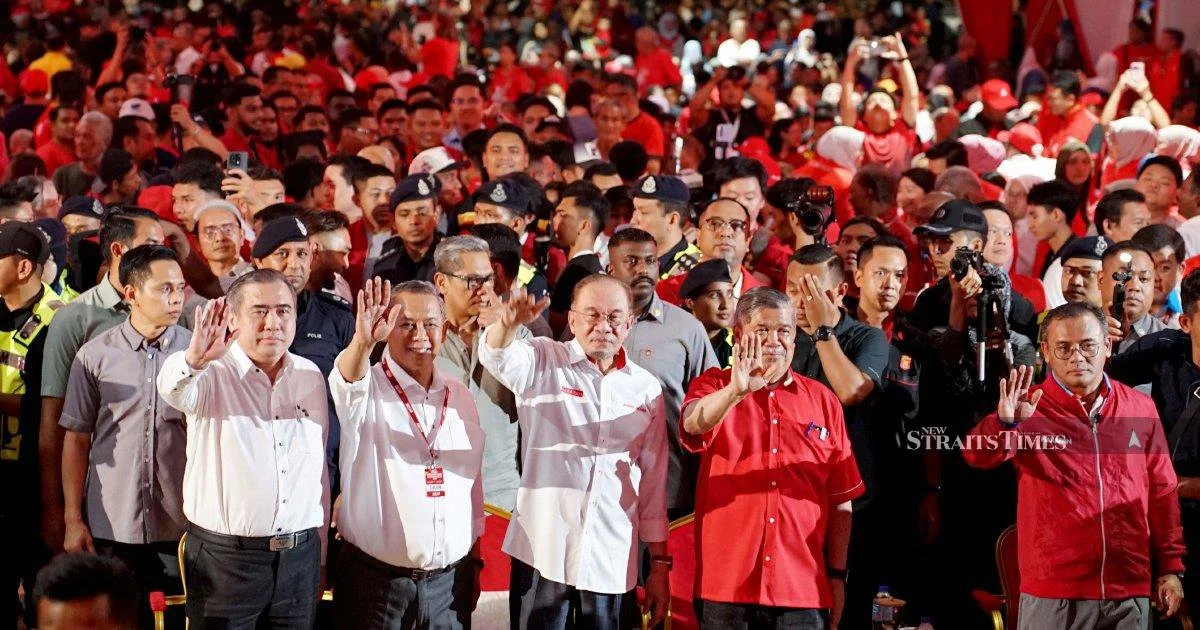
Prime Minister Datuk Seri Anwar Ibrahim has delivered a forceful reminder to the political establishment, warning against the exploitation of Malaysia's royal institution as a tool for electoral advantage in the Negri Sembilan state election. Speaking in Kuala Pilah, Anwar stressed the importance of maintaining clear boundaries between the monarchy and partisan political activity, signalling his administration's determination to safeguard the constitutional status of the institution during the competitive campaign period.
The caution reflects growing concerns within Malaysia's political leadership about the tendency of parties to leverage symbols of national prestige and cultural reverence for short-term political gain. The royal institution occupies a unique position in Malaysia's constitutional framework and social fabric, commanding respect across the political spectrum and among citizens regardless of party affiliation. When political campaigns begin to appropriate this institution, they risk undermining both its institutional integrity and the principle of political neutrality that has traditionally insulated the monarchy from factional disputes.
Negri Sembilan, with its distinctive constitutional arrangement and ceremonial role for the Duli Yang Maha Mulia, presents particular sensitivities around this issue. The state's unique system of rotation among the territorial chiefs adds another layer of complexity, making it essential that all electoral contestants maintain scrupulous respect for royal prerogatives and avoid suggesting that the institution should take sides in political contests. Anwar's intervention signals that the federal government will not tolerate attempts to muddy these waters during the campaign season.
For Malaysia's electoral system to function healthily, political parties must contest elections on the strength of their policies, track records, and vision for constituent welfare rather than relying on appeals to national symbols or institutions that stand above partisan concerns. The competition for voters should centre on substantive governance questions: economic management, social services, infrastructure development, and community engagement. When campaigns resort to invoking the monarchy or attempting to create the impression of royal endorsement for particular candidates or parties, they distract from these core issues and inject unnecessary tension into the relationship between politicians and the Crown.
Anwar's message also carries implications for how Malaysia navigates its broader democratic development. Southeast Asian democracies often face challenges in maintaining the distinction between respect for traditional institutions and healthy electoral competition. Countries in the region have experienced episodes where monarchical symbols became flashpoints in political disputes, occasionally straining public confidence in both political institutions and customary authority. Malaysia's constitutional monarchy depends partly on the monarchy remaining above the fray of everyday partisan politics—a balance that requires all political actors to exercise restraint.
The warning is particularly significant given the competitive nature of contemporary Malaysian politics, where state-level elections have assumed increased importance in the broader national political picture. Each contest now carries weight beyond its immediate geographical scope, influencing perceptions of which coalitions are ascendant nationally and which are in decline. This amplification of stakes can tempt politicians to resort to increasingly aggressive tactics, including the invocation of symbols and institutions that should remain neutral. Anwar's intervention attempts to establish clear expectations before such temptations materialise into actual campaign violations.
The distinction between respecting an institution and using it for political advantage may seem obvious in principle, but in practice, the line can become blurred through careful messaging, selective interpretation, and subtle insinuation. Political actors might not explicitly claim royal support but could imply it through carefully chosen language or by creating contexts in which voters develop false impressions about institutional preferences. Anwar's explicit warning serves to heighten awareness among both political contestants and the electorate about these subtle transgressions, raising the political cost of any such behaviour.
From a Malaysian governance perspective, protecting the royal institution from politicisation serves multiple purposes. It preserves the monarchy's capacity to serve as a unifying symbol during times of national division or crisis. It protects the institution from the inevitable backlash that follows electoral defeat, ensuring that no matter which party prevails, the crown remains respected across all communities and political camps. It also maintains the monarchy's credibility as a neutral arbiter in constitutional matters, a role that becomes essential during political deadlock or constitutional controversy.
The Prime Minister's intervention also reflects his government's commitment to electoral integrity more broadly. As Malaysia continues to strengthen its democratic institutions and practices, setting clear norms around which political tactics are acceptable becomes increasingly important. Governments that fail to establish and enforce such norms risk normalising behaviour that gradually erodes democratic quality. By speaking out proactively, Anwar positions his administration as one willing to establish and defend boundaries around appropriate political conduct, a stance that contributes to institutional credibility beyond the immediate election cycle.
Political parties contesting in Negri Sembilan will now face heightened scrutiny regarding their campaign messaging and activities, with observers alert to any suggestions that the royal institution is being mobilised for partisan purposes. This increased attention should encourage contestants to concentrate their energies on substantive policy differentiation and direct engagement with voter concerns. The effect, if taken seriously by all parties, would be to elevate the quality of democratic discourse and reduce the likelihood that the campaign devolves into disputes over symbols rather than substance.
Looking forward, Anwar's warning establishes a standard that should apply not only to this particular state election but to future contests across Malaysia. The principle of maintaining institutional neutrality—ensuring that the monarchy, the judiciary, the security forces, and other constitutionally significant bodies remain above partisan politics—constitutes a fundamental requirement for stable democracy. When political leaders actively reinforce this principle through their statements and actions, they contribute to a political culture where such respect for boundaries becomes normalised and expected rather than exceptional.

