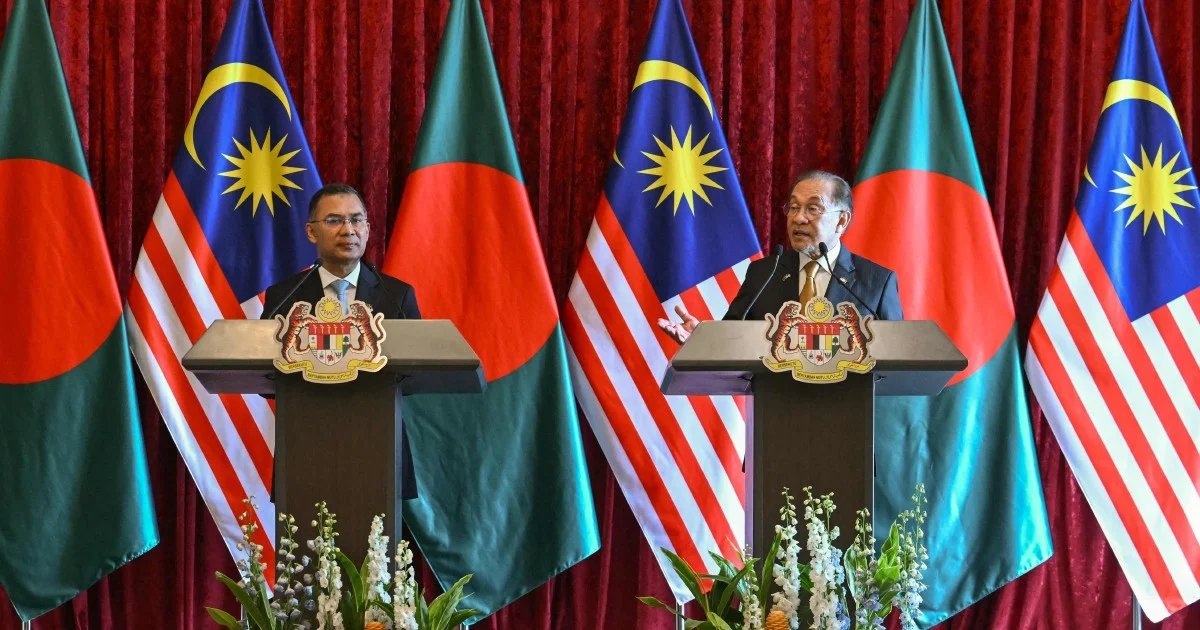
Prime Minister Datuk Seri Anwar Ibrahim has issued a firm commitment to safeguard Bangladeshi migrant workers operating within Malaysia, underscoring the indispensable role their labour plays in sustaining the nation's economic trajectory. The pledge comes as Malaysia continues to rely heavily on foreign workers across construction, manufacturing, agriculture and domestic sectors, with Bangladeshi nationals comprising a significant portion of this workforce.
Anwar's declaration represents a significant policy stance in response to persistent reports of workplace mistreatment, wage theft, and dangerous working conditions affecting foreign labourers. The Prime Minister characterised such exploitation as unacceptable and incompatible with Malaysia's professed values, signalling an intention to strengthen oversight mechanisms and enforcement of existing labour protections. This commitment reflects mounting international and domestic pressure regarding migrant worker welfare, an issue that has generated concern among human rights organisations and labour advocates across Southeast Asia.
The Malaysian economy's dependence on migrant labour has grown substantially over the past two decades. Construction projects, plantation operations, and manufacturing plants across the country frequently rely on workers from Bangladesh, who often accept employment under challenging circumstances due to economic pressures at home. The visibility of Bangladeshi workers in Malaysia's urban landscapes and industrial zones underscores their pervasive presence across multiple economic sectors critical to national output and development.
Exploitation patterns documented by rights groups include non-payment or delayed wages, unsafe working environments lacking basic protections, excessive working hours without appropriate compensation, and confiscation of travel documents—practices that trap workers in coercive situations. These conditions not only harm individual workers but generate reputational costs for Malaysia's standing internationally and complicate bilateral relations with Bangladesh, a source nation for significant migrant populations across the region.
Anwar's framing of migrant labour as "critical to Malaysia's economic survival" acknowledges an uncomfortable reality: Malaysia's development model has become structurally dependent on foreign workers willing to undertake jobs often shunned by citizens. This economic interdependence creates both opportunity and obligation—opportunity to establish fairer standards that benefit workers while maintaining competitiveness, and obligation to ensure that reliance on migrant labour does not translate into systemic abuse.
The enforcement challenge remains formidable. Malaysia's labour inspectorate historically lacks sufficient personnel to monitor thousands of workplaces and enforce regulations effectively. Corruption among officials, collusion between employers and labour brokers, and the informal status of some workers compound the difficulty. Many exploited workers hesitate to lodge complaints, fearing deportation or retaliation. Realising meaningful protection requires not merely policy pronouncements but substantial resource allocation and institutional reform.
Bangladesh has periodically raised concerns with Malaysian authorities regarding worker treatment, seeking assurances about safety standards and wage practices. Such bilateral tensions could escalate if exploitation continues unchecked, potentially affecting remittance flows—Bangladesh receives billions annually from diaspora workers abroad, including those in Malaysia. Economic leverage exists on both sides, creating incentive structures for genuine cooperation rather than performative commitments.
Anwar's promise must navigate the competing interests of businesses accustomed to minimal labour cost pressures and worker advocates seeking comprehensive protections. Malaysian employers operating on thin margins may resist regulations increasing labour costs, while government officials balancing economic competitiveness against humanitarian concerns face genuine policy trade-offs. The outcomes of enforcement efforts will signal whether current pledges translate into substantive institutional change or represent rhetoric without operational follow-through.
The regional dimension extends beyond bilateral Malaysia-Bangladesh relations. Thailand, Singapore, and other Southeast Asian economies face analogous migrant worker challenges, creating opportunities for coordinated standards-setting and enforcement cooperation. Malaysia's approach could influence regional norms around worker protection, either elevating expectations or permitting continuation of exploitative practices widely tolerated across the region.
Implementing effective protections requires complementary measures: establishing accessible complaint mechanisms with genuine anonymity protections, conducting unannounced workplace inspections, imposing meaningful penalties against repeat offenders, supporting independent monitoring organisations, and facilitating workers' access to legal assistance. International organisations, labour unions, and civil society can supplement government efforts through advocacy, documentation, and technical support.
Anwar's statement reflects acknowledgment that Malaysia's development depends not on reducing costs through worker exploitation but on sustainable labour practices that attract quality workers and enhance productivity. This reframing—from viewing workers as disposable to recognising their value—represents intellectual progress, though converting that recognition into operational reality requires sustained political will and institutional investment.
The coming months will prove revealing. Concrete enforcement actions, resource allocations, and measurable improvements in worker outcomes will demonstrate whether this pledge represents genuine policy recalibration or merely rhetorical positioning responding to international scrutiny. For Bangladeshi workers currently navigating Malaysia's labour market under precarious circumstances, the practical implications of Anwar's commitment will ultimately matter far more than its rhetorical force.