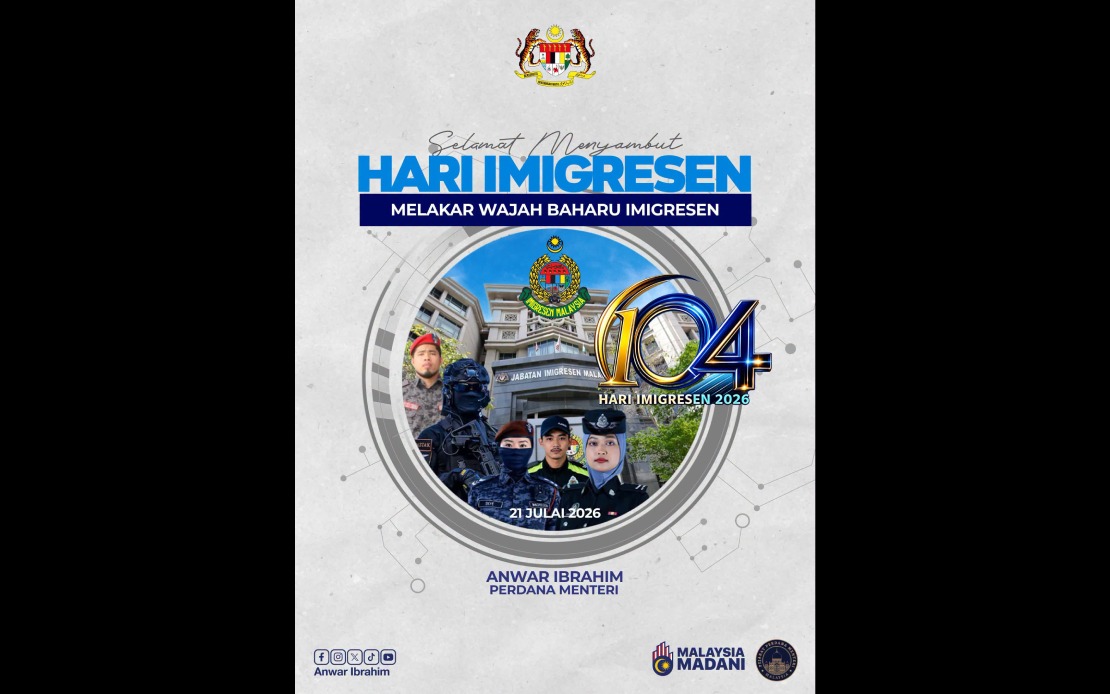
Prime Minister Datuk Seri Anwar Ibrahim has delivered a pointed message to the Immigration Department (JIM), urging its personnel to conduct themselves with unwavering integrity and to firmly reject all forms of corrupt practices and irregularities. The call, issued on Immigration Day on July 21, reflects growing governmental emphasis on cleansing public institutions of misconduct that has long plagued border management agencies across the region.
Anwar's intervention, communicated through a Facebook post, signals the government's renewed commitment to addressing systemic vulnerabilities within an agency responsible for controlling entry and exit into Malaysia. Immigration departments throughout Southeast Asia have historically struggled with corruption allegations, ranging from document fraud to bribery schemes involving visa approvals. By publicly addressing JIM personnel, the Prime Minister is sending a clear signal that his administration intends to hold the agency accountable to higher ethical standards.
Beyond the anti-corruption mandate, Anwar has emphasised that integrity must be paired with compassion in how immigration officers interact with the public. This dual emphasis represents a broader governance philosophy that distinguishes between strict rule enforcement and humane service delivery. The distinction matters significantly for Malaysia, a country where immigration officials make daily decisions affecting thousands of foreign workers, tourists, and businesspeople. The balance between security concerns and accessibility to services remains a persistent challenge for the department.
The Prime Minister articulated that JIM personnel should continue to excel in their core mission of safeguarding national sovereignty. This framing positions immigration work not merely as administrative processing but as a fundamental national security function. Given Malaysia's role as a major regional hub for commerce, tourism, and labour migration, the effective management of immigration flows carries implications far beyond border control. The department's performance directly affects investor confidence, tourism competitiveness, and Malaysia's standing within global travel and business networks.
Anwar's statement coincides with the 2026 Immigration Day celebration, which carries the thematic focus of "Charting a New Face for Immigration." This rebranding effort suggests the government recognises that public perception of the Immigration Department requires active rehabilitation. The theme signals intentions to modernise operations, improve service delivery, and potentially reshape how the institution engages with both internal stakeholders and the international community. For Malaysian citizens and business operators regularly interfacing with immigration procedures, such institutional renewal carries practical implications regarding processing times, transparency, and accessibility.
The timing of this public exhortation warrants consideration within Malaysia's broader anti-corruption agenda. The government has pursued various anti-graft initiatives across multiple agencies, yet immigration departments remain particularly vulnerable to corrupt practices due to the nature of their work. Officers possess significant discretionary power over document processing, visa approvals, and border clearance decisions. Where rules contain grey areas or when enforcement capacity remains limited, such discretion can create opportunities for malfeasance. Anwar's direct appeal to departmental personnel suggests recognition that top-down policy change must be accompanied by cultural shifts within institutional ranks.
For Malaysia's economy and regional position, the condition of immigration services carries outsized importance. The country competes regionally for foreign direct investment, attracting multinational firms whose employees require efficient visa processing and residence permit administration. Similarly, Malaysia's tourism industry depends partly on the reputation and perceived efficiency of immigration procedures. International travellers and business visitors form impressions of Malaysia partly through their interactions with border officials. Service quality deficiencies or perceptions of corruption can deter investment and tourism, affecting revenue streams and employment across multiple sectors.
The emphasis on professionalism and courteous service delivery reflects contemporary expectations for public administration. Modern economies increasingly compete on the quality of institutional services, not merely rule compliance. Immigration departments that combine security vigilance with efficient, transparent processes enjoy reputational advantages. Conversely, agencies perceived as corrupt, inefficient, or unprofessional become drag factors on national competitiveness. Anwar's articulation of this balance suggests awareness that JIM's transformation requires attention to both ethical and operational dimensions.
The broader regional context also illuminates significance in Anwar's statement. Across Southeast Asia, immigration agencies wrestle with similar challenges: managing rapid cross-border flows, combating document fraud and human trafficking, preventing overstaying, and maintaining security while facilitating legitimate movement. Institutional integrity within these organisations affects not only individual countries but regional security architecture and economic integration. Malaysia's demonstrated commitment to upgrading immigration standards through leadership rhetoric and institutional focus contributes to broader regional governance improvements.
Moving forward, the test of Anwar's exhortation rests in implementation. Public statements from prime ministers carry symbolic weight but require reinforcement through concrete mechanisms: enhanced training programmes, transparent complaint procedures, performance monitoring, and credible consequences for misconduct. Malaysia's immigration system must translate this call for integrity into measurable improvements accessible to ordinary citizens navigating visa applications, residence permits, and travel documentation. Success in this domain would demonstrate that governmental anti-corruption rhetoric translates into tangible improvements in public service delivery.

