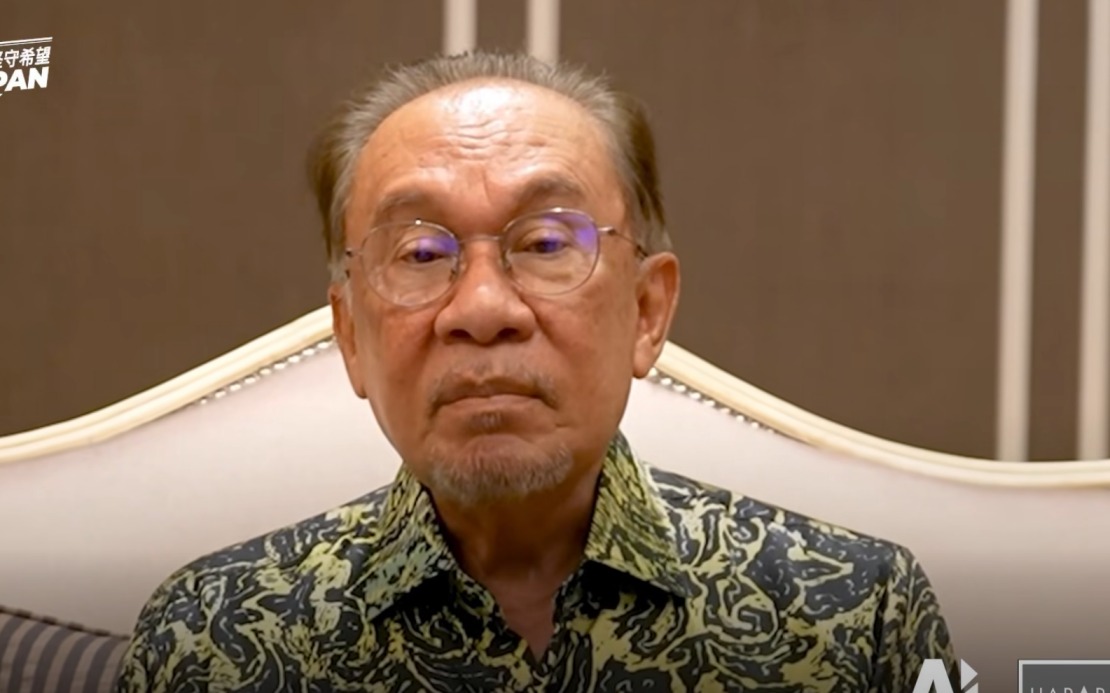
Prime Minister Datuk Seri Anwar Ibrahim has made a direct appeal to members of the Malaysian Armed Forces (ATM) and Royal Malaysia Police (PDRM), along with their spouses, to cast their votes for the Pakatan Harapan (PH) candidate in the upcoming Negeri Sembilan state election. In a video message shared on Facebook, the PH chairman positioned the election as an opportunity for security personnel to reaffirm their confidence in the government's commitment to their wellbeing and that of their families.
Anwar's appeal comes ahead of early voting scheduled for Tuesday, when more than 22,000 military and police personnel across Negeri Sembilan will participate in the electoral process at 38 designated centres throughout the state. This bloc voting represents a significant portion of the electorate in what is shaping up to be a closely watched contest for control of the state assembly. The timing of Anwar's intervention reflects the strategic importance placed on securing support from uniformed personnel, a constituency traditionally considered influential in state and national politics.
The Prime Minister articulated a comprehensive argument centered on past and future government initiatives designed to enhance the material conditions of defence and law enforcement personnel. He highlighted improvements already implemented by his administration and cabinet colleagues, including salary adjustments, provision of basic facilities, housing schemes, and educational support for dependents. These welfare measures form the backbone of his pitch to the security forces, suggesting that tangible improvements in living standards represent the primary basis for seeking their electoral support.
Beyond traditional compensation packages, Anwar specifically referenced two government assistance schemes: Sumbangan Tunai Rahmah (STR) and Sumbangan Asas Rahmah (SARA). These cash assistance programmes have become central to the government's social protection framework, and their mention underscores how financial relief mechanisms are being leveraged as indicators of government responsiveness to the needs of uniformed personnel and their households. Healthcare provisions for retired military and police families, another area mentioned, reflect recognition that security sector welfare extends beyond active service members to encompassing broader family protection.
However, Anwar's message also contained an implicit acknowledgment that existing arrangements remain inadequate. His reference to believing "there is still room for improvement" suggests that despite government efforts, personnel grievances persist regarding compensation levels, career prospects, and family support systems. This candid admission may reflect feedback the government has received from within the security establishment regarding persistent dissatisfaction with pay scales, pension arrangements, or operational support, even as the administration claims credit for welfare enhancements already implemented.
The framing of the election as a trust-based transaction carries particular significance for understanding contemporary Malaysian political dynamics. Anwar positioned voting for PH not merely as a transactional endorsement but as a partnership arrangement whereby continued military and police support would enable the government to pursue further improvements. This reciprocal framing attempts to bind the interests of security personnel directly to PH's electoral fortunes, suggesting that rival political forces might deprioritize or reverse existing welfare improvements if given the opportunity to govern.
The geographical focus on Negeri Sembilan reflects the state's political competitiveness and the PH coalition's need to consolidate support across all major demographic segments. As a state where multiple coalitions maintain considerable influence, controlling the security force vote could prove decisive in determining which party or coalition eventually commands a working majority in the state assembly. The fact that Anwar personally intervened through a social media message rather than delegating this appeal to regional party officials underscores the perceived importance of this engagement with uniformed voters.
The Election Commission's designation of August 1 as the general polling day for the sixteenth Negeri Sembilan state election establishes the broader electoral calendar. Early voting arrangements for military and police personnel, standard practice in Malaysian elections, acknowledge the operational constraints these groups face in participating during regular polling. The concentration of early voting in 38 locations throughout the state facilitates their participation while maintaining security and maintaining electoral integrity.
For Malaysian and Southeast Asian observers, this episode illustrates how contemporary Malaysian politics increasingly involves direct appeals to specific voter constituencies by national leadership, with welfare improvements and promises of continued government responsiveness serving as primary electoral arguments. The emphasis on material benefits rather than ideological or policy-based appeals reflects broader patterns in Southeast Asian electoral politics, where patronage and direct government support mechanisms frequently outweigh abstract political narratives in influencing voter behaviour, particularly among professional and uniformed public sector workers.
The outcome of the Negeri Sembilan election will provide insight into whether welfare-focused messaging and perceived government responsiveness to security force concerns translate into reliable electoral support for PH. If the coalition achieves strong results among military and police voters, it may encourage replication of this strategy in future elections, cementing welfare provision and targeted assistance schemes as central components of PH's electoral positioning. Conversely, any decline in security force support would suggest that existing welfare measures remain insufficient to ensure loyalty, or that alternative political messages resonate more powerfully with these constituencies.

