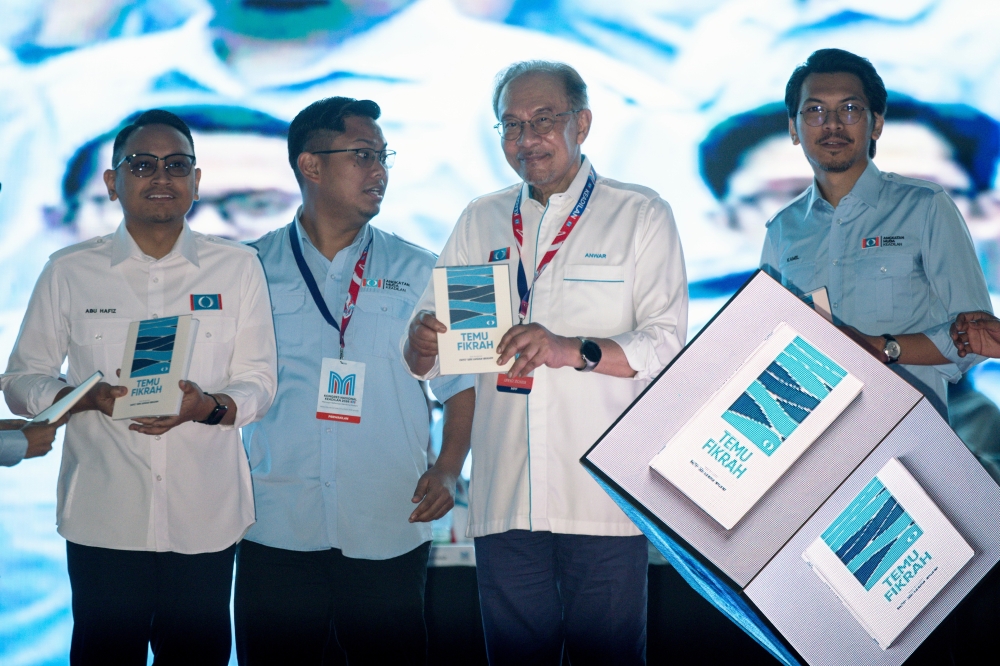
Prime Minister Datuk Seri Anwar Ibrahim formally introduced Temu Fikrah in Melaka on August 16, positioning the initiative as a comprehensive manifesto and operational handbook designed to energise PKR's youth wing and consolidate the ruling coalition's ideological direction. The launch represents a strategic effort by the PKR president to anchor his party's younger generation in clearly defined principles while translating abstract governance concepts into tangible youth engagement activities across Malaysia's federal and state levels.
Temu Fikrah, which translates roughly as "idea meeting" or "knowledge gathering," operates as both a philosophical statement and a practical manual for party activists. The dual nature of the document reflects a deliberate attempt to bridge the gap between lofty political aspirations and ground-level implementation challenges that often frustrate younger party members seeking direction. By packaging the initiative as both manifesto and manual, PKR leadership aims to prevent the common disconnect between policy announcements and youth mobilisation that has historically plagued political parties in Southeast Asia.
The manifesto's emphasis on courage addresses a perceived need within PKR's younger cadres to champion reform initiatives without fear of institutional backlash or entrenched interests. In the Malaysian political context, where factional tensions within coalition parties remain persistent, signalling commitment to bold advocacy serves multiple purposes. It appeals to idealistic youth members while simultaneously differentiating PKR from competing coalitions that older generations perceive as more conservative or status-quo-oriented in their governance approaches.
Creativity as a core pillar reflects recognition that Malaysia's younger demographic increasingly demands innovative policy solutions to familiar problems, particularly in areas of digital governance, economic diversification, and climate adaptation. PKR's inclusion of creativity as a formal principle signals receptiveness to bottom-up innovation and suggests the party intends to position itself as technology-forward and agile compared to rival parties. This alignment with creative problem-solving also resonates with Malaysia's urban, educated voters who form PKR's traditional support base.
The framework explicitly situates itself within the broader Madani governance agenda, which Prime Minister Anwar has championed since taking office. By linking youth mobilisation directly to Madani principles—which encompass prosperity, sustainability, and prosperity—PKR attempts to create coherence across age groups within the party structure. This integration prevents youth initiatives from appearing siloed or tangential to broader government objectives, instead positioning young party members as frontline implementers of national policy priorities.
The Melaka venue selection carries geographical significance, as the historic state remains strategically important in coalition mathematics and has experienced shifting electoral dynamics over recent election cycles. Holding the launch in Melaka rather than Kuala Lumpur underscores PKR's commitment to connecting with constituencies beyond the capital and signals that youth engagement is conceived as a nationwide initiative rather than an urban or metropolitan phenomenon. This decentralised approach reflects lessons learned from previous youth wing revitalisation efforts that failed to penetrate semi-urban and rural communities.
Temu Fikrah's launch timing aligns with an intensifying period of coalition politics following recent state-level developments and positioning ahead of potential future electoral contests. By formalising ideological guidelines for youth members now, PKR creates institutional capacity to mobilise younger activists efficiently should campaigning accelerate. The manifesto-manual format also provides party leadership with tools to enforce message discipline among youth representatives, reducing the risk of damaging public statements or off-message advocacy that could alienate swing voters or core coalition partners.
For PKR specifically, the initiative addresses recruitment and retention challenges within the youth wing that have periodically surfaced over the past decade. Malaysia's political landscape has become increasingly competitive for young people's attention and engagement, with civil society organisations, social enterprises, and digital activism platforms offering alternative venues for impact-oriented individuals. By offering a structured ideological framework combined with practical guidance, PKR positions membership in its youth wing as intellectually rigorous and outcomes-focused rather than ceremonial or career-advancement-oriented.
The emphasis on governance implementation within the manifesto suggests PKR's recognition that youth members require clarity on how abstract political principles translate into policy action. Rather than simply exhorting young activists to embrace party ideology, Temu Fikrah provides concrete mechanisms and guidelines for translating courage, creativity, and Madani values into specific governance initiatives at federal, state, and local levels. This practical orientation differentiates the initiative from purely aspirational youth manifestos that frequently fail to translate into sustained engagement.
Regionally, PKR's youth-focused governance initiative reflects broader trends across Southeast Asian political parties attempting to bridge generational divides in an era of declining party membership and rising political fragmentation. Malaysia's experience with youth engagement offers potential lessons for neighbouring countries grappling with similar challenges of keeping younger voters invested in traditional political structures rather than alternative political expressions or complete disengagement from formal politics.
The Temu Fikrah framework also implicitly acknowledges demographic realities shaping Malaysian politics: younger voters increasingly prioritise performance-based legitimacy over historical or identity-based appeals. By framing youth engagement around concrete governance outcomes, PKR positions itself as responsive to voter expectations for demonstrable delivery rather than symbolic gestures or rhetorical flourishes. This approach carries implications for how ruling coalitions will compete for youth support in coming electoral cycles.
Moving forward, the practical impact of Temu Fikrah will depend substantially on PKR's capacity to embed the manifesto's principles into institutional structures and resource allocation within the youth wing. Successful implementation requires sustained leadership commitment, training mechanisms for youth representatives, and accountability measures ensuring that youth activities genuinely reflect the published principles. Previous party youth initiatives in Malaysia have sometimes languished due to insufficient institutional integration or leadership neglect, underscoring the importance of mechanisms that translate manifesto language into habitual practice.

