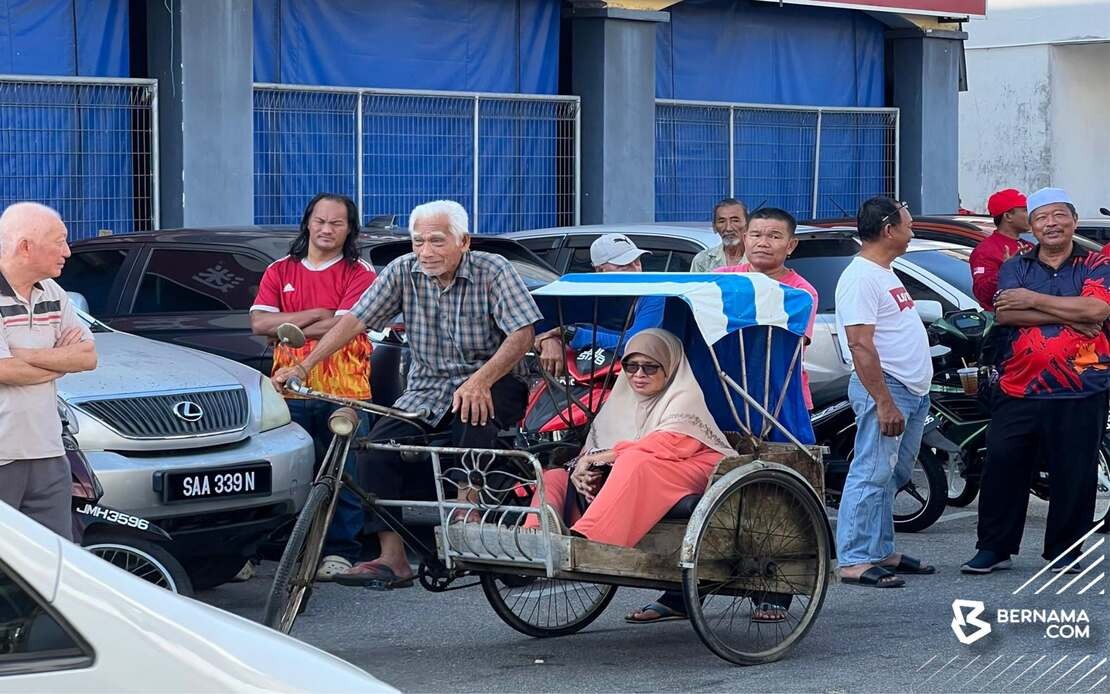
Prime Minister Datuk Seri Anwar Ibrahim has publicly expressed deep appreciation for an octogenarian's determination to bring his wife to see him during a recent campaign visit to Johor, underlining the personal connections that remain central to Malaysian political engagement despite the modern machinery of state office.
The gesture moved Anwar sufficiently that he took to social media to acknowledge the couple's effort. In a Facebook post, the premier conveyed his gratitude to Abdul Razak Pelangga, 86, who made the unconventional journey on a trishaw—a humble three-wheeled vehicle—covering nearly a kilometre from his home in Kampung Parit Bugis to reach Kedai Kopi Hailam Sri Medan in Senggarang, Batu Pahat, where Anwar had stopped for breakfast. The prime minister simultaneously expressed his regret at having missed the opportunity to encounter them in person during the visit.
Abdul Razak, who serves as imam of Masjid Raudhatul Jannah Parit Bugis, made his decision after learning of Anwar's scheduled appearance in the constituency. His motivation was straightforward yet touching: his wife, Jamilah Samsudin, 64, had expressed a wish to see the country's leader up close. Rather than attempting to navigate the congestion that typically accompanies such visits, Abdul Razak opted for the trishaw despite having access to more modern transport options, reasoning that the parking challenges in the area made the traditional vehicle a more practical choice.
In his written response, Anwar conveyed his hope for a future meeting with the couple, assuring them of his recognition of their support while invoking a blessing upon them. His message—"InsyaAllah, we will meet another time. Thank you for your encouragement and support. May Allah SWT bless both of you with good health and ease all your affairs"—reflects the communal language and values through which Malaysian political leaders typically communicate with constituents, particularly in Malay-Muslim contexts.
The incident occurred during Anwar's broader campaign activities in the Senggarang state constituency, undertaken in connection with the Johor State Election. The visit encompassed approximately 50 minutes spent at the kopitiam engaging with local residents through an informal meet-and-greet programme, demonstrating the continued importance of direct grassroots interaction despite the increasing digitisation of electoral politics in Malaysia.
The story carries particular resonance in the Malaysian context, where respect for elders and gestures of personal devotion remain deeply embedded in cultural values. The image of an 86-year-old man pedalling a trishaw to fulfil his wife's wish speaks to a form of civic participation that transcends economic status or technological sophistication. In an era dominated by social media campaigns and mass broadcasting, such intimate, individual acts of political engagement represent an older tradition of Malaysian democracy.
The couple's effort also highlights the continued relevance of physical proximity and personal encounter in Malaysian politics. Despite living in an age where political messages reach citizens through smartphones and screens, the desire to witness a leader in person remains powerful. For many Malaysians, particularly those in smaller towns and rural areas, such opportunities remain special occasions that warrant considerable effort to pursue.
Anwar's response, notably, elevated this personal moment into a broader public acknowledgment through social media, allowing the incident to resonate beyond the immediate locality. This amplification reflects how modern political communication operates as a two-way process, with individual stories of constituents gaining national visibility through leaders' own digital platforms. The prime minister's gracious response and expression of regret at the missed meeting demonstrated attentiveness to the emotional dimensions of political participation.
The visit to Batu Pahat formed part of Anwar's engagements across Johor in relation to the state electoral campaign, representing the type of ground-level political mobilisation that remains crucial in Malaysian elections. Such visits allow national leadership to maintain connection with local communities while simultaneously energising party machinery at the state level. The informal setting of a kopitiam breakfast, rather than a more formal venue, signals the accessibility that contemporary Malaysian leaders seek to project.
For residents of smaller towns like Senggarang, such ministerial visits can carry outsized significance. They represent recognition and validation that their concerns matter to national leadership, a particularly important signal in constituencies that sometimes feel marginalised relative to urban centres. The personal dimension that Abdul Razak and Jamilah's trishaw journey added to what might otherwise have been a routine campaign appearance transformed it into a story worth sharing and remembering.
The broader implications extend beyond the touching anecdote itself. The incident illustrates how political engagement in Malaysia remains deeply personalised, rooted in relationships and face-to-face encounters even as party politics becomes increasingly professionalised. It also demonstrates the abiding cultural significance of respect, deference, and the willingness to make personal sacrifices to pay respects to authority figures—themes that continue to structure Malaysian social and political life across diverse communities.

